Introduction to South Korea's Proximity Sensor Industry
South Korea has firmly established itself as a global powerhouse in advanced electronics and industrial automation. Within this ecosystem, the proximity sensor sector stands out as a critical component, driving innovation in manufacturing, robotics, and smart technology. Korean suppliers are renowned for their commitment to precision engineering, stringent quality control, and rapid adaptation to emerging market demands. The industry's growth is deeply intertwined with the country's leading automotive, semiconductor, and consumer electronics sectors, creating a robust demand for high-performance, reliable sensing solutions. This synergy has propelled Korean manufacturers to the forefront of sensor technology development.
Key Technological Capabilities and Innovations
Korean proximity sensor suppliers excel in several key technological areas. A primary focus is on the development of high-frequency inductive, capacitive, and ultrasonic sensors with exceptional accuracy and repeatability. Innovations often center on miniaturization, allowing sensors to be integrated into increasingly compact devices without sacrificing performance. Furthermore, there is a significant push towards enhancing environmental resilience. Suppliers produce sensors capable of withstanding extreme temperatures, high-pressure washdowns, and exposure to corrosive materials, making them ideal for harsh industrial environments. The integration of smart features, such as IO-Link communication for predictive maintenance and data analytics, is another hallmark of Korea's advanced offerings.
Major Suppliers and Their Market Specializations
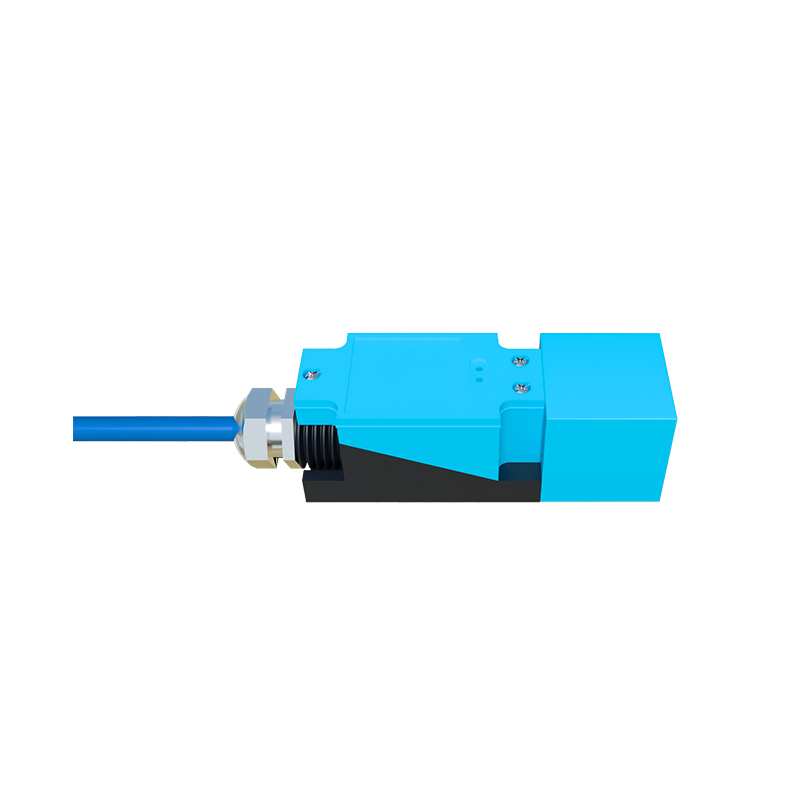
The landscape is dominated by several key players, each with distinct specializations. Companies like Autonics and SMC Korea are titans in the market, offering extensive catalogs of inductive, capacitive, and magnetic proximity sensors for factory automation. These suppliers provide robust, standard-duty sensors for general applications. For more specialized needs, firms such as Omron Electronics Korea and Panasonic Industrial Devices Korea lead in providing high-precision sensors for semiconductor fabrication and precision assembly lines. Additionally, a growing number of agile, technology-focused firms are emerging, specializing in niche applications like ultra-miniature sensors for medical devices or high-speed sensors for robotic guidance systems.
Application in Core Industrial Sectors
The application breadth of Korean proximity sensors is vast. In the automotive industry, they are indispensable for robotic welding, part presence verification, and automated guided vehicle (AGV) navigation. The semiconductor and display panel manufacturing sectors rely on them for wafer handling, alignment, and defect detection, where nanometer-level precision is non-negotiable. Consumer electronics assembly lines utilize these sensors for component insertion, testing, and packaging automation. Beyond traditional manufacturing, they are increasingly deployed in smart logistics for warehouse automation, in renewable energy systems for equipment monitoring, and in infrastructure for smart building management.
Quality Standards and Global Supply Chain Integration
Quality and reliability are non-negotiable for Korean suppliers. Products consistently meet and exceed international standards such as IEC, UL, and CE. This commitment to quality assurance, coupled with rigorous testing protocols, ensures long-term operational stability and reduces total cost of ownership for end-users. Korean companies are deeply integrated into global supply chains, operating extensive distribution networks and providing strong technical support worldwide. Their ability to offer customized solutions and rapid prototyping services makes them preferred partners for multinational corporations seeking to optimize their automated processes.
Future Trends and Strategic Direction
The future trajectory of South Korea's proximity sensor industry points towards greater intelligence and connectivity. The convergence of sensor technology with the Internet of Things (IoT) and Industry 4.0 principles is a major strategic focus. Suppliers are developing sensors with embedded intelligence for edge computing, enabling real-time decision-making at the source of data generation. Another significant trend is the development of multi-functional sensors that can detect proximity, distance, and even color or surface characteristics simultaneously. As demand grows for collaborative robots (cobots) and autonomous systems, the need for safe, highly responsive, and compact proximity sensing solutions will continue to drive innovation from Korean engineering teams.
Conclusion: A Hub of Precision and Reliability
In conclusion, South Korea's proximity sensor suppliers represent a cornerstone of modern industrial automation. Their success is built on a foundation of technological excellence, rigorous quality management, and a deep understanding of diverse industrial applications. By continuously pushing the boundaries of miniaturization, durability, and smart functionality, these companies not only support South Korea's domestic industrial giants but also supply critical components to global markets. For engineers and procurement specialists worldwide, partnering with a Korean proximity sensor supplier offers access to cutting-edge technology, reliable performance, and solutions engineered for the challenges of tomorrow's automated world.