Introduction to Time-of-Flight Technology
Time-of-Flight (ToF) photoelectric sensors represent a significant advancement in non-contact distance measurement and object detection. Unlike traditional photoelectric sensors that rely on light intensity or triangulation, ToF sensors measure the time it takes for a light signal to travel from the emitter to a target and back to the receiver. This fundamental principle allows for highly accurate, long-range, and fast measurements, making them indispensable in modern automation, robotics, and safety systems. The core of this technology lies in its ability to directly calculate distance based on the constant speed of light, offering a robust solution even in challenging environmental conditions.
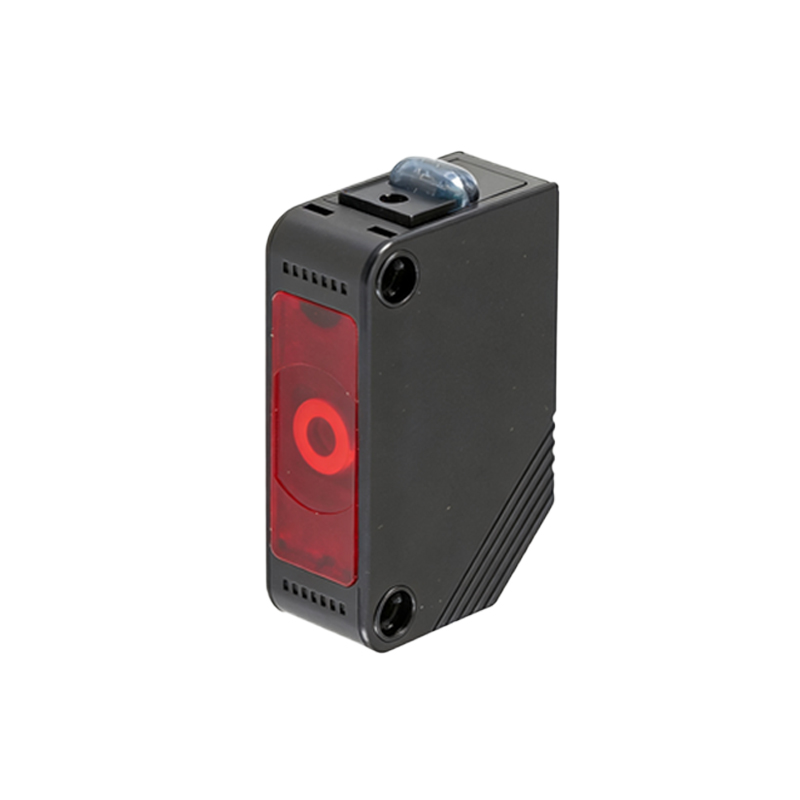
Core Working Principle and Components
The operation of a ToF photoelectric sensor is elegantly simple in concept but sophisticated in execution. The system primarily consists of a modulated light source, typically a laser diode or VCSEL (Vertical-Cavity Surface-Emitting Laser) emitting near-infrared light, a high-speed photosensitive receiver (like an APD or SPAD array), and a precision timing circuit, often integrated into a single chip. The process begins when the emitter sends out a short, precisely timed pulse of modulated light. This light travels through the air, reflects off the target object, and returns to the sensor's receiver. The key measurement is the phase shift or the direct time delay between the emitted and received light pulses. The distance (d) to the target is then calculated using the formula: d = (c * Δt) / 2, where 'c' is the speed of light and 'Δt' is the measured time of flight. Dividing by two accounts for the round-trip journey of the light signal.
Modulation Techniques: Pulse and Continuous Wave
There are two primary modulation methods employed in ToF sensors: direct Time-of-Flight (dToF) and indirect Time-of-Flight (iToF). Direct ToF, or pulse ToF, measures the time interval between sending a short light pulse and receiving its reflection directly. It is excellent for long-range measurements and multi-object detection but requires extremely fast and precise timing circuits. Indirect ToF, or continuous-wave (CW) ToF, uses amplitude-modulated continuous light. It measures the phase difference between the emitted and reflected sinusoidal waves. The distance is derived from this phase shift. CW-ToF is often used for shorter ranges and offers advantages in terms of component cost and integration, commonly found in consumer electronics like smartphone depth cameras. Each method has its optimal application space within industrial sensing.
Key Advantages in Industrial Applications
ToF photoelectric sensors offer distinct benefits that set them apart from other sensing technologies. Their primary advantage is insensitivity to target color, reflectivity, and texture. Since they measure time, not reflected light intensity, a dark, matte object can be measured as accurately as a bright, shiny one at the same distance. They provide excellent performance over long ranges, often exceeding 10 meters, with high accuracy and repeatability. Furthermore, ToF sensors are incredibly fast, capable of taking thousands of measurements per second, which is critical for dynamic applications like conveyor belt sorting, robotic guidance, and vehicle detection. Their solid-state design with no moving parts ensures high reliability and longevity in harsh industrial environments.
Overcoming Environmental and Technical Challenges
Despite their robustness, ToF sensors face specific challenges that engineers must address. Ambient light, especially sunlight containing infrared components, can saturate the receiver. Advanced optical filters and modulation at specific frequencies help mitigate this interference. Multi-path interference, where light reflects off multiple surfaces before returning, can cause measurement errors. Sophisticated signal processing algorithms and sensor design are employed to identify and filter out these false signals. For very precise short-range measurements, the timing resolution of the circuit becomes paramount, pushing the limits of current semiconductor technology. Thermal management of the light source and consistent calibration are also critical for maintaining accuracy over time and temperature variations.
Future Trends and Integration
The future of ToF photoelectric sensors is tightly linked to advancements in semiconductor and integration technologies. We are witnessing a trend towards single-chip solutions that integrate the VCSEL, SPAD array, and timing circuitry, reducing size, power consumption, and cost. This miniaturization is driving their adoption in mobile devices, augmented reality, and automotive LiDAR. Furthermore, the development of multi-zone or imaging ToF sensors (ToF cameras) is creating new possibilities for 3D profiling, gesture recognition, and complex bin-picking in robotics. As processing power increases and costs decrease, ToF sensors are poised to become even more pervasive, providing the essential "eyes" for the next generation of intelligent machines and automated systems, from factory floors to autonomous vehicles.