What Are Proximity Sensors?
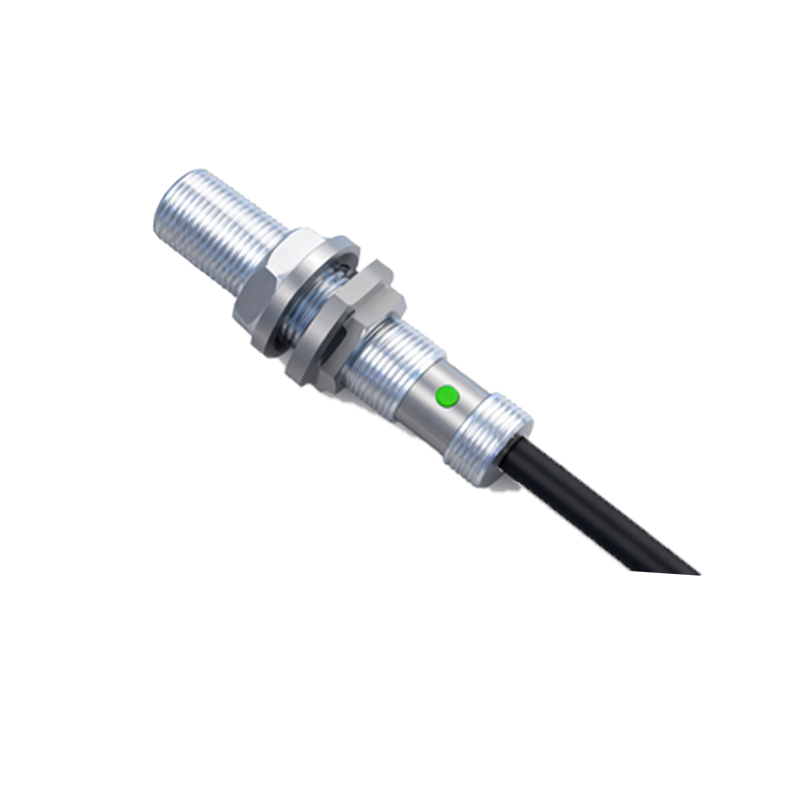
Proximity sensors are non-contact electronic devices designed to detect the presence or absence of an object within a specific sensing range without any physical contact. They operate by emitting an electromagnetic field, beam, or radiation and then monitoring for changes in the return signal or field. When a target object enters the sensor's detection zone, it causes a detectable alteration, prompting the sensor to send an electrical output signal. This fundamental capability makes them indispensable in automation, manufacturing, robotics, and safety systems, where reliable, wear-free detection is critical for efficiency and precision.
Core Functions and Operational Principles
The primary function of a proximity sensor is to detect, measure, or report the presence of an object. This simple task breaks down into several key operational principles depending on the sensor type. Inductive sensors generate an oscillating electromagnetic field to detect metallic objects, causing eddy current losses that trigger the output. Capacitive sensors create an electrostatic field and can detect both metallic and non-metallic materials by sensing changes in capacitance. Photoelectric sensors use a light beam (visible, infrared, or laser); detection occurs when the target interrupts or reflects this beam. Ultrasonic sensors emit high-frequency sound waves and measure the time for the echo to return, calculating distance. Each principle is suited to specific environmental conditions and target materials.
Major Types of Proximity Sensors
The industrial landscape utilizes several main types of proximity sensors. Inductive proximity sensors are robust, cost-effective, and ideal for detecting ferrous and non-ferrous metals in harsh environments like machine tools. Capacitive proximity sensors offer versatility, capable of detecting liquids, powders, plastics, and wood, making them perfect for level detection and packaging. Photoelectric sensors provide long sensing ranges and high speed, used extensively in conveyor systems, object counting, and complex inspection tasks. Magnetic proximity sensors, or reed switches, are simple devices activated by a magnetic field, often used for door/window position sensing. Ultrasonic sensors excel in distance measurement and detecting transparent or irregularly shaped objects where other technologies might fail.
Key Advantages in Industrial Settings
Proximity sensors offer significant advantages that drive their widespread adoption. Their non-contact nature eliminates mechanical wear and tear, ensuring long operational life and reduced maintenance. They provide high-speed response and repeatability, essential for fast-paced production lines. Most types are not affected by surface conditions like color, texture, or reflectivity (with exceptions for some photoelectric sensors). They are typically housed in rugged enclosures resistant to dust, moisture, and vibration, allowing reliable performance in challenging industrial environments. Furthermore, their solid-state design offers high reliability and resistance to electrical noise.
Common Industrial Applications
The applications of proximity sensors span virtually every sector of modern industry. In automotive manufacturing, they position robot arms, count parts, and verify assembly steps. On packaging lines, they detect labels, monitor fill levels, and control product flow. In metalworking, inductive sensors detect the end of a metal sheet or the position of a drill bit. They are crucial for safety, acting as interlock switches on machine guards to prevent operation when doors are open. In material handling, they control conveyor belts, sort packages, and manage inventory in automated warehouses. Their role in enabling precision, safety, and efficiency is foundational to industrial automation.
Selection Criteria and Installation Considerations
Selecting the right proximity sensor requires careful analysis of several factors. The nature of the target material (metal, plastic, liquid) dictates the sensor type (inductive, capacitive, etc.). The required sensing distance, or range, must be specified, ensuring a suitable margin. Environmental conditions such as temperature extremes, presence of chemicals, washdown requirements, or electrical interference influence the housing material and protection rating (e.g., IP67). The output type (PNP/NPN, analog, IO-Link) must be compatible with the control system (PLC). Proper installation is equally vital; sensors must be mounted securely, with adequate clearance from metal surroundings to prevent false triggering, and wiring must follow manufacturer guidelines to ensure signal integrity.
The Future of Sensing Technology
The evolution of proximity sensors is closely tied to Industry 4.0 and smart manufacturing trends. Modern sensors are becoming more intelligent, integrating microprocessors and communication protocols like IO-Link. This allows for advanced diagnostics, parameter adjustment on-the-fly, and the transmission of process data to higher-level systems for predictive maintenance and data analytics. Miniaturization continues, enabling sensors to fit into tighter spaces. Furthermore, the development of sensors with enhanced immunity to environmental interference and the ability to detect multiple parameters simultaneously will further expand their role in creating more adaptive, efficient, and interconnected industrial systems.