Introduction to Proximity Sensing Technology
Proximity sensors are fundamental components in modern industrial automation and control systems. These non-contact devices detect the presence or absence of an object within a specified range without any physical contact. This capability makes them invaluable in harsh environments, high-speed applications, and scenarios requiring high reliability and longevity. The core principle involves generating an electromagnetic field or beam and detecting changes caused by a target object. Their applications span across manufacturing, automotive, packaging, material handling, and robotics, providing critical input for process control, safety interlocks, and position verification. The selection of the appropriate sensor type is crucial for optimal system performance, depending on factors like target material, sensing distance, environmental conditions, and required output.
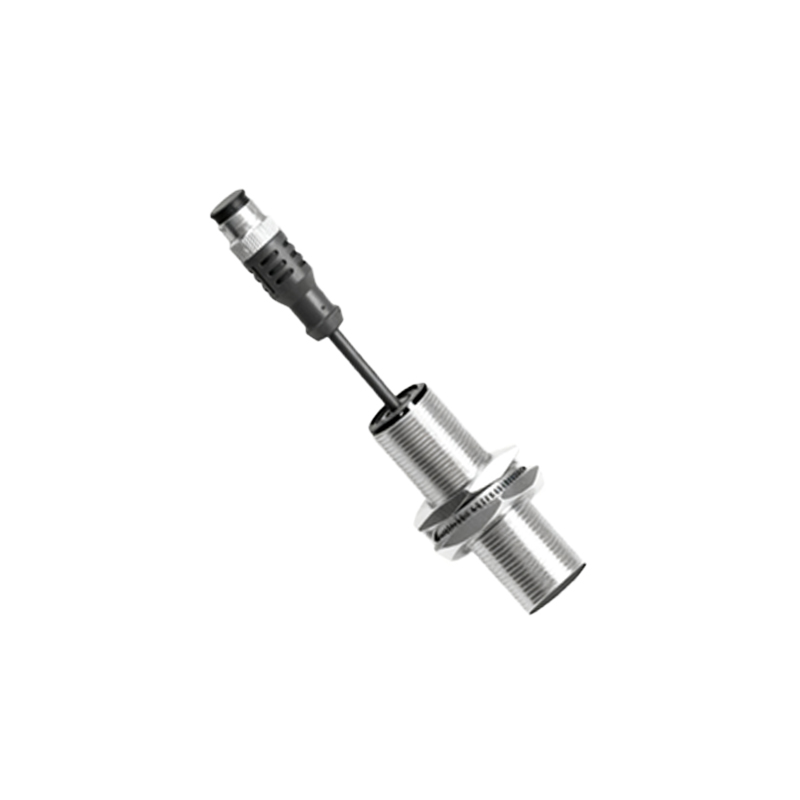
Inductive Proximity Sensors
Inductive proximity sensors are specifically designed to detect metallic objects, primarily ferrous metals like iron and steel, though some types can also sense non-ferrous metals. They operate on the principle of electromagnetic induction. The sensor contains a coil wound around a ferrite core connected to an oscillator. When a metallic target enters the sensor's electromagnetic field, it induces eddy currents on the target's surface. This causes a change in the oscillation amplitude, which is detected by a threshold circuit, triggering a solid-state output switch. Key advantages include high switching frequency, robustness against dirt, dust, and moisture (often rated IP67 or higher), and insensitivity to non-metallic materials. Common housing styles are cylindrical (e.g., M8, M12, M18, M30) and rectangular. They are ideal for position sensing of machine parts, limit switching, and counting metal objects.
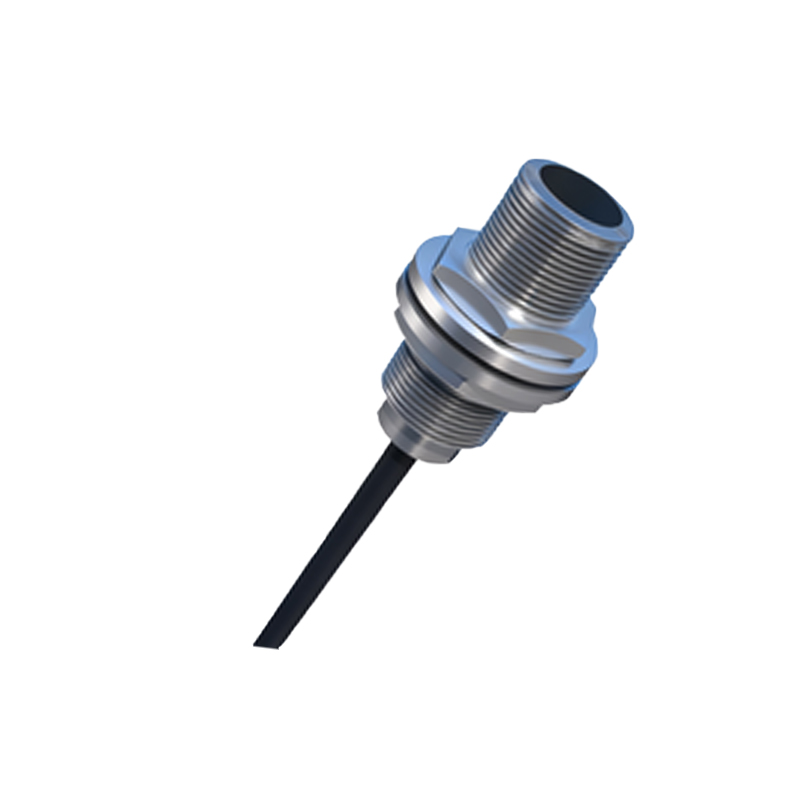
Capacitive Proximity Sensors
Capacitive sensors can detect both metallic and non-metallic materials, including liquids, powders, plastics, glass, and wood. They function by measuring changes in capacitance. The sensor face acts as one plate of a capacitor, with the target object acting as the other plate. An oscillator circuit creates an electrostatic field. When a target enters this field, it alters the dielectric constant and thus the capacitance, causing the oscillator to start or change amplitude. This change is processed to activate the output. These sensors are particularly useful for level detection of liquids or granular materials through non-metallic container walls, presence detection of non-metallic objects, and applications requiring sensitivity to different material types. They typically have shorter sensing ranges than inductive sensors and can be influenced by environmental factors like humidity.
Ultrasonic Proximity Sensors
Ultrasonic sensors utilize sound waves beyond the human hearing range (typically 40-400 kHz) to detect objects. They consist of a transmitter that emits ultrasonic pulses and a receiver that listens for the echo. The sensor calculates the time interval between pulse emission and echo reception to determine the distance to the target. This principle, known as time-of-flight, allows for precise distance measurement and detection of objects regardless of their material, color, or transparency. They are excellent for detecting clear glass, liquid levels, uneven surfaces, and objects over longer distances (up to several meters). Common output types include analog (4-20 mA, 0-10 V) for continuous distance measurement and discrete switching outputs. Challenges can include false readings from acoustic noise, temperature variations affecting sound speed, and specular reflections from angled surfaces.
Photoelectric Sensors
Photoelectric sensors employ light beams, usually infrared, visible red, or laser, for detection. They are categorized mainly by their operating mode. Through-beam sensors have separate emitter and receiver units; an object is detected when it interrupts the light beam. This mode offers the longest sensing range and highest reliability. Retro-reflective sensors use a single unit and a reflector; detection occurs when the beam is blocked from returning to the receiver. Diffuse (proximity) sensors detect light reflected directly off the target itself. Photoelectric sensors can detect virtually any material, are extremely fast, and offer long ranges, especially through-beam types. They are sensitive to environmental contaminants like dust, fog, or heavy dirt that can obscure the lens, and the target's color and reflectivity can affect the sensing range in diffuse mode.
Magnetic Proximity Sensors (Reed Switches & Hall Effect)
Magnetic sensors detect the presence of a permanent magnet. Two primary technologies are used. Reed switches consist of two ferromagnetic reeds sealed in a glass tube filled with inert gas. When a magnetic field is applied, the reeds attract each other and make contact, closing the circuit. They are simple, low-cost, and require no power, but have limited switching cycles and speed. Hall Effect sensors are solid-state devices. They produce a voltage difference (the Hall voltage) across an electrical conductor when