Introduction to Embedded Proximity Sensors
Embedded proximity sensors are fundamental components in modern industrial automation and machinery. Unlike surface-mounted variants, these sensors are designed to be integrated directly into mechanical structures or housings, offering a flush or recessed mounting profile. This design provides significant protection against physical damage, environmental contaminants, and electromagnetic interference. The core function remains the non-contact detection of an object's presence, absence, or position within a defined sensing range. Their embedded nature makes them ideal for applications where space is constrained, aesthetics are important, or the operational environment is harsh. From automotive assembly lines to food processing machinery and robotic arms, embedded proximity sensors deliver reliable, maintenance-free operation critical for system uptime and precision.
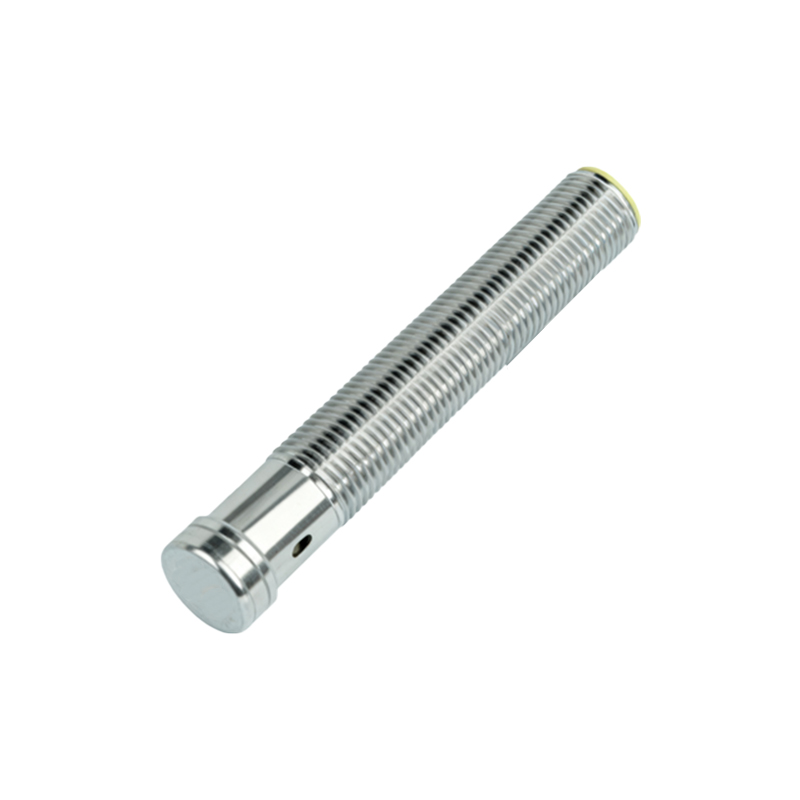
Inductive Proximity Sensors
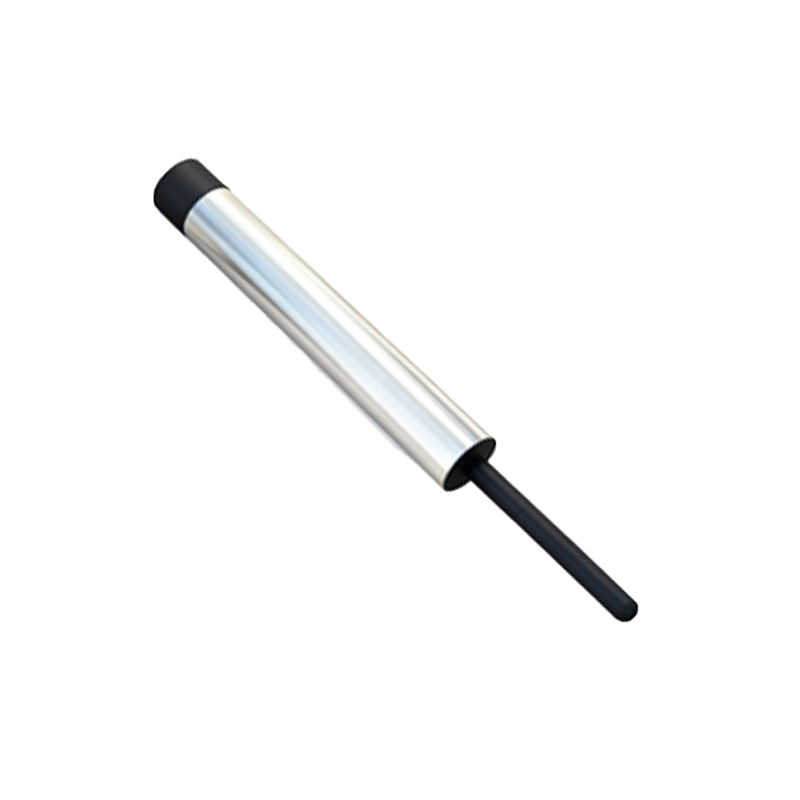
Inductive proximity sensors are arguably the most common type of embedded sensor in industrial settings. They operate on the principle of electromagnetic induction. The sensor generates an oscillating electromagnetic field from its face. When a metallic target, typically ferrous metals like steel or iron, enters this field, eddy currents are induced in the target. This causes a change in the oscillation amplitude within the sensor's coil, which is detected by the internal circuitry, triggering a solid-state output switch. Embedded inductive sensors are exceptionally robust, capable of withstanding severe shock, vibration, and contaminants like oil or coolant. They are insensitive to non-metallic materials and are primarily used for detecting metal objects in applications such as position verification of machine parts, counting metallic items on conveyors, and end-of-travel detection in cylinders.
Capacitive Proximity Sensors
Capacitive proximity sensors offer a broader detection capability compared to their inductive counterparts. They function by generating an electrostatic field. Any object that enters this field alters the capacitance of the sensor's circuit, triggering an output. The key advantage is their ability to detect both metallic and non-metallic materials, including liquids, plastics, glass, wood, and granular substances. Embedded capacitive sensors are often used in level detection tasks, such as monitoring the fill level of tanks containing liquids or powders. They are also employed in applications requiring detection of material presence through non-metallic container walls. Their sensitivity is adjustable, allowing engineers to tune out unwanted background materials or to detect specific substances. This makes them versatile but requires careful installation and calibration to prevent false triggering.
Ultrasonic Proximity Sensors
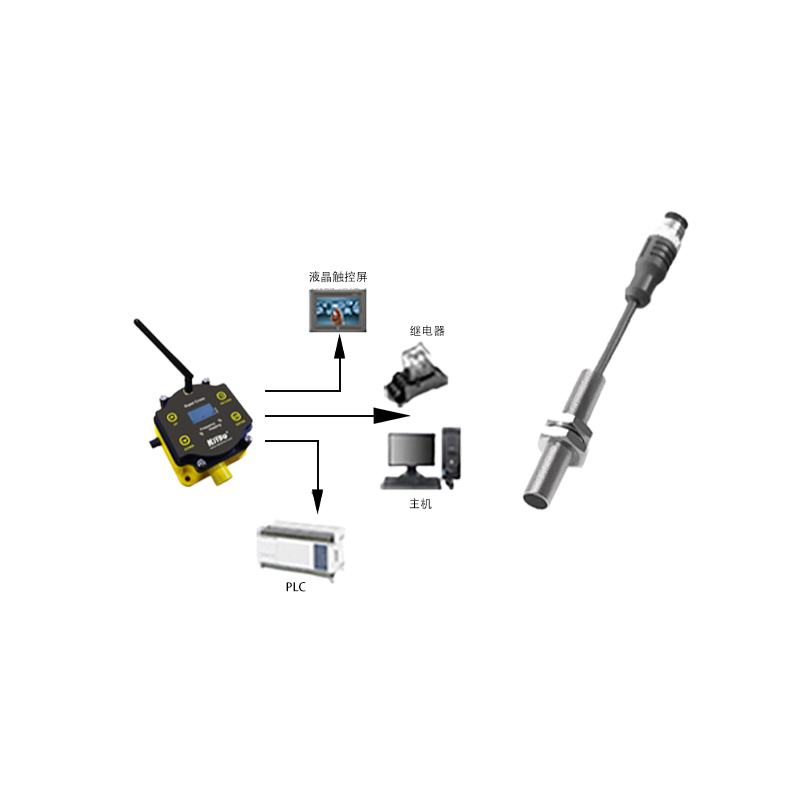
Embedded ultrasonic sensors utilize sound waves beyond the human hearing range for detection. They operate by emitting high-frequency ultrasonic pulses and then listening for the echo reflected from a target object. By measuring the time interval between the emission and the reception of the echo (time-of-flight), the sensor can determine both the presence and the distance to the object. This allows them to function effectively as both proximity switches and analog distance measuring devices. Their major strength is insensitivity to color, transparency, or material composition; they can reliably detect virtually any solid or liquid object. Embedded ultrasonic sensors are ideal for challenging environments with dust, fog, or light smoke, where optical sensors might fail. Common applications include pallet detection, loop control in winding machines, and distance monitoring in automated guided vehicles (AGVs).
Magnetic Proximity Sensors (Reed Switches & Hall Effect)
Magnetic proximity sensors detect the presence of a magnetic field, typically from a permanent magnet attached to a moving part. Two primary embedded technologies are prevalent: reed switches and Hall-effect sensors. A reed switch consists of two ferromagnetic reeds sealed in a glass tube. When a magnet approaches, the reeds are drawn together, closing the electrical contact. Hall-effect sensors are solid-state devices that produce a voltage output when exposed to a magnetic field. Embedded magnetic sensors are highly reliable for detecting the position of pistons in pneumatic or hydraulic cylinders (often via a built-in magnet in the piston). They are completely sealed, making them immune to dirt, moisture, and corrosion. Their operation is not affected by non-ferrous materials, allowing detection through non-magnetic barriers like aluminum or plastic housings.
Photoelectric Proximity Sensors
While often associated with through-beam or retro-reflective setups, photoelectric sensors are also available in embedded, diffuse (proximity) mode configurations. An embedded diffuse sensor houses both the light emitter (usually an LED producing visible red, infrared, or laser light) and the receiver in a single, compact housing. It detects an object when the emitted light reflects off the target back to the receiver. Advanced background suppression models use triangulation to only detect objects within a precise, defined range, ignoring more distant surfaces. Embedded photoelectric sensors excel at detecting small objects, offer very long sensing ranges compared to inductive/capacitive types, and can detect virtually any