What Are Flat Proximity Sensors?
Flat proximity sensors, as the name suggests, are a specialized type of non-contact sensing device characterized by their low-profile, flat housing design. Unlike traditional cylindrical or block-shaped sensors, these units are engineered to be extremely thin, often just a few millimeters in height. This unique form factor is achieved through advanced packaging of the sensing coil and electronics. They operate on the same fundamental principles as standard inductive or capacitive proximity sensors, detecting the presence or absence of a metallic or non-metallic target object without physical contact. The core innovation lies not in the sensing technology itself, but in the miniaturized and flattened mechanical construction, which opens up a new realm of installation possibilities in space-constrained automation environments.
Key Design Features and Construction
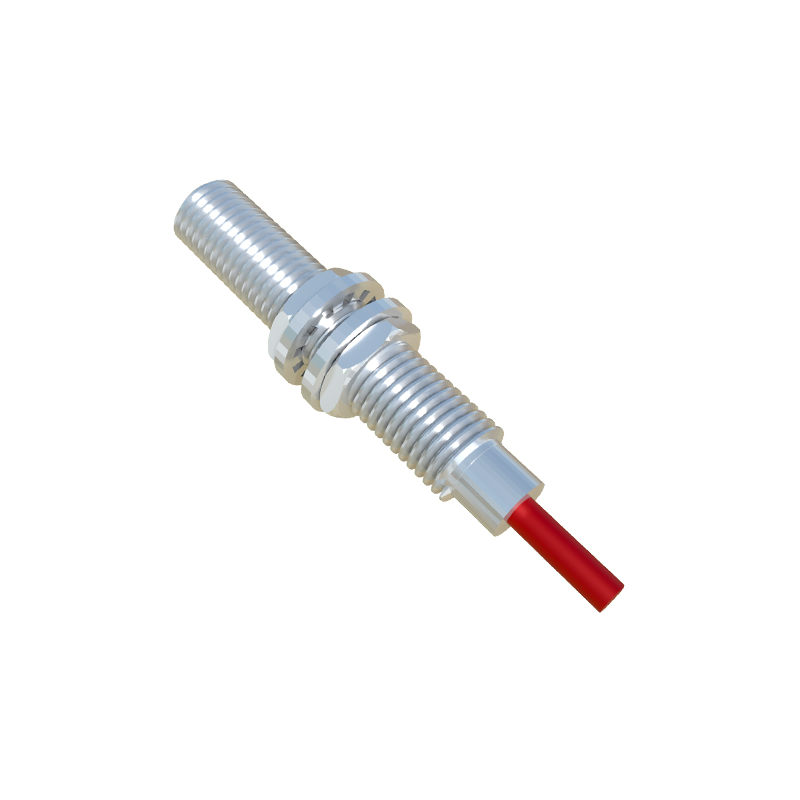
The defining feature of a flat proximity sensor is its ultra-slim profile. Typical heights range from 3mm to 10mm, with sensing faces that are rectangular or oval-shaped. The housing is usually made from robust, industrial-grade plastics like PBT or metals like stainless steel for harsh environments. Internally, the oscillator coil is wound in a flat, planar pattern. This is connected to a compact, surface-mount technology (SMT) based evaluation circuit. To protect the sensitive components, the sensing face is often a molded part of the housing or covered with a thin, wear-resistant layer that allows the electromagnetic field to pass through. Many models also feature built-in LED status indicators and short-circuit, overload, and reverse polarity protection circuits, all integrated into the slender frame.
Primary Operating Principles
Most flat proximity sensors are inductive, making them ideal for detecting metals. They contain an oscillator circuit that generates a high-frequency electromagnetic field at the active sensing face. When a ferrous or non-ferrous metal target enters this field, eddy currents are induced on the target's surface. This causes a change in the oscillation amplitude or frequency within the sensor, which is detected by the evaluation circuit, triggering a solid-state output switch (PNP/NPN). For detecting non-metallic materials like plastics, wood, or liquids, flat capacitive proximity sensors are used. These generate an electrostatic field and detect changes in capacitance caused by the target material's dielectric constant. Some advanced models also utilize magneto-resistive technology for detecting magnetic fields.
Major Advantages Over Standard Sensors
The primary advantage is the minimal installation space requirement. They can be mounted in locations where a standard sensor would simply not fit, such as behind thin panels, inside narrow machine frames, or on robot grippers. Their flat surface allows for flush mounting without a protruding barrel, eliminating the risk of mechanical damage from impacts. This also enables detection of very small or thin targets that might pass by a larger sensor. The low-profile design often results in a wider and more uniform sensing field parallel to the mounting surface, which can be beneficial for certain applications like edge guiding or detecting overlapping materials. Furthermore, their sleek design can contribute to a cleaner, more streamlined machine aesthetic.
Typical Industrial Applications
Flat proximity sensors are indispensable in modern, high-density automation. Common applications include position verification of elevator car floors, end-of-travel detection in linear actuators, and presence sensing of circuit boards in electronic assembly. They are widely used in packaging machinery to detect the position of thin seals, foils, or labels. In robotics, they are integrated into gripper jaws for part presence confirmation. The printing industry uses them for paper jam detection and web break monitoring. In metalworking, they monitor the position of stamping press rams or detect the end of a metal coil. Their ability to be mounted behind non-metallic surfaces also makes them perfect for hidden detection tasks in consumer devices or access control panels.
Critical Selection and Installation Guidelines
Selecting the right flat sensor requires careful consideration. First, determine the sensing technology: inductive for metals, capacitive for other materials. The rated sensing distance (Sn) is typically shorter than cylindrical sensors, often between 1mm and 5mm, and must be chosen based on the target material and size. The housing material must be compatible with the environment (e.g., chemical resistance, temperature range). Output type (DC 3-wire, NPN/PNP) must match the controller's input card. For installation, ensure the mounting surface is flat and rigid. Adhere strictly to the manufacturer's specified flush-mounting or non-flush-mounting conditions, as the surrounding metal can significantly affect the sensing range. Maintain the required dead zone behind the sensor and provide adequate clearance from other metal objects in the lateral direction to prevent false triggering.
Installation and Wiring Considerations
Proper installation is crucial for reliable operation. Since