Introduction to Photoelectric Sensing Technology
Photoelectric sensors are a cornerstone of modern industrial automation and safety systems, particularly in door control applications. These devices operate on the principle of converting light signals into electrical signals. A typical sensor consists of an emitter, which projects a light beam—often infrared, visible red, or laser—and a receiver that detects the presence or absence of this beam. When an object, such as a person or vehicle, interrupts this beam, the receiver triggers a change in its output state. This simple yet highly reliable mechanism forms the basis for non-contact detection, making it ideal for controlling automatic doors in various environments, from commercial buildings to industrial warehouses and secure facilities.
Core Operating Modes for Door Control
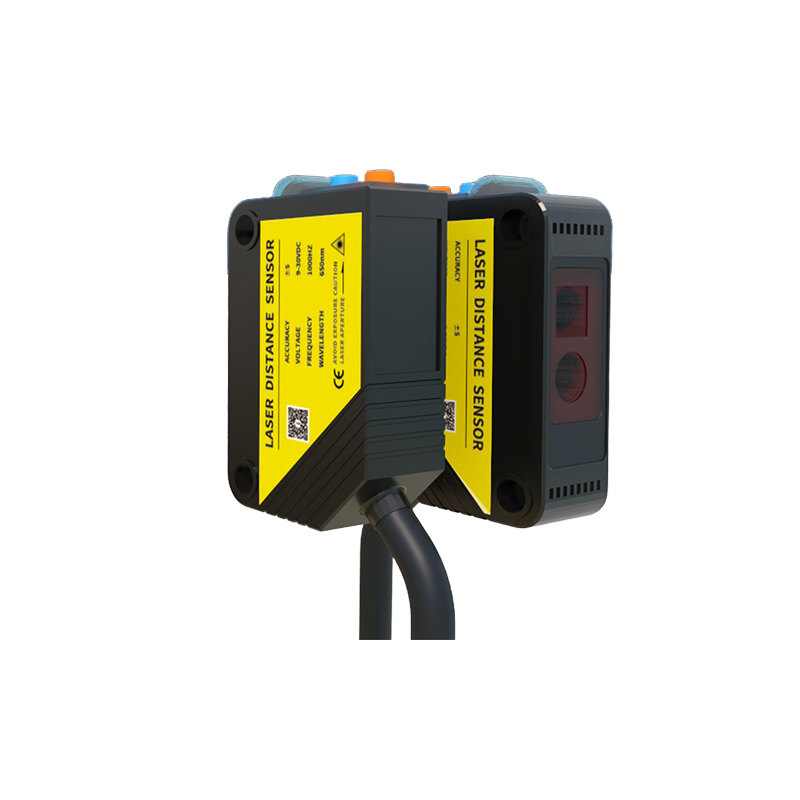
Three primary sensing modes are employed in door control systems: through-beam, retro-reflective, and diffuse. Through-beam sensors, with separate emitter and receiver units, offer the longest sensing ranges and highest reliability, as the receiver directly detects the emitter's beam. They are often used as safety curtains at the sides of large industrial doors. Retro-reflective sensors house both emitter and receiver in a single housing, relying on a reflector to bounce the beam back. This mode is common for overhead door activation, where a beam is projected across an access path. Diffuse or proximity sensors detect the reflection of light from the target itself and are frequently used for presence detection immediately in front of a door to prevent premature closing.
Integration with Door Control Systems
The output from a photoelectric sensor is a critical input to the door's programmable logic controller (PLC) or dedicated door operator. Typically, a sensor's output is a simple digital signal—either a normally open (NO) or normally closed (NC) dry contact or a solid-state transistor signal. Upon beam interruption, this signal changes state, instructing the controller to initiate the door's opening cycle. More advanced systems utilize multiple sensors in a networked configuration. For instance, one sensor may act as an activation trigger from a distance, while a second, safety-rated sensor creates a protective zone at the door's edges to immediately halt or reverse closing if an obstruction is detected.
Safety Standards and Functional Safety
Implementing photoelectric sensors for door control, especially in public or industrial settings, is governed by stringent safety standards such as IEC 61496 (Safety of machinery - Electro-sensitive protective equipment) and regional building codes. Safety Light Curtains, a specialized type of through-beam photoelectric device, are used to create invisible guarding zones. These systems are rated with Performance Levels (PL) according to ISO 13849 or Safety Integrity Levels (SIL) per IEC 62061. For a main entrance automatic door, a system might require a minimum of PLd. The sensors must be fail-safe, with built-in self-checking routines to monitor LED output, receiver function, and alignment, ensuring a safe fault condition (e.g., door fails to close or stops moving) if any component fails.
Environmental Considerations and Selection Criteria
Selecting the correct photoelectric sensor for a door application requires careful analysis of the operating environment. Key factors include sensing range, required response time, and environmental robustness. Outdoor doors demand sensors with high ingress protection ratings (e.g., IP67 or IP69K) to withstand rain, dust, and temperature fluctuations. The housing material must resist UV degradation. For high-traffic interior doors, resistance to ambient light interference from sunlight or fluorescent lamps is crucial; sensors with modulated LED light and synchronous detection circuits are preferred. Additionally, the physical mounting, alignment stability, and ease of maintenance are practical considerations that impact long-term reliability.
Advanced Applications and System Enhancements
Beyond basic open/close triggering, photoelectric sensors enable sophisticated door management. In logistics centers, a combination of sensors can differentiate between the direction of traffic, count objects, or measure object height for oversized load management. Integration with access control systems is common, where a valid access card swipe is coupled with a sensor confirming a single person's presence to prevent tailgating. Furthermore, modern sensors with IO-Link or other industrial communication protocols provide diagnostic data—such as signal strength, operating hours, and contamination warnings—enabling predictive maintenance and reducing system downtime. This connectivity allows for remote monitoring and adjustment of sensitivity, adapting the door's behavior to changing conditions.
Installation, Alignment, and Maintenance Best Practices
Proper installation is paramount for reliable operation. Sensors must be securely mounted to prevent vibration-induced misalignment. For through-beam and retro-reflective types, precise optical alignment is critical; many modern sensors feature built-in alignment aids like visual or audible indicators. Wiring should follow EMI/RFI guidelines, using shielded cables in electrically noisy environments to prevent false triggering. Regular maintenance schedules should include lens cleaning to remove dirt, frost, or condensation that can attenuate the light beam. Periodic functional tests, as mandated by safety regulations, must verify that the safety reversal feature activates correctly upon beam interruption during the door's closing cycle.
Future Trends in Sensor Technology for Access Control
The evolution of photoelectric sensing continues to enhance door control systems. The integration of time-of-flight (ToF) sensors and 3D vision systems allows for more intelligent detection zones, capable of discerning between a person approaching directly versus someone walking past. The miniaturization of components facilitates more discreet installations in architectural settings. Furthermore, the convergence with the Industrial Internet of Things (IIoT) means future door control sensors will not only provide control signals but also contribute valuable data on building occupancy, traffic flow patterns, and energy usage, integrating door operations into broader smart building management systems for improved efficiency and security.