Introduction to Laser Diode Proximity Sensors
Laser diode proximity sensors represent a significant advancement in non-contact detection technology, widely adopted across automation, robotics, and manufacturing sectors. These sensors operate by emitting a focused beam of light from a laser diode towards a target object. The fundamental principle involves detecting changes in the received light beam, which can be based on reflection, interruption, or triangulation methods. Unlike traditional inductive or capacitive sensors, laser-based variants offer exceptional precision for detecting small objects, achieving high-resolution measurements even at considerable distances. Their ability to function with a wide range of materials, including glass, plastic, and metal, regardless of color or surface finish, makes them exceptionally versatile. The core component, the laser diode, is prized for its compact size, low power consumption, and ability to produce a coherent, highly visible beam, facilitating easier alignment and setup in complex industrial environments.
Core Operating Principles and Technology
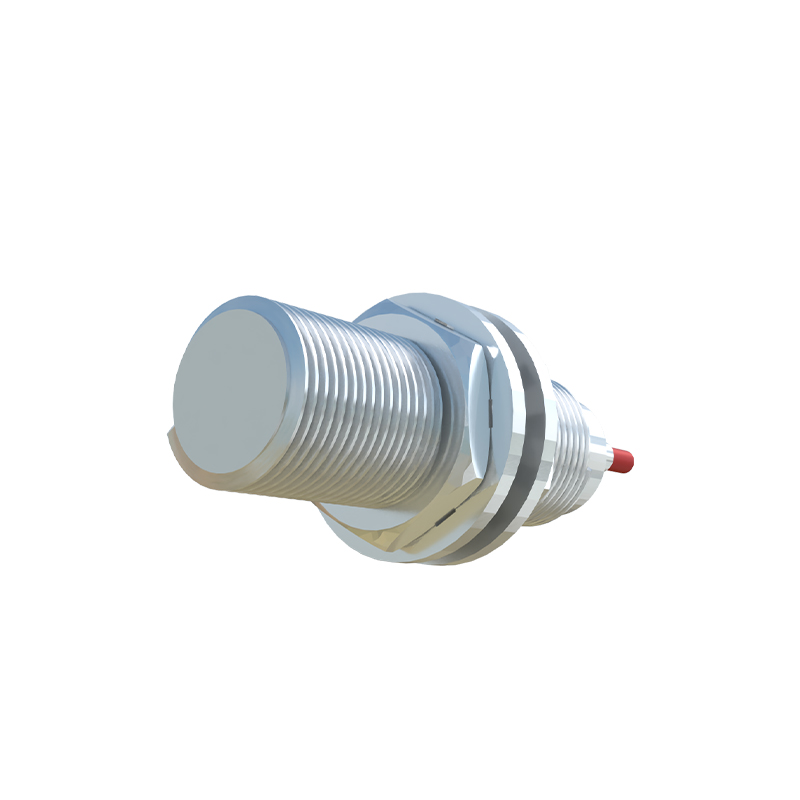
The operation hinges on the precise modulation and reception of light. A driver circuit powers the laser diode, emitting a pulsating or continuous beam. When this beam strikes a target within its sensing range, it is reflected back towards the sensor. A phototransistor or a photodiode, acting as the receiver, detects this reflected light. The sensor's internal circuitry then processes this signal. The key measurement is often the time-of-flight (ToF) or the phase shift of the modulated light, which is directly proportional to the distance to the target. This method allows for exact distance measurement, not just presence detection. Advanced models utilize triangulation, where the position of the reflected spot on a linear sensor array changes with distance, providing even higher accuracy for displacement measurement. The laser's coherence ensures the beam remains narrow over long distances, minimizing dispersion and enabling precise detection points.
Key Advantages in Industrial Applications
The deployment of laser diode proximity sensors brings numerous technical benefits. Their primary advantage is the exceptional sensing range and spot size accuracy. They can detect objects as far as several meters away with a sub-millimeter resolution, far surpassing ultrasonic or infrared sensors. The response time is extremely fast, often in the microsecond range, which is critical for high-speed production lines and robotic positioning systems. Furthermore, they are largely immune to environmental factors like ambient light, thanks to modulated light signals and optical filters, and are unaffected by the electromagnetic interference that plagues inductive sensors. This reliability ensures stable operation in harsh industrial settings involving dust, vapor, or varying temperatures, provided they are housed in appropriately rated enclosures.
Critical Selection Parameters and Specifications
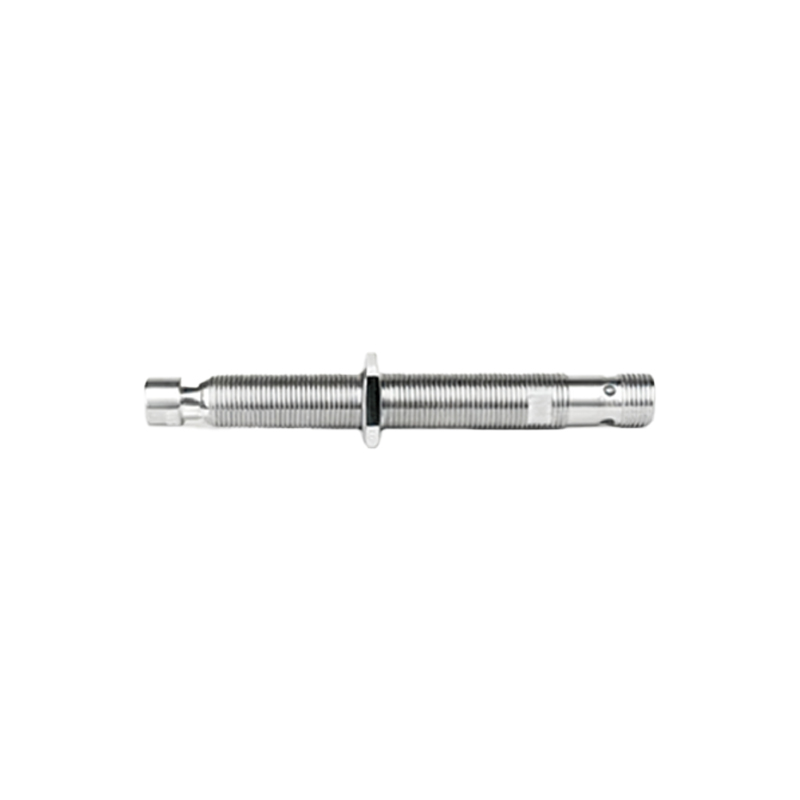
Selecting the appropriate sensor requires careful analysis of several technical specifications. The sensing range, both minimum and maximum, must match the application. The type of output (e.g., digital PNP/NPN, analog 0-10V, 4-20mA, or IO-Link) must be compatible with the control system. Beam spot size determines the minimum detectable object size; a smaller spot allows for finer detection. Repeatability, the sensor's ability to consistently detect an object at the same distance, is a crucial measure of precision. Environmental ratings such as IP67 or IP69K for dust and water ingress protection, and operating temperature ranges, are vital for durability. Engineers must also consider the laser class (typically Class 1 or 2, which are eye-safe under normal operating conditions) and any required approvals for specific industries.
Common Applications and Use Cases
These sensors are indispensable in modern automation. In packaging machinery, they precisely detect the presence and position of labels, flaps, and products on high-speed conveyors. Robotic arms use them for accurate bin-picking, part positioning, and collision avoidance. In semiconductor manufacturing, they measure wafer thickness and alignment with nanometer-level precision. They are also used for edge detection in web guiding systems, controlling the tension and alignment of materials like paper, film, or foil. Furthermore, in automotive assembly, they verify part presence, check gap dimensions between panels, and assist in autonomous guided vehicles (AGVs) for navigation and object avoidance, showcasing their adaptability across diverse technical challenges.
Installation, Alignment, and Calibration Best Practices
Proper installation is paramount for optimal performance. The sensor must be securely mounted to prevent vibration-induced errors. Alignment is critical; the laser beam must be perpendicular to the target surface for accurate distance measurement, or at the prescribed angle for retro-reflective or through-beam modes. Many sensors feature built-in alignment aids like visible red beams or alignment status LEDs. Calibration involves setting the sensing window or teaching-in the reference distance for switching points. Engineers should avoid mounting sensors facing highly reflective or absorbent surfaces directly, as these can cause false readings. Regular maintenance includes cleaning the