Introduction to Proximity Sensing Technology
Proximity sensors are fundamental components in modern industrial automation, providing non-contact detection of objects within a defined range. Among the various types available, inductive proximity sensors stand out for their reliability in detecting metallic targets. The TH-310 series represents a robust and versatile line of inductive proximity sensors engineered for demanding industrial environments. These sensors operate on the principle of electromagnetic induction, generating an oscillating electromagnetic field. When a metallic object enters this field, eddy currents are induced on the object's surface, causing a change in the oscillation amplitude. This change is detected by the sensor's circuitry, which subsequently triggers a solid-state output signal. This non-contact method of detection eliminates mechanical wear, ensures high operational speed, and offers exceptional longevity compared to mechanical limit switches.
Key Features and Technical Specifications of the TH-310
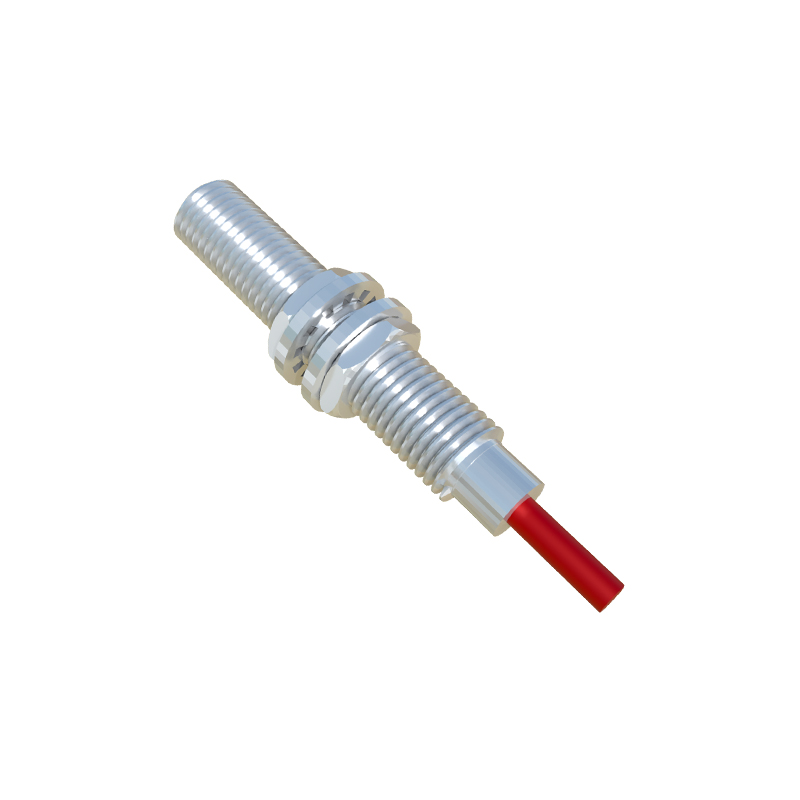
The TH-310 proximity sensor is designed with a focus on durability and performance. It typically features a sturdy nickel-plated brass or stainless-steel housing, providing excellent resistance to corrosion, oils, and coolants commonly found in manufacturing settings. A key specification is its sensing distance, which is precisely calibrated and non-adjustable to ensure consistent performance. Common models offer standard sensing ranges, such as 5mm, 8mm, or 10mm. The TH-310 is often available in both Normally Open (NO) and Normally Closed (NC) output configurations, offering flexibility in control logic design. It operates on a wide range of DC voltages (commonly 10-30V DC) and incorporates reverse polarity protection and short-circuit protection, safeguarding both the sensor and the connected control system from wiring errors. The output is typically a 3-wire configuration (brown for +V, blue for 0V, and black for the switched output) with an LED status indicator for easy diagnostics.
Installation and Wiring Considerations
Proper installation is critical for optimal performance of the TH-310 sensor. It is essential to maintain the specified mounting clearances. Inductive sensors require a metal-free zone around the sensing face and the sides of the barrel to prevent false triggering. The sensor should be mounted securely using the provided locknut, ensuring it is not over-tightened to avoid damaging the housing. When wiring, always refer to the manufacturer's datasheet for the specific model. For a standard 3-wire DC sensor, connect the brown wire to the positive DC supply, the blue wire to the negative or common, and the black wire to the load (e.g., a PLC input module). The load is then connected back to the positive supply. Ensuring clean, secure connections and using shielded cable in electrically noisy environments can significantly enhance signal integrity and system reliability.
Application Scenarios in Industrial Automation
The TH-310 finds extensive use across numerous industrial sectors due to its robustness. In automotive assembly lines, it is employed for part presence verification, such as detecting if an engine block is correctly positioned on a conveyor pallet. In metal machining centers, these sensors are used for tool breakage detection, end-of-travel limits on slides, and monitoring the position of robotic arms. Packaging machinery utilizes them to count metallic items, detect foil seals, or confirm the closed position of a metallic door or guard. Their sealed construction (often meeting IP67 standards) makes them suitable for washdown areas in food and beverage processing. Essentially, any application requiring reliable, high-speed detection of ferrous or non-ferrous metals without physical contact is a potential use case for the TH-310 sensor.
Troubleshooting Common Issues
Despite their reliability, issues can arise. A frequent problem is failure to detect a target. This can be caused by the target being outside the specified sensing range, using a non-metallic target, or the sensing face being dirty or coated with material like metal shavings. Cleaning the face often resolves this. If the sensor's LED indicator is on but no signal reaches the controller, check the wiring connections, the load, and the power supply voltage. False triggering is another common issue, usually resulting from insufficient mounting clearance, electrical interference from nearby motors or welding equipment, or the presence of other metal objects in the sensing field. Increasing the distance from interfering metals or using a sensor with a shielded face design can mitigate this. Always consult the technical manual for specific diagnostic procedures.
Advantages Over Alternative Sensing Methods
Compared to other sensing technologies, the TH-310 inductive proximity sensor offers distinct benefits. Unlike photoelectric sensors, it is virtually immune to ambient light conditions, dust, fog, or dirt that can obstruct a light beam. It outperforms mechanical limit switches by offering a much longer operational life, higher switching frequencies (often in