Introduction to Inductive Proximity Sensors
Inductive proximity sensors are non-contact electronic devices designed to detect metallic objects within their sensing range. Operating on the principle of electromagnetic induction, these sensors generate an oscillating electromagnetic field from a coil. When a metallic target enters this field, eddy currents are induced in the object, causing a change in the oscillation amplitude or frequency. This alteration is detected by the sensor's circuitry, triggering an output signal. Known for their robustness, reliability, and insensitivity to environmental factors like dust, oil, or moisture, inductive sensors are indispensable in industrial automation, manufacturing, and material handling systems. Their ability to function without physical contact ensures minimal wear and tear, leading to long operational lifespans and reduced maintenance needs.
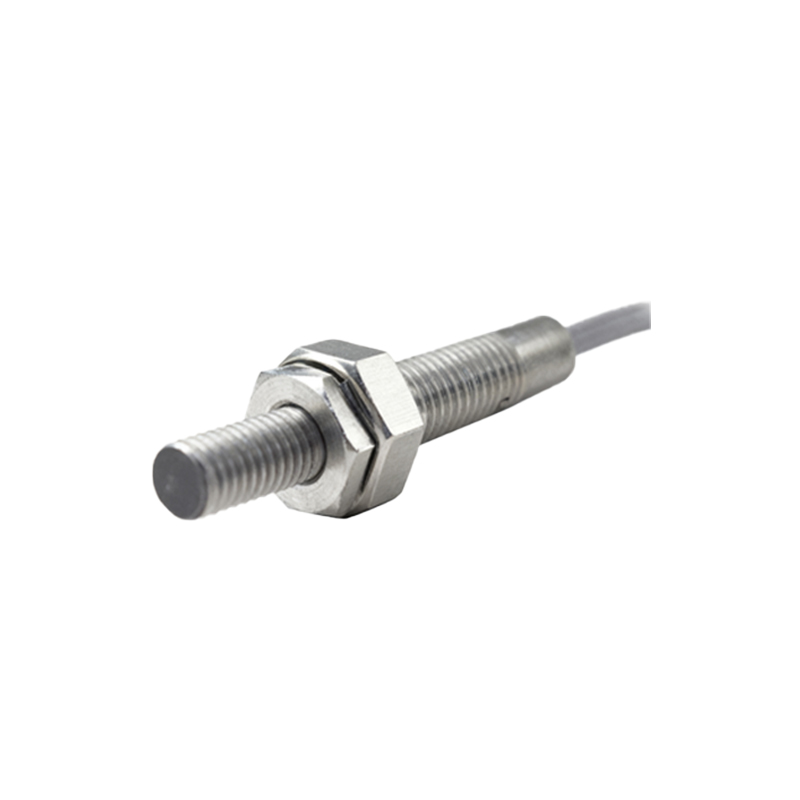
Defining Medium to Long Sensing Ranges
In the context of inductive proximity sensors, "medium to long range" typically refers to detection distances beyond the standard short-range models, which often cover only a few millimeters. Medium-range sensors generally offer sensing distances from approximately 10 mm to 30 mm, while long-range variants can detect objects from 30 mm up to 70 mm or more, depending on the specific design and target material. These extended ranges are achieved through optimized coil designs, enhanced oscillator circuits, and sometimes the incorporation of ferrite cores to concentrate the magnetic field. The selection of range depends heavily on application requirements, such as the need to detect larger objects, maintain a safety gap, or accommodate varying installation positions. It is crucial to note that the rated sensing distance is specified for a standard mild steel target; detection ranges for other metals like aluminum, copper, or stainless steel may differ due to variations in electrical conductivity and magnetic permeability.
Key Technologies and Design Innovations
Advancements in technology have significantly expanded the capabilities of medium to long-range inductive sensors. One critical innovation is the development of factor-1 sensors, which provide a consistent sensing range regardless of the target metal type—be it steel, aluminum, or copper. This is accomplished through sophisticated calibration and compensation algorithms within the sensor's electronics. Additionally, the integration of ASICs (Application-Specific Integrated Circuits) allows for more compact designs with improved noise immunity and temperature stability. Housing materials, such as nickel-plated brass or stainless steel, are engineered to withstand harsh industrial environments, including exposure to coolants, vibrations, and mechanical impacts. Some models feature teach-in functionality or programmable output modes, enabling easy setup and adaptation to different operational conditions without hardware modifications.
Application Scenarios in Industry
Medium to long-range inductive proximity sensors are deployed across diverse sectors. In automotive assembly lines, they monitor the position of vehicle frames or components on conveyors over greater distances, ensuring precise alignment. In packaging machinery, these sensors detect the presence of metallic containers or lids on high-speed production lines, facilitating accurate counting and sorting. Material handling systems, such as crane and forklift operations, utilize them for position feedback and collision avoidance, where detecting large metallic structures from a safe distance is paramount. Furthermore, in metalworking and stamping presses, they serve as safety devices to confirm the absence or presence of metal sheets before a cycle begins, preventing equipment damage. Their extended range allows for flexible mounting, reducing installation complexity and improving system layout efficiency.
Selection Criteria and Installation Guidelines
Choosing the appropriate medium to long-range inductive sensor requires careful consideration of several parameters. First, the nominal sensing distance must accommodate the application's maximum required gap, typically selecting a sensor with a rated range 10-20% greater than the actual working distance to account for tolerances. The target material and size also influence performance; larger targets or those with higher magnetic permeability generally enhance detection reliability. Environmental conditions, such as ambient temperature, presence of other metals (which can cause shielding effects), and potential chemical exposure, dictate the required ingress protection (IP) rating and housing material. Electrical specifications, including supply voltage, output type (PNP/NPN, analog, or IO-Link), and switching frequency, must match the control system. During installation, maintaining adequate clearance from surrounding metal objects—as per the manufacturer's guidelines—is essential to prevent false triggering. Regular testing with the actual target under operational conditions ensures optimal performance and longevity.
Future Trends and Developments
The evolution of inductive proximity sensors continues to align with Industry 4.0 and smart manufacturing trends. Future models are expected to incorporate enhanced connectivity features, such as integrated IO-Link interfaces, enabling real-time data exchange on parameters like sensor health, temperature, and switch point deviations for predictive maintenance. Miniaturization efforts aim to deliver longer sensing ranges in smaller form factors, expanding installation possibilities in compact machinery. Energy-efficient designs