Introduction to AGV Photoelectric Sensors
Automated Guided Vehicles (AGVs) represent a cornerstone of modern material handling and logistics automation. At the heart of their operational intelligence and safety lie photoelectric sensors, sophisticated devices that serve as the primary "eyes" of these mobile robots. These sensors emit light beams, typically infrared, laser, or visible light, and detect changes in the received light to sense the presence, absence, distance, or position of objects. Unlike mechanical contact switches, photoelectric sensors offer non-contact detection, which is crucial for the high-speed, precise, and reliable operation required in dynamic industrial environments. Their ability to function accurately over varying distances and in challenging conditions makes them indispensable for AGV navigation, load handling, obstacle detection, and safety interlocking.
Core Operating Principles and Technologies
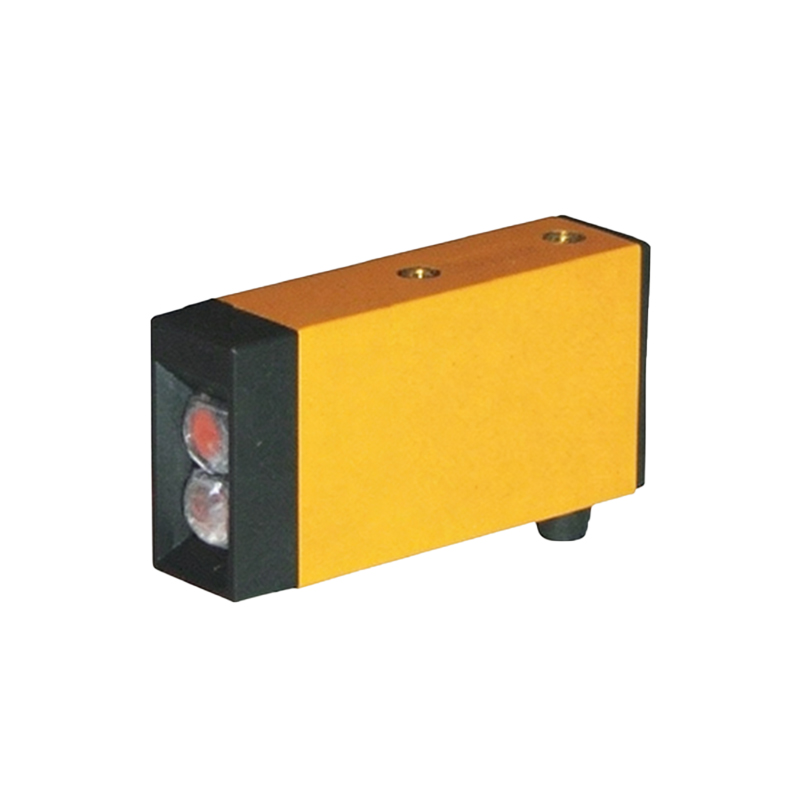
The fundamental principle behind photoelectric sensors involves a light emitter and a receiver. The emitter projects a light beam, and the receiver detects the intensity of the returning or received light. Disruptions or changes in this light pattern are interpreted as a detection event. For AGVs, several specific technologies are prevalent. Through-beam sensors, with separate emitter and receiver units, offer the longest sensing ranges and highest reliability, ideal for precise position verification at docking stations. Retro-reflective sensors use a reflector to bounce the beam back to a combined emitter/receiver unit, suitable for path following and detecting reflective tape on floors. Diffuse or proximity sensors rely on light reflected directly from the target object, making them perfect for obstacle detection at short ranges around the AGV's perimeter. More advanced versions, like background suppression and time-of-flight (ToF) sensors, provide precise distance measurement, enabling AGVs to maintain specific follow distances or detect the height of loads on racks.
Critical Roles in AGV Navigation and Guidance
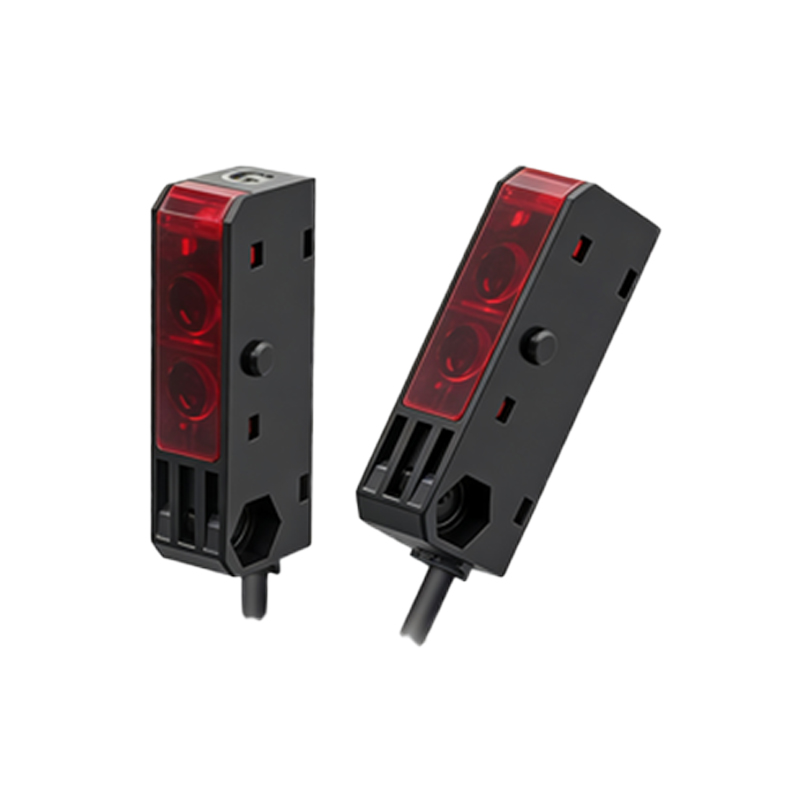
Photoelectric sensors are integral to multiple guidance systems. In traditional tape-guided AGVs, an array of diffuse sensors constantly scans the floor for the reflective tape path. Any deviation in the sensor signal triggers corrective steering actions. In laser navigation (LiDAR), rotating laser sensors measure the time it takes for pulses to reflect off fixed landmarks, creating a precise real-time map for localization. For inertial and natural feature guidance, photoelectric sensors work in tandem with other systems to verify position by detecting fixed points in the facility. Furthermore, they are crucial for precise stopping and alignment at pick-up/drop-off points, charging stations, and elevator interfaces, ensuring millimeter-level accuracy for automated loading and unloading processes.
Ensuring Safety and Collision Avoidance
Safety is paramount for AGVs operating alongside human workers and other machinery. Photoelectric sensors form the backbone of the AGV's safety-rated protective field. Safety laser scanners, a specialized category of photoelectric sensors, are mounted on the AGV to continuously monitor the area in front and to the sides. They create two-dimensional protective fields: a warning zone and a stricter safety zone. If a person or object enters the warning zone, the AGV may slow down. An intrusion into the safety zone triggers an immediate stop. These sensors are certified to stringent safety standards (e.g., SIL 2/PLe according to IEC 62061/ISO 13849) and are fail-safe, ensuring reliable operation even in the event of a component failure.
Challenges and Environmental Considerations
Industrial environments present significant challenges for optical sensing. Dust, fog, oil mist, and intense ambient light from welding or sunlight can interfere with light beams, causing false triggers or missed detections. Modern AGV photoelectric sensors are engineered to combat these issues. They feature robust housings (often IP67 or higher), use modulated infrared light to ignore ambient light, and incorporate diagnostic LEDs to indicate lens contamination. For critical applications, sensors with "teach-in" functionality can be programmed to ignore fixed background objects. Regular maintenance, primarily lens cleaning, is essential to maintain optimal performance and prevent costly system downtime or safety incidents.
Integration with AGV Control Systems
Photoelectric sensors do not operate in isolation. They are intelligent peripherals connected to the AGV's main Programmable Logic Controller (PLC) or onboard computer via digital I/O or industrial networks like IO-Link, PROFINET, or EtherNet/IP. IO-Link, in particular, offers significant advantages by enabling bidirectional communication. It allows for remote parameter setting, continuous condition monitoring, and detailed diagnostic data transmission (e.g., signal strength, internal temperature). This integration facilitates predictive maintenance, faster troubleshooting, and seamless adaptation of sensor parameters for different tasks, enhancing the overall flexibility and intelligence of the AGV fleet.
Future Trends and Advancements
The evolution of AGV photoelectric sensors is closely tied to advancements in Industry 4.0 and mobile robotics. Future trends point towards greater miniaturization, higher precision, and enhanced intelligence. The integration of 3D vision sensors and solid-state LiDAR will provide richer environmental perception, enabling more complex navigation in unstructured spaces. Increased use of multi-pixel technology allows single sensors to detect multiple objects simultaneously along the beam path. Furthermore, the convergence of sensing and edge computing will lead to "smart sensors" capable of pre-processing data and making simple decisions locally, reducing the computational load on the central AGV controller and enabling faster reaction times.