Introduction to Proximity Sensor Detection Principles
Proximity sensors are widely used in industrial automation for non-contact detection of objects. The most common types are inductive, capacitive, and photoelectric sensors. Inductive proximity sensors, in particular, are fundamental for detecting metallic objects. They operate by generating an electromagnetic field. When a metallic object enters this field, eddy currents are induced on the object's surface. This causes a change in the oscillation amplitude within the sensor's coil, which is then processed by the sensor's circuitry to trigger an output signal. This principle is highly effective for ferrous metals like iron and steel.
The Aluminum Detection Challenge
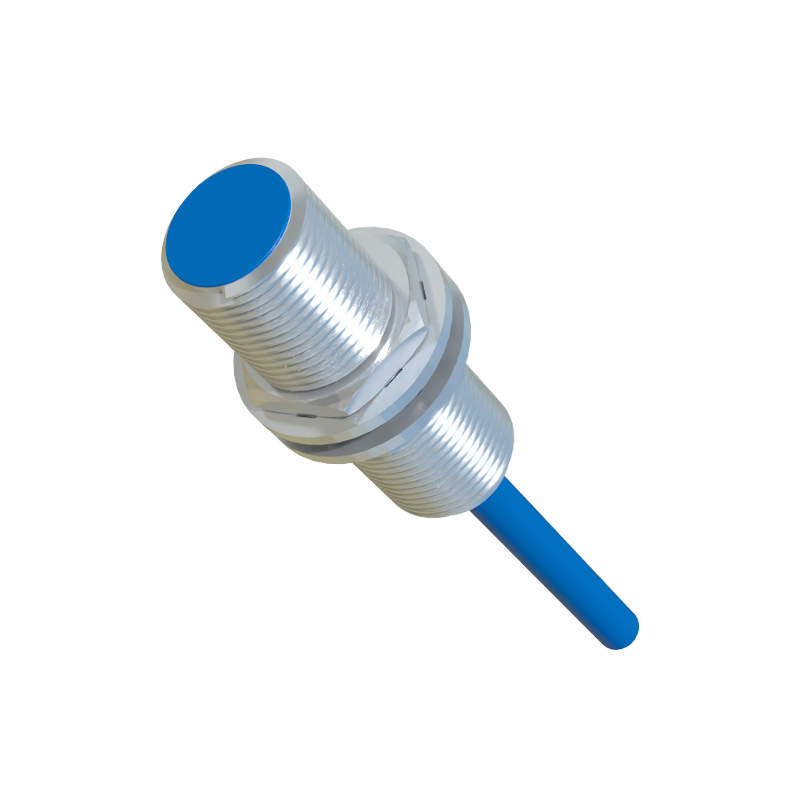
A common question in industrial settings is whether standard inductive proximity sensors can reliably detect aluminum. The straightforward answer is yes, but with significant caveats and reduced performance. Aluminum is a non-ferrous metal, meaning it is not magnetic. While it is conductive, its electrical conductivity and magnetic permeability differ greatly from those of ferrous metals. The eddy currents induced in aluminum are different in magnitude and behavior compared to iron. Consequently, the damping effect on the sensor's electromagnetic field is weaker. This results in a substantially reduced sensing range for aluminum when using a standard inductive sensor designed for steel. The effective sensing distance for aluminum can be as low as 30% to 40% of the rated sensing distance for steel.
Key Factors Influencing Detection
Several critical factors influence the detection capability and reliability for aluminum targets. First, the alloy composition and grade of the aluminum play a major role. Pure aluminum and various alloys (e.g., 6061, 7075) have different electrical conductivities, directly impacting the sensor's response. Second, the target size and thickness are crucial. The target must be large enough and sufficiently thick to absorb the sensor's field energy; thin foil or small pieces may not be detected reliably. Third, surface condition matters. Oxidation, anodizing, painting, or coating on the aluminum surface can act as an insulating barrier, severely degrading or completely preventing detection by standard inductive sensors.
Sensor Technology and Material Selection
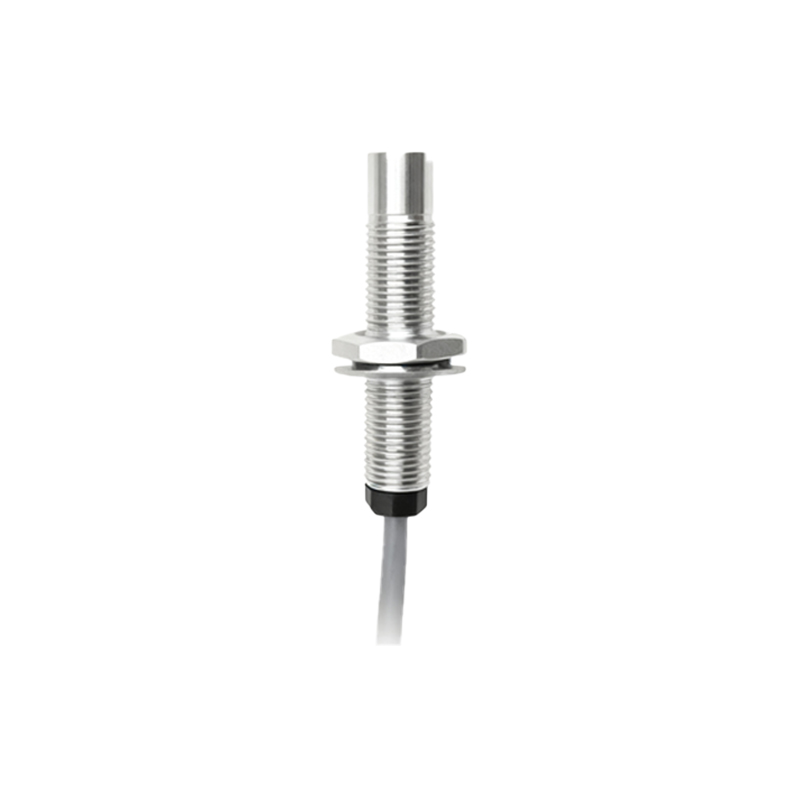
To overcome the challenges of detecting aluminum, specific sensor technologies and material selections are employed. Factor-1 rated inductive sensors are explicitly designed for detecting all metals, including non-ferrous ones like aluminum, copper, and brass. They maintain a consistent sensing range regardless of the target metal type, though this universal range is typically shorter than the optimized range of standard sensors for steel. Capacitive proximity sensors offer another solution. They detect any material that affects an electrostatic field, including metals, plastics, and liquids. They are excellent for detecting aluminum regardless of alloy or surface coating, but they can be more susceptible to environmental interference like humidity. Ultrasonic sensors provide a non-contact option based on sound waves, making them material-agnostic and suitable for detecting aluminum objects of various shapes and surface conditions.
Optimizing Detection in Practical Applications
For engineers integrating these systems, practical optimization is key. When using standard inductive sensors, it is essential to derate the sensing distance. Always refer to the sensor's datasheet, which provides reduction factors (e.g., 0.3 to 0.4 for Al). Ensure the aluminum target is at least equal to the sensor's face diameter and has adequate thickness. For coated aluminum, consider using a capacitive sensor or a specialized "non-ferrous" inductive model. Shielded (flush-mountable) sensors have a more focused electromagnetic field and may perform slightly more predictably with aluminum in tight spaces, though their range is inherently shorter. Proper mounting, stable power supply, and environmental protection from chips, coolants, or vibrations are equally important for reliable operation.
Conclusion and Best Practices
In summary, proximity sensors can detect aluminum, but standard inductive sensors face limitations in range and reliability due to aluminum's material properties. The detection is influenced by alloy type, target geometry, and surface conditions. For consistent and robust aluminum detection, selecting the right sensor technology—such as Factor-1 inductive, capacitive, or ultrasonic sensors—is paramount. Best practices involve careful consultation of manufacturer specifications, rigorous testing with the actual application material and conditions, and considering environmental factors. By understanding these principles and selecting appropriate hardware, engineers can ensure reliable aluminum detection in automated systems, from conveyor lines to robotic pick-and-place operations.