Introduction to Photoelectric Sensor Nomenclature
In the complex landscape of industrial automation, photoelectric sensors are ubiquitous components. Their naming conventions, while often appearing as cryptic strings of letters and numbers, are systematic and information-rich. Understanding these codes is crucial for engineers, technicians, and procurement specialists to ensure correct selection, integration, and replacement. This standardized nomenclature, developed by manufacturers to convey key specifications succinctly, typically encodes information about the sensing mode, output type, housing style, connection method, and special features. A mastery of this "language" streamlines workflows and minimizes errors in system design and maintenance.
Decoding the Core Sensing Principles
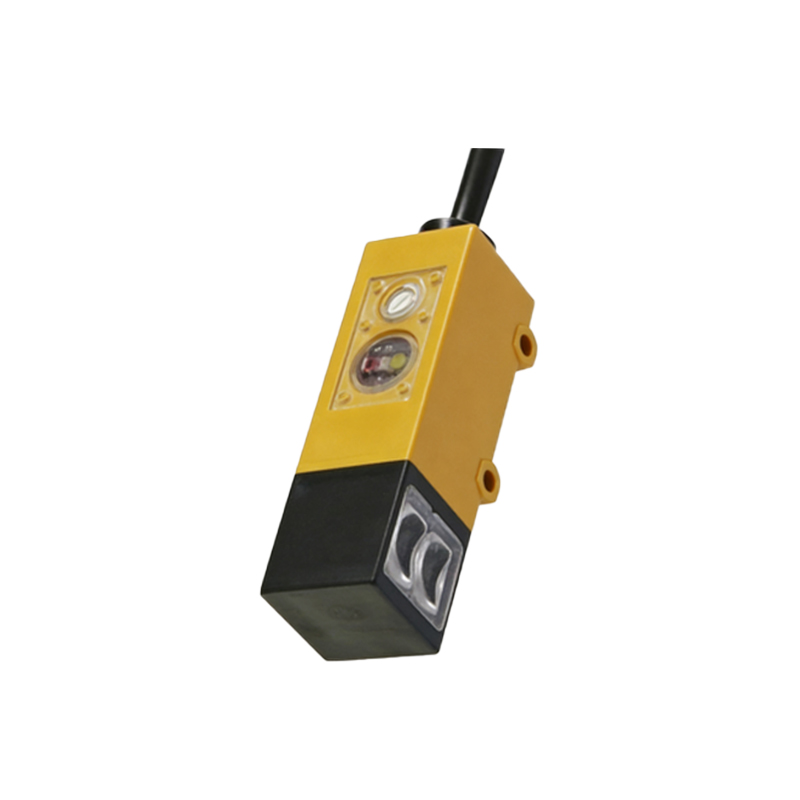
The prefix or initial segment of a sensor's part number almost always indicates its fundamental operating principle. Common designations include 'E3S' or 'PS' for general photoelectrics, but more critically, codes specify the sensing mode. 'Thru-beam' sensors, where the emitter and receiver are separate units, might be denoted by 'B' or 'TB'. 'Retro-reflective' models, which bounce light off a reflector, often use 'R' or 'RR'. 'Diffuse-reflective' (or proximity) sensors, which detect light reflected directly from the target, are frequently labeled with 'D' or 'DR'. Some advanced families use prefixes like 'EX' for background suppression types or 'GL' for precise, focused-gloss sensors. This first piece of the puzzle defines the sensor's basic application geometry.
Output Configuration and Electrical Characteristics
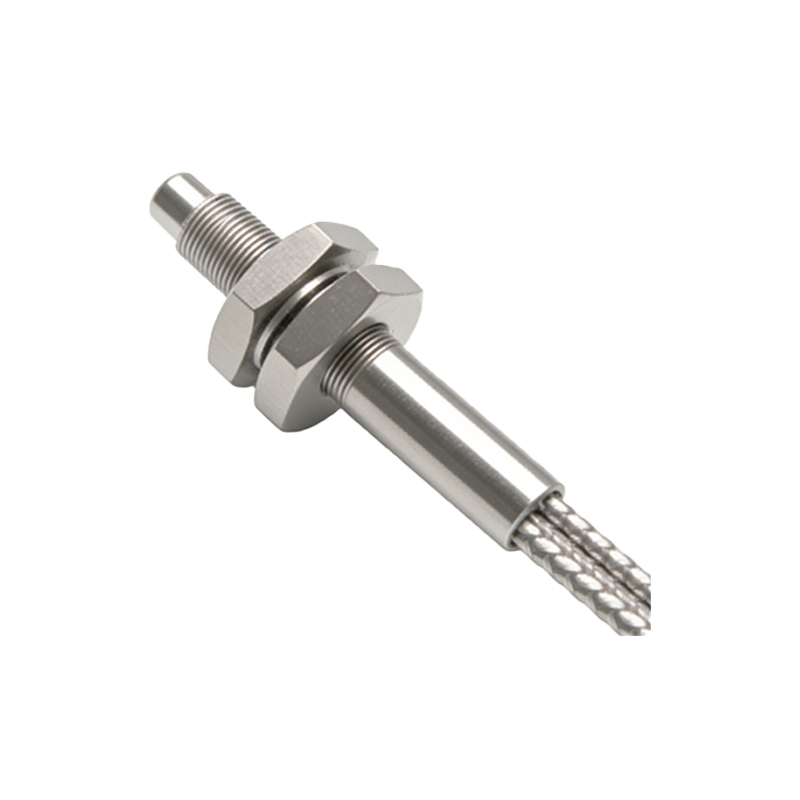
Following the sensing mode, the next critical element is the output type. This is typically represented by a one or two-character code. 'N' or 'NPN' signifies a sinking output (load connected to positive voltage), prevalent in many regions. 'P' or 'PNP' indicates a sourcing output (load connected to common negative). 'A' might denote an analog output (e.g., 0-10V or 4-20mA), while 'Y' could represent relay or dual-output configurations. Additionally, codes may specify the output function: 'NO' for normally open, 'NC' for normally closed, or 'C' for changeover contacts. The voltage range (e.g., 10-30V DC) is sometimes implied by the output series or explicitly stated in the datasheet referenced by the model number.
Housing Form Factor and Beam Characteristics
The physical design of the sensor is another key encoded parameter. Cylindrical housings are common, with their diameter (e.g., M12, M18, M30) often part of the number. Rectangular or block-style sensors have their own series codes. The material, such as metal ('M') or plastic ('P'), may be indicated. Furthermore, the light source type is a vital specification. 'R' often stands for red visible LED, 'G' for green, 'IR' for infrared, and increasingly, 'L' for laser diode for highly precise applications. The beam type, such as polarized light for retro-reflective sensors rejecting shiny targets, might be signified by a 'P' suffix.
Connection Methodology and Special Function Indicators
How the sensor interfaces with the control system is detailed in the naming string. Codes like 'C' or 'CONN' may indicate a built-in connector (e.g., M8 or M12), while 'L' or 'LEAD' specifies a pre-wired cable outlet of a certain length and type. '2M' would explicitly note a 2-meter cable. The latter part of the model number often highlights special features or certifications. 'E' or 'IP67' denotes ingress protection ratings. 'Q' might indicate a quick-disconnect feature. 'F' could signify a fiber optic model. Safety-rated sensors for guarded applications carry distinct prefixes like 'F3S' or 'ES'. Understanding these suffixes ensures the selected sensor meets environmental and functional safety requirements.
Practical Application and Cross-Referencing
In practice, a complete model number like PSD-30N-P-C2 can be dissected: 'PSD' could be a diffuse sensor series, '30' might imply 30mm sensing distance or housing, 'N' for NPN output, 'P' for PNP? (Caution: this is an example; always consult the specific manufacturer's guide). This highlights the most critical rule: while conventions share similarities, they are not universal. Each major manufacturer (e.g., Omron, Keyence, Sick, Banner) has its own proprietary system. Therefore, the essential final step is always to refer to the manufacturer's official catalog or datasheet. These documents provide the definitive decoder key for their specific product lineage, ensuring accurate interpretation and preventing costly mismatches in the field.
Conclusion: The Value of Standardized Codes
Photoelectric sensor naming conventions serve as a compact technical datasheet. They are not arbitrary but a structured language designed for precision and efficiency in industrial communication. By investing time to learn the general patterns and, more importantly, the specific lexicon of the brands used in your facility, engineering and maintenance teams can dramatically improve procurement accuracy, troubleshooting speed, and system documentation. This knowledge transforms a seemingly random string of characters into a clear blueprint of the sensor's capabilities and physical attributes.