Understanding Capacitive Sensing Fundamentals
Capacitive proximity sensors operate by generating an electrostatic field. When a target object enters this field, it alters the capacitance between the sensor's electrode and ground. The sensor's internal circuitry detects this change, triggering an output signal. The core components consuming power are the oscillator generating the field, the signal conditioning circuitry, and the output stage (typically a solid-state switch or analog amplifier). Unlike inductive sensors, capacitive types must often penetrate non-conductive materials or sense conductive ones, sometimes requiring a more robust field, which has direct implications for energy use. The baseline power draw is intrinsically linked to the oscillation frequency and the current needed to charge and discharge the sensing electrode's capacitance.

Key Factors Influencing Power Draw
Several critical parameters dictate the power consumption of a capacitive proximity sensor. Operating voltage range is primary; a sensor specified for 10-30V DC will typically draw a relatively constant current, meaning power (P=VI) increases linearly with voltage. Sensor size and sensing range also play a major role. A larger sensor face or a longer nominal sensing distance requires a more extensive electrostatic field, demanding more energy from the oscillator. The output type is another significant factor. A standard two-wire DC sensor consumes a residual current (leakage) even when off, and a higher sink/source current when active. Three-wire and four-wire models, with separate supply and output lines, often have lower static quiescent currents. Finally, switching frequency—how often the target is detected and the output toggles—adds dynamic load, especially for outputs driving substantial loads.
Analyzing Static vs. Dynamic Power Consumption
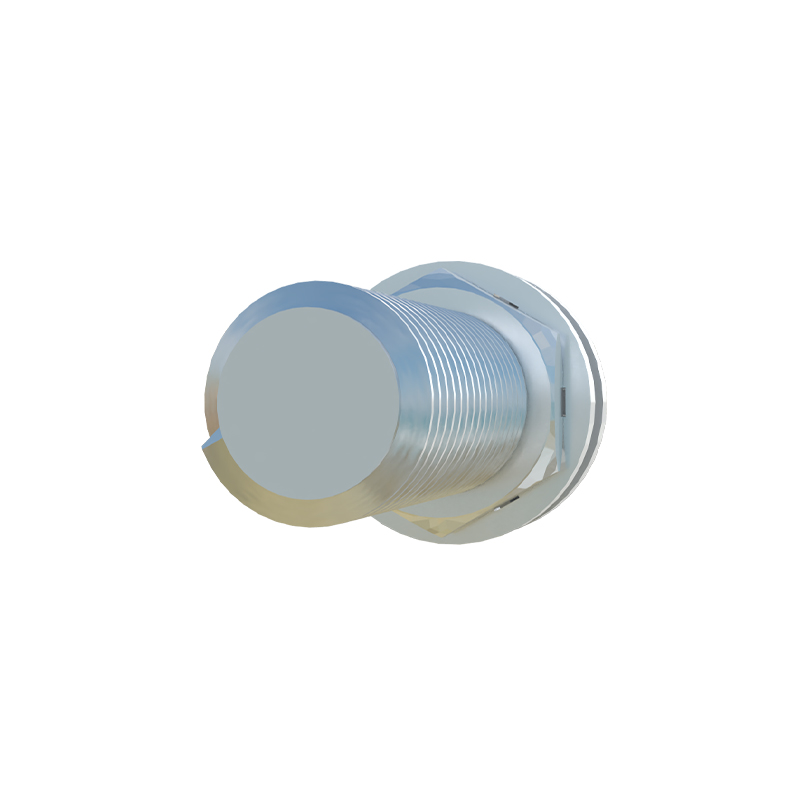
Power consumption can be divided into static (quiescent) and dynamic components. Static consumption refers to the current drawn when the sensor is powered but no target is present, and the output is in its idle state. This covers the minimal operation of the oscillator and detection circuitry. Dynamic consumption adds the power used when the output switches state (a brief surge) and when it sustains the new state (e.g., powering a load). In pulsed or duty-cycled operation modes, dynamic consumption becomes intermittent. For battery-powered applications, the average power consumption, calculated over time considering both static and dynamic phases, is the most critical metric, not the peak instantaneous draw.
Impact of Circuit Design and Technology
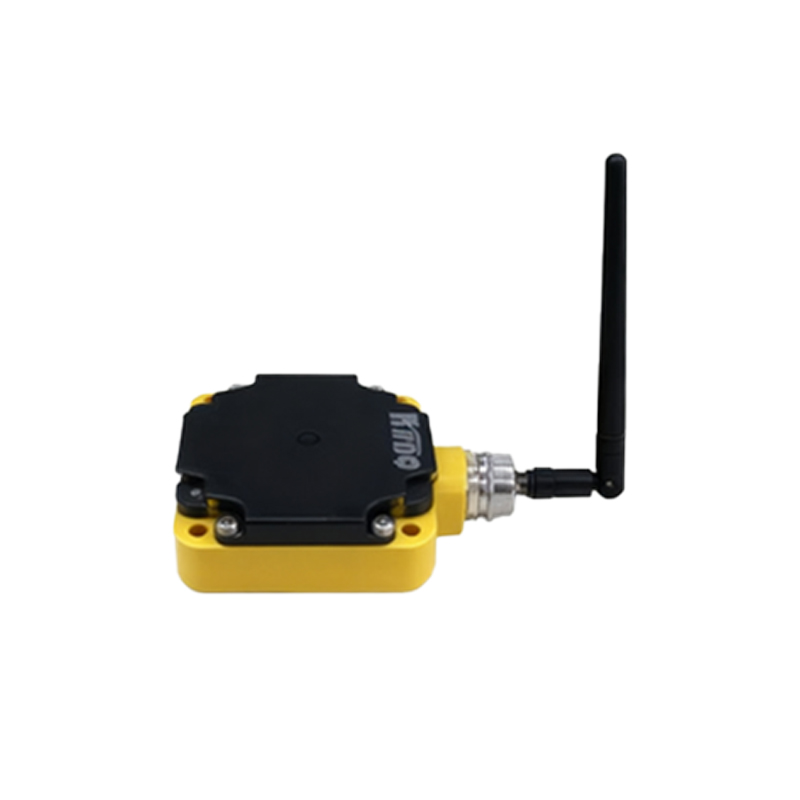
Modern capacitive sensors leverage advanced integrated circuits (ICs) and design techniques to minimize power. Micro-power oscillators, low-leakage semiconductors, and efficient power regulation are standard. Some sensors incorporate adaptive sensing algorithms. Instead of emitting a continuous field, they pulse the oscillator at intervals, significantly reducing average current. The choice of housing material and shield design also affects efficiency. A properly designed guard ring or shield focuses the electrostatic field, reducing stray capacitance and the energy required to establish a usable sensing field. These technological refinements directly translate to lower wattage on the nameplate.
Comparative Analysis with Other Sensor Types
When evaluating system power budgets, it's instructive to compare capacitive sensors with alternatives. Inductive proximity sensors, for similar sensing ranges, often have comparable or slightly lower power consumption as they interact only with conductive metals and can use optimized coil designs. Ultrasonic sensors, with their need to drive a piezoelectric transducer, generally consume significantly more power. Photoelectric sensors fall in a broad range; simple diffuse models may be low-power, but long-range or background-suppression models with powerful LEDs can rival or exceed capacitive sensor consumption. The capacitive sensor's advantage lies not in being the absolute lowest power, but in providing material-agnostic sensing at a reasonable, often predictable, energy cost.
Strategies for Minimizing Energy Usage
Engineers can implement several strategies to reduce the power footprint of capacitive sensors in an application. First, select a sensor with the smallest feasible sensing range and face size for the task. Second, operate the sensor at the lower end of its rated voltage supply when possible. Third, utilize sensors with programmable features like a sleep mode or adjustable response time, slowing the sampling rate to the minimum acceptable. Fourth, in multi-sensor systems, consider multiplexing or staggering activation to avoid simultaneous high-current draws. Finally, ensure proper installation—correct mounting, adequate clearance from conductive surroundings, and a stable power supply—to prevent the sensor from operating inefficiently or oscillating unnecessarily.
Measurement and Specification Interpretation
Accurately assessing power consumption requires careful reading of datasheets. Key specifications include: Quiescent current (I_q) or Off-state current, On-state current, and Maximum current consumption. These are typically given in milliamperes (mA) at a