Understanding Reflective Photoelectric Sensing
Reflective photoelectric sensors, often referred to as photoplethysmography (PPG) sensors, have become a cornerstone technology in non-invasive physiological monitoring. At its core, this technology operates on a simple yet powerful principle: it emits light, typically from a light-emitting diode (LED), onto a biological tissue—most commonly the skin on a wrist or fingertip. A portion of this light is absorbed by the tissue, bone, and, critically, by the blood flowing in the capillaries and arteries. The remaining light is scattered and reflected back towards a photodetector positioned adjacent to the light source. The key variable is blood volume, which pulsates with each heartbeat. During systole, when the heart contracts, blood volume in the peripheral vessels increases slightly, leading to greater light absorption. Conversely, during diastole, blood volume decreases, resulting in more light being reflected back. The photodetector captures these minute, rhythmic variations in reflected light intensity, generating a waveform known as a photoplethysmogram. This analog signal is then amplified, filtered, and processed by algorithms to extract the heart rate in beats per minute (BPM) and often other parameters like heart rate variability (HRV).
Key Components and Sensor Design
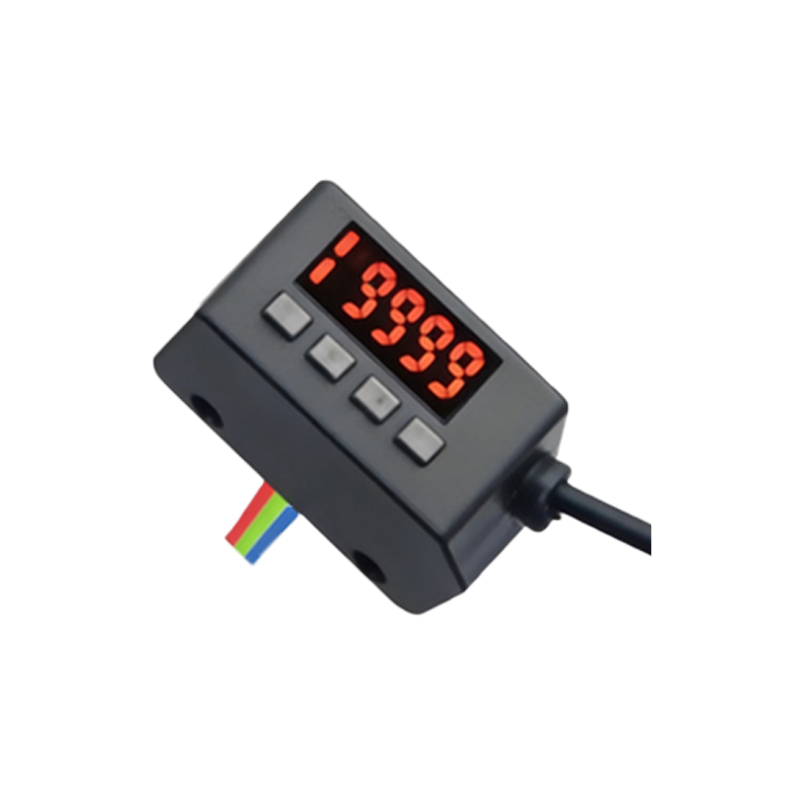
The efficacy of a heart rate monitoring system hinges on the precise engineering of its photoelectric components. The light source is paramount; green LEDs (wavelength ~530nm) are currently favored for wrist-based applications because green light is absorbed well by oxygenated hemoglobin and has a good penetration depth for superficial capillaries, offering a strong signal-to-noise ratio. Infrared and red LEDs are also used, particularly in clinical fingertip pulse oximeters for measuring blood oxygen saturation (SpO2) alongside heart rate. The photodetector, usually a photodiode or phototransistor, must be highly sensitive to detect the weak reflected signal, which is often less than 1% of the emitted light. Optical design is critical to minimize direct "optical crosstalk" from the LED to the detector without passing through tissue, which would swamp the physiological signal. This involves careful placement, shielding, and sometimes the use of optical barriers or lenses. Furthermore, the entire sensor assembly must be designed to maintain consistent skin contact and exclude ambient light, which is a significant source of noise. Modern wearable devices integrate these optical components with accelerometers and sophisticated digital signal processors (DSPs) to perform motion artifact cancellation, distinguishing the pulse signal from noise generated by movement.
Signal Processing and Algorithmic Challenges
The raw signal from the photodetector is far from a clean, textbook pulse wave. It is contaminated with noise from various sources: motion artifacts (the biggest challenge in wearable devices), ambient light changes, respiration, and even subtle changes in skin contact. Therefore, advanced signal processing is the true engine of reliable heart rate monitoring. The analog signal first undergoes filtering (high-pass to remove DC offset from tissue, low-pass to remove high-frequency noise). After analog-to-digital conversion, digital filters and adaptive algorithms take over. Time-domain analysis might involve peak detection on the smoothed waveform. Frequency-domain analysis, such as Fast Fourier Transform (FFT), is often used, especially in conjunction with accelerometer data. The accelerometer provides a frequency profile of the user's movement; the algorithm then identifies and isolates the frequency component in the PPG signal that corresponds to the heart rate and is not correlated with the motion noise. Machine learning algorithms are increasingly deployed to improve accuracy across a wider range of activities and skin tones, adapting to individual user physiology.
Applications in Consumer and Clinical Domains
The application of reflective photoelectric heart rate sensors has proliferated across a spectrum. In the consumer wellness and fitness domain, they are ubiquitous in smartwatches, fitness bands, and chest straps, providing continuous, real-time heart rate data for tracking exercise intensity, resting heart rate, and calorie expenditure. They enable features like workout auto-detection and recovery time estimation. In the clinical and telehealth sphere, their role is expanding significantly. They are integral to remote patient monitoring systems for individuals with cardiovascular conditions, allowing for the long-term tracking of heart rate trends and the detection of potential arrhythmias like atrial fibrillation. Wearable patches equipped with PPG sensors enable hospital-grade monitoring outside clinical settings. Furthermore, they form the optical component of the standard pulse oximeter, a vital tool in emergency medicine, anesthesiology, and managing respiratory illnesses. Research is also exploring their use in estimating blood pressure, cardiac output, and respiratory rate through advanced analysis of the PPG waveform morphology.
Advantages, Limitations, and Future Directions
The primary advantages of reflective photoelectric sensing for heart rate are its non-invasive nature, low cost, scalability, and suitability for continuous monitoring. It requires no electrodes or gels, is relatively comfortable for the user, and can be miniaturized effectively. However, engineers and clinicians must acknowledge its limitations. Accuracy can be compromised by significant motion, poor peripheral perfusion (e.g., in cold environments or for patients in shock), dark skin pigmentation (which absorbs more light), tattoos, and excessive body hair. It provides a peripheral pulse rate, which may not always perfectly match the electrical heart rate from an ECG in cases of certain arrhythmias. Future developments are focused on overcoming these hurdles. Multi-wavelength sensor arrays using several LED colors can improve accuracy across diverse skin tones and extract more physiological data. Improved optical designs, such as sensor fusion with bio-impedance, and more robust AI-driven algorithms promise greater resilience to motion artifacts. The integration of reflective PPG sensors into more discrete form factors (e.g., earphones, rings, and smart clothing) and their convergence with other biosensors point toward a future of seamless, comprehensive, and highly personalized health monitoring ecosystems.