In today's competitive industrial landscape, precision and reliability are paramount. Laser sensors have become indispensable tools across manufacturing, automation, logistics, and robotics, offering unparalleled accuracy in measurement, detection, and positioning. However, with a multitude of companies claiming to offer the best products, selecting the right supplier can be a daunting task. The question "Which company sells the best laser sensors?" is common, but the answer is rarely about a single "best" vendor. Instead, it hinges on finding the optimal partner whose capabilities align precisely with your specific application requirements, budget, and long-term operational goals.
The first step in this selection process is a thorough internal assessment. Clearly define your technical specifications. What is the required measuring range, resolution, and accuracy? Consider the environmental conditions: will the sensor face extreme temperatures, dust, vibration, or exposure to liquids? The type of output needed (analog, digital, IO-Link, Ethernet-based protocols) must integrate seamlessly with your existing control systems. Furthermore, the physical size and mounting options of the sensor are critical for installation in often space-constrained machinery. Without a clear understanding of these parameters, comparing suppliers becomes an exercise in comparing apples to oranges.
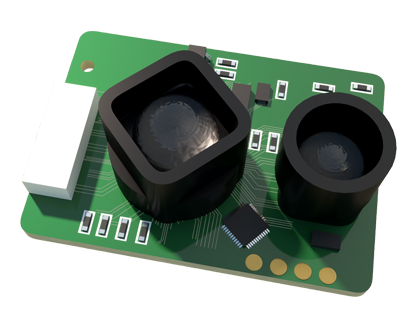
Once your requirements are solidified, evaluating potential suppliers involves several key pillars beyond just the product datasheet. Product quality and technological innovation sit at the core. Investigate the supplier's research and development investment. Do they offer a diverse portfolio, including 2D/3D profiling sensors, distance sensors, contrast sensors, and laser micrometers? A company with a broad and deep product line often possesses stronger core technology and can offer more tailored solutions. Look for certifications like ISO standards, which indicate a commitment to consistent manufacturing quality.
Technical support and customer service are arguably as important as the hardware itself. A superior laser sensor is of little value if you cannot get it to work correctly in your application. Assess the supplier's support structure. Do they offer comprehensive pre-sales consultation with application engineers who understand industrial challenges? Is post-sales support readily accessible, with knowledgeable staff who can troubleshoot issues? Availability of detailed documentation, software tools, SDKs for custom integration, and training resources are strong indicators of a supplier invested in customer success.
Reliability and proven performance in the field are non-negotiable. Seek out case studies, white papers, and testimonials from companies in your industry. How long has the supplier been in business? A long track record often correlates with product maturity and durability. Inquire about the Mean Time Between Failures (MTBF) data for their sensors. Furthermore, examine their global logistics and supply chain robustness. Can they guarantee consistent delivery and stable inventory, preventing costly production line stoppages? A supplier with a strong global presence typically has more resilient operations.

Finally, consider the total cost of ownership (TCO), not just the initial purchase price. A slightly more expensive sensor from a reputable supplier that offers higher reliability, longer lifespan, and exceptional support will almost always yield a lower TCO than a cheaper alternative prone to failures and downtime. Downtime in an automated factory can cost thousands per minute. Evaluate the warranty terms and the supplier's policy on repair or replacement.
In conclusion, identifying the best laser sensor supplier is a strategic decision. It requires moving beyond simple price comparisons and marketing claims. By meticulously defining your needs and rigorously evaluating suppliers on the pillars of product technology, application support, field reliability, and total cost of ownership, you can form a productive partnership. The right supplier will not only provide a high-quality sensor but will act as a valuable extension of your engineering team, ensuring your systems operate at peak efficiency and accuracy for years to come. Focus on finding this synergy, and you will have answered the question of "which one is good" for your unique situation.