Introduction to Infrared Proximity Sensors
Infrared proximity sensors are widely used in various applications, from consumer electronics to industrial automation. These sensors detect the presence or absence of an object within a specific range without physical contact. They operate by emitting infrared light and measuring the reflected signal. The core principle relies on the fact that infrared radiation is invisible to the human eye but can be detected by specialized components. This makes them ideal for scenarios where discreet or non-intrusive sensing is required, such as in touchless switches, robotics, and safety systems. The effectiveness of these sensors depends on their design and the integration of key components, which work together to ensure accurate and reliable detection.
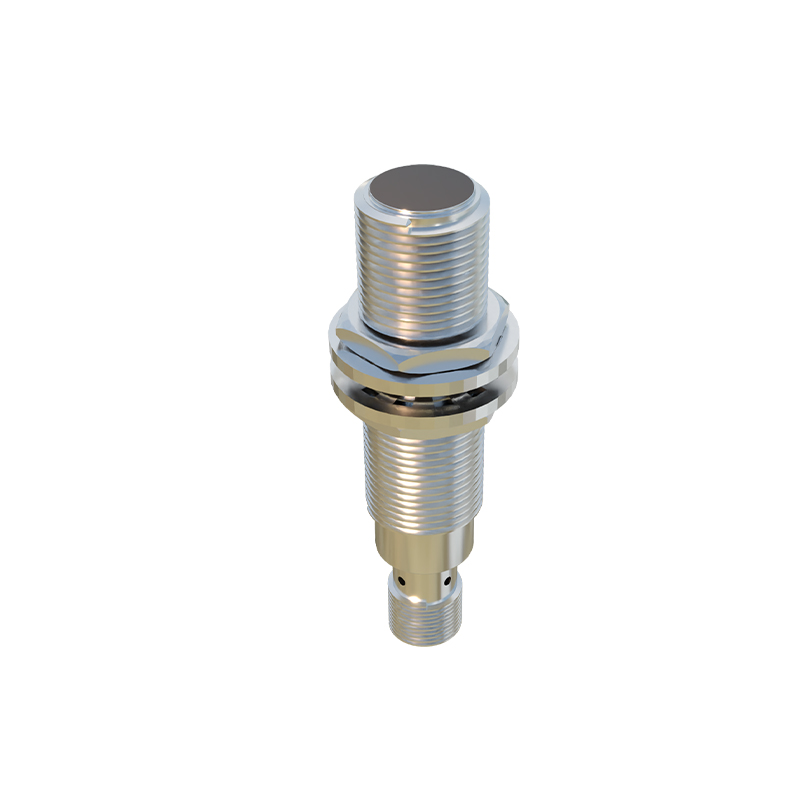
Key Components of the Sensor System
The block diagram of an infrared proximity sensor typically includes several essential components. First, the infrared emitter, usually an infrared LED, generates the light signal. This emitter is driven by a current source or oscillator circuit to produce a modulated signal, which helps reduce interference from ambient light. Next, the infrared receiver, often a photodiode or phototransistor, captures the reflected light from the target object. The receiver converts the light into an electrical signal, which is then processed by subsequent stages. Additional elements may include lenses or filters to focus the infrared beam and minimize noise from other light sources.
Signal Processing and Conditioning
Once the infrared receiver detects the reflected signal, it undergoes processing to extract meaningful data. The raw electrical signal from the receiver is typically weak and noisy, so it passes through an amplifier stage to boost its strength. Following amplification, a filter circuit removes unwanted frequencies, such as those from ambient light or electronic interference. In many designs, a demodulator is used to decode the modulated infrared signal, enhancing the sensor's immunity to external disturbances. This conditioned signal is then fed into a comparator or microcontroller, which determines whether the object is within the predefined proximity range by comparing it to a threshold value.
Output Interface and Applications
The output stage of an infrared proximity sensor provides the final detection result in a usable form. Common output types include digital signals (e.g., high/low logic levels) or analog voltages proportional to the distance. These outputs can interface with microcontrollers, PLCs, or other control systems to trigger actions, such as activating a relay or sending data to a display. In applications like smartphones, the sensor controls screen on/off functions during calls. In industrial settings, it may be used for object counting or collision avoidance in automated machinery. The versatility of these sensors stems from their compact design and low power consumption.
Design Considerations and Challenges
Designing an effective infrared proximity sensor involves addressing several challenges. Ambient light interference is a major issue, as sunlight or artificial lighting can saturate the receiver. To mitigate this, sensors often use modulation techniques and optical filters. Another consideration is the reflectivity of target objects; dark or non-reflective surfaces may reduce detection range. Environmental factors like dust or humidity can also affect performance, necessitating protective enclosures. Engineers must balance sensitivity, range, and power efficiency based on the application requirements, often through iterative testing and calibration.
Future Trends and Innovations
Advancements in technology are driving improvements in infrared proximity sensors. Integration with IoT devices is becoming more common, enabling smart sensing networks for home automation and industrial monitoring. Miniaturization allows for smaller sensor footprints, suitable for wearable gadgets and medical devices. Enhanced signal processing algorithms, powered by machine learning, are increasing accuracy and enabling multi-object detection. Additionally, energy-efficient designs are extending battery life in portable applications. As these trends evolve, infrared proximity sensors are expected to play a larger role in emerging fields like autonomous vehicles and robotics.