Introduction to Anti-Pinch Systems
Anti-pinch systems are critical safety features in modern automated machinery, automotive applications, and industrial equipment. Their primary function is to detect the presence of an obstruction in a closing path, such as a car window, elevator door, or robotic arm, and immediately reverse or halt the motion to prevent injury or damage. Among the various sensing technologies employed, photoelectric sensors have emerged as a highly reliable and precise solution. These systems operate on the principle of light beam interruption, offering non-contact detection with high speed and accuracy. This article delves into the operational principles, configurations, and implementation considerations of photoelectric sensors in anti-pinch applications, providing a detailed technical perspective for engineering professionals.
Fundamental Operating Principle
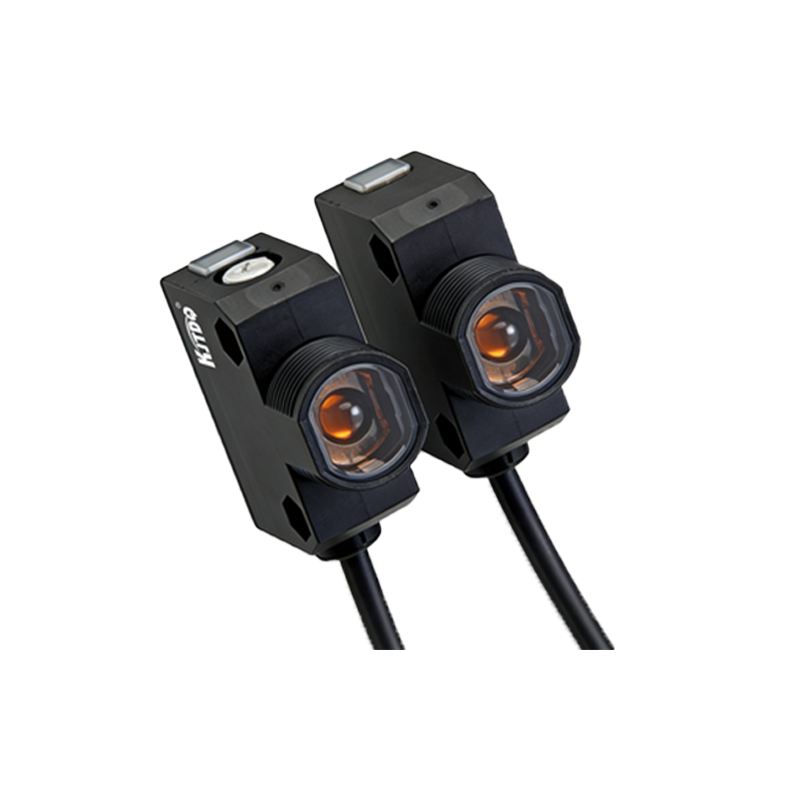
At its core, a photoelectric anti-pinch system consists of a light emitter, a receiver, and a control unit. The emitter, typically an infrared LED or laser diode, projects a beam of light across the gap of the moving component. The receiver, positioned opposite the emitter, continuously monitors the intensity of this received light. Under normal, unobstructed conditions, the light beam reaches the receiver at a known, stable intensity. The control unit is programmed with a threshold for this signal. When an object enters the path—such as a hand, arm, or tool—it interrupts or significantly attenuates the light beam. The receiver detects this sudden drop in light intensity and sends a signal to the control unit. The control logic then triggers an immediate safety response, commanding the drive motor to stop and reverse direction, thereby preventing the pinch hazard.
Key Sensor Configurations for Anti-Pinch
Several photoelectric sensor configurations are suitable for anti-pinch duties, each with specific advantages. The through-beam (or opposed) mode, where emitter and receiver are separate units facing each other, offers the longest sensing range and highest reliability, as it directly measures beam interruption. This is ideal for large openings like bus doors. The retro-reflective mode uses a single sensor unit and a reflector, simplifying wiring but requiring a clear line-of-sight to the reflector, which can be compromised by dirt. For applications requiring detection on one side only, diffuse (proximity) sensors can be used, which detect light reflected from the object itself. However, their range is shorter and can be influenced by the object's color and surface texture. Advanced systems often employ modulated infrared light to filter out ambient light interference, ensuring stable operation in varying environmental conditions.
System Integration and Control Logic
Integrating a photoelectric sensor into an anti-pinch system involves more than just beam detection. The control logic is paramount. Upon receiving the obstruction signal, the system must execute a failsafe routine. This typically involves an immediate stop command to the motor controller, followed by a reversal for a predefined distance or time. The response time, from detection to motor command, must be extremely fast, often in the millisecond range, to minimize the force applied to the obstruction. Furthermore, the system often includes self-checking diagnostics. During the initial closing movement, the control unit may perform a "soft-start" check to verify the sensor's functionality by ensuring the beam is unbroken before allowing full-speed operation. Redundancy is also a common safety practice, using multiple sensors or dual-channel control systems to meet Safety Integrity Level (SIL) or Performance Level (PL) standards per IEC 62061 and ISO 13849.
Environmental and Design Considerations
The operational environment poses significant challenges. Photoelectric sensors must maintain performance despite contamination from dust, moisture, oil, or frost. Selecting sensors with appropriate Ingress Protection (IP) ratings is crucial. Optical lenses may require special coatings or air purge systems in dirty environments. Temperature extremes can affect LED output and receiver sensitivity, necessitating components with wide operational temperature ranges. Alignment is another critical factor; even slight misalignment in through-beam systems can cause failure. Robust mechanical mounting and periodic maintenance checks are essential. For applications like sunroofs or convertible tops, the system must also discriminate between a true obstruction and environmental factors like rain droplets or falling leaves, which may require intelligent signal processing to avoid nuisance reversals.
Advantages Over Alternative Technologies
Compared to other anti-pinch technologies like capacitive strips or current sensing, photoelectric sensors offer distinct benefits. They provide true non-contact sensing, meaning no physical pressure is required to activate them, allowing for detection before contact occurs. This results in a gentler, more preventive safety action. They are highly sensitive and can detect very small or thin objects. Their response speed is superior to mechanical contact-based systems. Additionally, they are less prone to mechanical wear and tear since they have no moving parts in the sensing element. While capacitive sensors can detect proximity without direct line-of-sight, photoelectric sensors generally offer more precise beam positioning and are less affected by environmental factors like humidity when properly configured.
Application Examples in Industry
The use of photoelectric anti-pinch systems is widespread. In the automotive sector, they are mandatory for power windows, sunroofs, sliding doors, and liftgates, governed by regulations like FMVSS 118. In industrial automation, they safeguard operators around robotic work cells, automatic gates, and machinery guards. Elevator and train door systems rely heavily on through-beam photoelectric curtains to create an invisible safety screen. In packaging machinery, they prevent product damage and jams in closing mechanisms. Each application dictates specific requirements for sensing range, response time, form factor, and safety certification, driving continuous innovation in sensor design, such as the development of compact, fully integrated safety light curtains with programmable zones.
Conclusion and Future Trends
Photoelectric sensors form the backbone of modern, reliable anti-pinch safety systems. Their principle of operation is straightforward, yet their effective implementation requires careful consideration of configuration, control logic, and environmental robustness. As safety standards become more stringent and machinery more collaborative, the role of these sensors will only expand. Future trends point towards increased integration of smart sensors with IO-Link or similar interfaces for enhanced diagnostics and parameterization. The fusion of photoelectric sensing with other technologies like time-of-flight (ToF) cameras or AI-based image processing may lead to next-generation systems capable of more sophisticated object discrimination and predictive safety actions, further enhancing protection for personnel and equipment in an increasingly automated world.