Introduction to Weiqin Photoelectric Sensors
Weiqin photoelectric sensors represent a cornerstone technology in modern industrial automation, offering unparalleled precision in object detection, positioning, and measurement. These sensors operate on the fundamental principle of converting light signals into electrical signals, utilizing components such as light-emitting diodes (LEDs), laser diodes, or infrared sources paired with phototransistors or photodiodes as receivers. The core advantage lies in their non-contact detection capability, which eliminates mechanical wear and tear, ensuring long-term operational stability and reducing maintenance costs. In environments ranging from high-speed packaging lines to intricate assembly stations, Weiqin sensors provide consistent performance, detecting objects irrespective of material composition—be it metal, plastic, glass, or liquid—with high repeatability and accuracy. Their design integrates robust housing materials that withstand harsh conditions, including dust, moisture, and temperature fluctuations, making them indispensable in sectors like automotive manufacturing, food processing, and logistics.
Key Technologies and Operating Principles
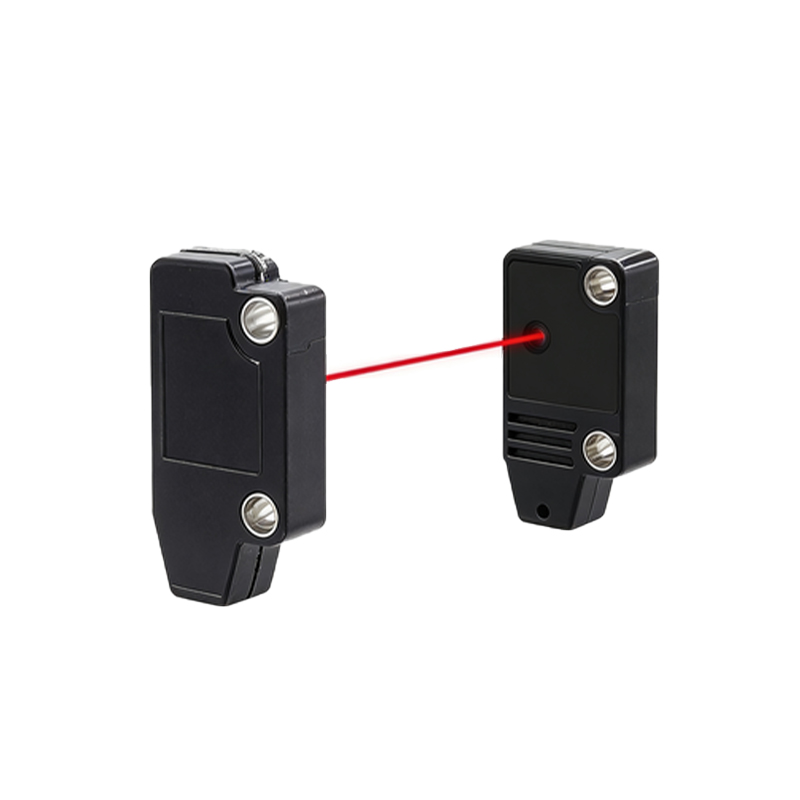
The efficacy of Weiqin photoelectric sensors stems from advanced optical and electronic technologies. They are primarily categorized into three types: through-beam, retro-reflective, and diffuse reflective sensors. Through-beam sensors consist of separate emitter and receiver units, where an object is detected when it interrupts the light beam, offering the longest sensing ranges and highest reliability. Retro-reflective sensors use a single unit that emits light toward a reflector, with detection occurring when the reflected beam is blocked; these are ideal for medium-range applications. Diffuse reflective sensors rely on light bouncing off the target object itself, making them suitable for short-range tasks where space is constrained. Weiqin incorporates innovations such as background suppression, which ignores distant objects, and polarized filters to reduce false triggers from shiny surfaces. Additionally, modern variants feature digital signal processing (DSP) for noise reduction and adaptive sensitivity settings, ensuring optimal performance even in dynamic industrial settings with variable ambient light or vibration.
Applications Across Industrial Sectors
Weiqin photoelectric sensors are deployed across diverse industries, enhancing efficiency and safety. In automotive manufacturing, they facilitate precise part counting on conveyor belts, robot guidance for welding and painting, and quality control inspections by detecting minute defects. The food and beverage industry relies on these sensors for bottle cap alignment, fill-level monitoring, and packaging integrity checks, where hygiene and speed are critical. In logistics and warehousing, they enable automated sorting systems, palletizing robots, and inventory management through barcode scanning and object presence detection. Moreover, in pharmaceutical production, Weiqin sensors ensure sterile environments by monitoring equipment positioning and verifying label placement on vials. Their versatility extends to renewable energy sectors, such as solar panel assembly, where they assist in aligning components and detecting cracks. By integrating with programmable logic controllers (PLCs) and industrial networks like Ethernet/IP or PROFINET, these sensors form the backbone of smart factories, enabling real-time data acquisition and predictive maintenance.
Advantages Over Alternative Sensing Technologies
Compared to other sensing methods like inductive, capacitive, or ultrasonic sensors, Weiqin photoelectric sensors offer distinct benefits. Their non-contact nature allows for detection of non-metallic objects, which inductive sensors cannot achieve, and they provide faster response times—often in microseconds—crucial for high-speed production lines. Unlike capacitive sensors that are sensitive to environmental changes, photoelectric models maintain stability in varying humidity or temperature conditions. They also outperform ultrasonic sensors in precision for small object detection and are less affected by air turbulence or noise interference. Weiqin’s focus on energy efficiency results in low-power designs that reduce operational costs, while their compact form factors enable easy integration into space-limited machinery. Furthermore, with features like teach-in functionality for quick calibration and IO-Link compatibility for digital communication, these sensors simplify installation and troubleshooting, minimizing downtime and boosting overall equipment effectiveness (OEE).
Future Trends and Innovations
The future of Weiqin photoelectric sensors is shaped by emerging trends in Industry 4.0 and the Internet of Things (IoT). Next-generation models are incorporating artificial intelligence (AI) algorithms for predictive analytics, allowing sensors to self-adjust based on historical data and detect anomalies before failures occur. Enhanced connectivity options, such as 5G and wireless protocols, will enable seamless integration into cloud-based monitoring systems, facilitating remote diagnostics and control. Miniaturization efforts are yielding nano-sensors for micro-assembly applications, while advancements in laser technology are extending sensing ranges to over 100 meters for large-scale outdoor use. Sustainability is also a key focus, with designs using recyclable materials and reduced energy consumption. Weiqin is actively developing multi-functional sensors that combine photoelectric sensing with temperature or pressure measurement, offering comprehensive solutions for complex automation challenges. As industries increasingly adopt collaborative robots and autonomous guided vehicles (AGVs), these sensors will play a pivotal role in ensuring safe human-machine interaction and precise navigation.
Selection and Maintenance Guidelines
Choosing the right Weiqin photoelectric sensor requires careful consideration of application parameters. Factors include sensing distance, object size and reflectivity, environmental conditions (e.g., exposure to chemicals or UV light), and required output type (e.g., NPN/PNP or analog signals). For instance, in dusty areas, sensors with IP67 or higher ingress protection ratings are recommended, while high-speed applications demand fast switching frequencies. Proper installation is critical: aligning emitter and receiver accurately, avoiding obstructions in the light path, and shielding from direct sunlight or other light sources that could cause interference. Regular maintenance involves cleaning lenses with soft cloths to prevent dust buildup, checking wiring for corrosion, and verifying performance through diagnostic LEDs or software tools. Weiqin provides comprehensive technical support, including datasheets, configuration software, and training resources, to help engineers optimize sensor lifespan and reliability. By adhering to these guidelines, users can maximize ROI and ensure continuous operation in demanding industrial environments.