Introduction to Proximity Photoelectric Sensors
Proximity photoelectric sensors are indispensable components in modern industrial automation, offering non-contact detection of objects. These sensors operate by emitting a beam of light, typically from an LED or laser diode, and detecting changes in the received light caused by the presence or absence of a target object. Their ability to sense objects without physical contact makes them ideal for applications requiring high-speed operation, harsh environments, or delicate handling. The core principle relies on the modulation of light, which can be through reflection, interruption, or retro-reflection. This technology provides exceptional reliability, long operational life, and high precision, forming the backbone of countless positioning, counting, and inspection tasks across manufacturing, packaging, and material handling sectors.
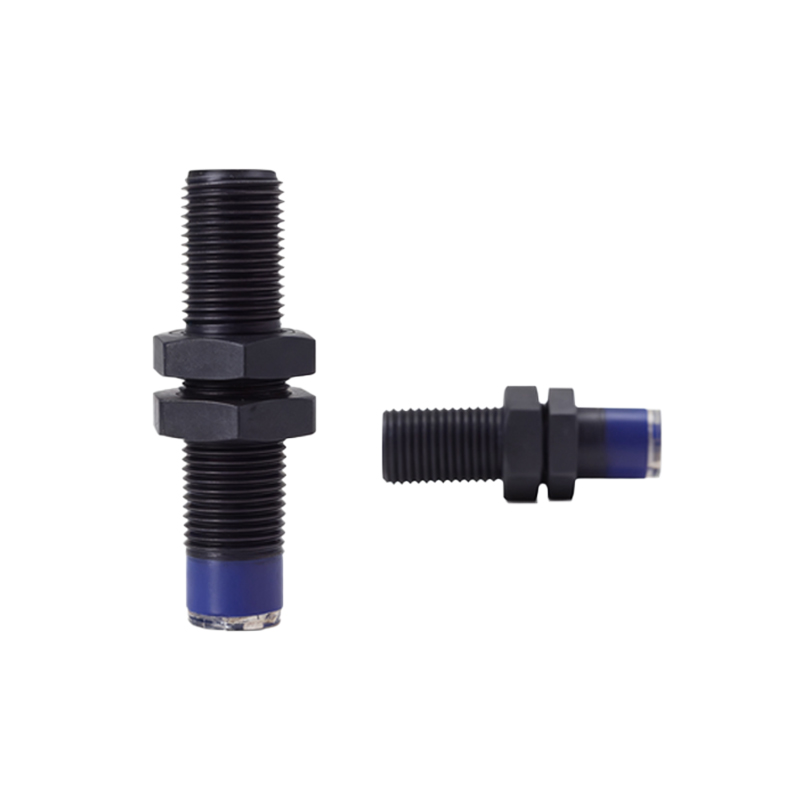
Through-Beam Sensors
Through-beam sensors, also known as opposed-mode sensors, consist of two separate units: a transmitter and a receiver. The transmitter projects a continuous beam of light directly to the receiver. Detection occurs when an object physically interrupts this light beam. This configuration offers the longest sensing range among photoelectric sensors, often exceeding 20 meters, and provides the highest level of reliability and accuracy. Because the receiver detects the direct light from the transmitter, it is largely immune to factors like object color, reflectivity, or surface finish. Common applications include detecting large objects on conveyors, monitoring breakages in material webs, and providing safety curtains for machinery access points. Their main drawback is the need for precise alignment of two separate components and increased installation complexity.
Retro-Reflective Sensors
Retro-reflective sensors house both the light emitter and receiver in a single housing. They operate by projecting light towards a specialized reflector, often a corner-cube or tape reflector, which returns the light beam directly back to the receiver. An object is detected when it blocks this reflected beam. This design offers a substantial sensing range, typically up to 10 meters, while simplifying installation compared to through-beam sensors as only one device and a reflector need to be mounted. These sensors are excellent for detecting opaque objects. However, they can be fooled by highly reflective objects that might bounce light back to the receiver, mimicking the reflector. Many modern models feature polarization filters to mitigate this by only accepting light that has its polarization rotated by the specific reflector.
Diffuse Reflective Sensors
Diffuse reflective sensors, or proximity-mode sensors, integrate the emitter and receiver into one unit. Detection is based on the diffuse reflection of light from the surface of the target object itself. The sensor emits light, and the receiver detects the portion that scatters back from the object. This allows for true proximity sensing with only one device to install, making it highly versatile for detecting objects at shorter ranges, usually from a few millimeters to about 2 meters. Performance is heavily influenced by the object's color, size, and surface texture; light-colored, matte surfaces are detected at greater distances than dark, shiny ones. They are widely used for presence detection, bottle counting on filling lines, and level detection in bins. Advanced versions with background suppression technology can precisely define the sensing field, ignoring objects beyond a set distance.
Fiber Optic Photoelectric Sensors
Fiber optic photoelectric sensors separate the sensing head from the amplifier unit using flexible fiber optic cables. The amplifier contains the light source and receiver electronics, while the fiber optic cables transmit light to and from the sensing point. This design provides exceptional benefits in challenging environments. The small, passive sensing head can be installed in extremely confined spaces, high-temperature zones, or areas with strong electromagnetic interference. The amplifier can be mounted remotely in a protected control cabinet. These sensors are available in through-beam, retro-reflective, and diffuse reflective versions defined by the tip configuration. They are ideal for detecting minute objects like electronic components, monitoring hot materials, or operating in washdown areas in food and pharmaceutical industries.
Laser Sensor Variants
Laser-based proximity sensors utilize a focused, coherent laser beam instead of standard LED light. This results in a very small, precise spot size, enabling the detection of extremely small objects or precise edge positioning. They offer excellent sensing ranges with high accuracy and stability. Laser sensors are commonly used in diffuse reflective mode for precise distance measurement and in through-beam mode for high-precision alignment tasks. Applications include wafer handling in semiconductor fabrication, precision assembly verification, and dimensional gauging. Safety is a paramount concern, and most industrial laser sensors are classified as Class 1 or Class 2, meaning they are eye-safe under normal operating conditions.
Key Selection Criteria
Choosing the correct proximity photoelectric sensor requires careful analysis of the application. The primary factors include sensing range, required response time, and the physical