What is an M18 Photoelectric Sensor?
An M18 photoelectric sensor is a specific type of industrial sensing device characterized by its 18-millimeter cylindrical threaded housing. The "M18" designation refers to the metric thread size (M18 x 1.0), which is a standardized mounting format widely adopted in factory automation and machinery. These sensors operate on the fundamental principle of emitting a beam of light—typically visible red, infrared, or laser—and detecting changes in the received light to sense the presence, absence, or distance of an object. They are a critical component in countless automation systems, providing non-contact, reliable detection for process control, positioning, counting, and quality inspection.
Core Operating Principles and Sensing Modes
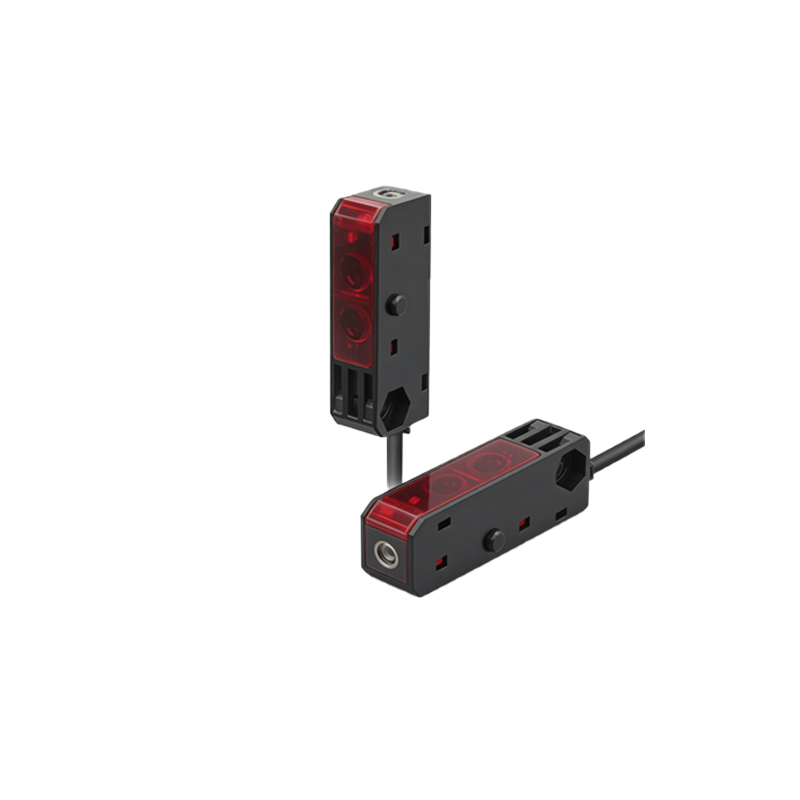
M18 photoelectric sensors are available in several primary sensing modes, each suited for different applications. The through-beam (or opposed) mode consists of separate emitter and receiver units placed opposite each other. An object is detected when it interrupts the light beam between them, offering the longest sensing ranges and highest reliability. The retro-reflective mode uses a single housing containing both emitter and receiver, along with a specialized reflector. The sensor detects an object when it blocks the light beam reflected back from the reflector. Finally, the diffuse (or proximity) mode has the emitter and receiver in one unit and detects an object by measuring the light scattered back from the object itself. This mode is simpler to install as it requires no separate component, but its sensing range is typically shorter and can be influenced by the object's color and surface texture.
Key Technical Specifications and Selection Criteria
Selecting the appropriate M18 sensor requires careful consideration of several technical parameters. Sensing range is paramount; it varies significantly between modes, from a few centimeters for diffuse sensors to several meters for through-beam models. The light source type (e.g., red LED, infrared, laser) affects visibility, precision, and environmental resistance. Output configuration is another critical choice, with common types including NPN (sinking), PNP (sourcing), and analog outputs (4-20mA or 0-10V) for distance measurement. Engineers must also evaluate the housing material (often nickel-plated brass or stainless steel), ingress protection (IP) rating for dust and water resistance, and the operating voltage range (commonly 10-30V DC). Additional features like built-in timers, teach-in functionality for easy setup, and IO-Link communication for smart sensor data exchange are increasingly important for advanced applications.
Typical Industrial Applications and Use Cases
The robustness and versatility of the M18 form factor make these sensors ubiquitous across industries. In packaging machinery, they are used for detecting product presence on conveyors, verifying case flap closure, and counting items. Within automotive assembly lines, M18 sensors ensure precise positioning of parts for robotic welding or assembly, and detect the passage of vehicles on monorail systems. In material handling, they serve as limit switches for pallet positioning, detect jams on conveyor belts, and monitor fill levels in bins or hoppers. Their reliable performance in harsh conditions also makes them suitable for outdoor applications, such as detecting vehicles at gate barriers or monitoring objects in agricultural equipment.
Advantages Over Other Sensor Types and Form Factors
The M18 size offers a compelling balance of performance, durability, and space efficiency. Compared to larger sensors (e.g., M30), M18 units provide a smaller footprint, allowing for installation in tight spaces on modern, compact machinery. Compared to smaller sensors (e.g., M8 or M12), they generally offer longer sensing ranges, more robust construction, and often house more advanced electronics. When contrasted with inductive proximity sensors, photoelectric sensors can detect non-metallic objects like plastic, glass, wood, and liquids, vastly expanding their application scope. Their non-contact nature ensures no physical wear on the sensor or the target, leading to longer service life and reduced maintenance.
Installation, Alignment, and Maintenance Best Practices
Proper installation is crucial for optimal sensor performance. The M18 thread allows for easy mounting into standard drilled and tapped holes or into adjustable mounting brackets. For through-beam and retro-reflective types, precise alignment of the emitter, receiver, and reflector is essential; many models feature built-in alignment indicators (like LED lights) to facilitate this process. For diffuse sensors, consideration must be given to the background, as highly reflective surfaces behind the target can cause false triggers. Regular maintenance involves keeping the lens clean from dust, oil, or debris that could attenuate the light signal. Checking for loose wiring and ensuring a stable power supply are also standard preventative measures to ensure long-term, trouble-free operation.