Introduction to 485 Photoelectric Sensors
In the landscape of industrial automation, reliable data acquisition is paramount. Among the myriad of sensing technologies, photoelectric sensors stand out for their versatility in detecting the presence, absence, or distance of objects without physical contact. When these sensors are integrated with an RS-485 communication interface, their utility and application scope expand dramatically. A 485 photoelectric sensor combines precise optical detection with robust, long-distance serial communication capabilities, forming a critical node in modern distributed monitoring and control networks. This fusion enables real-time, high-integrity data transmission from the sensor point to centralized control systems, even in electrically noisy industrial environments.
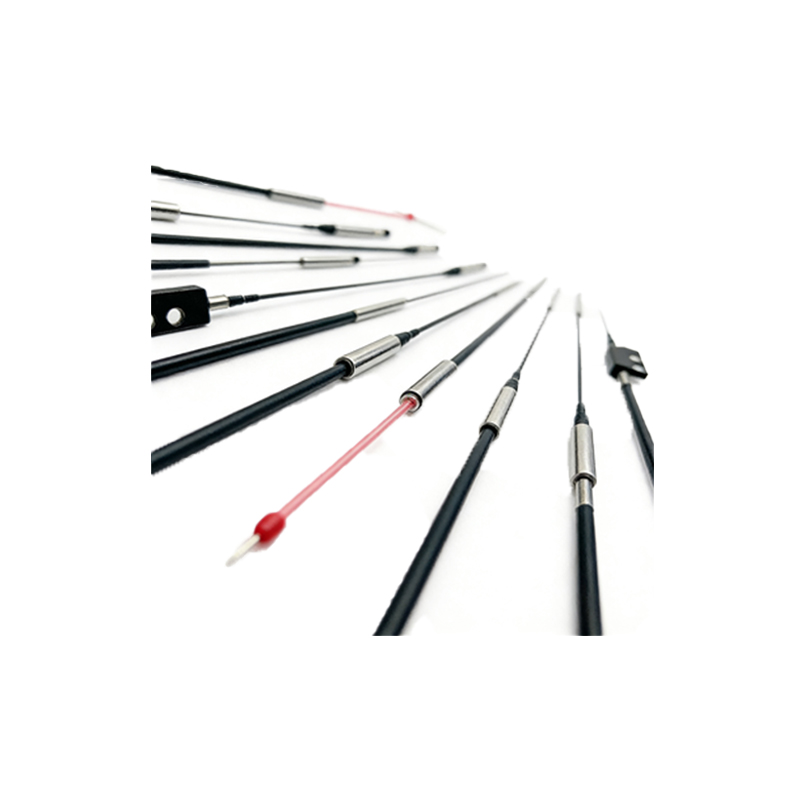
Core Function and Operational Principle
The fundamental role of a 485 photoelectric sensor is to convert a physical event—typically the interruption or reflection of a light beam—into a standardized digital signal and transmit it over an RS-485 network. Internally, the sensor comprises an emitter (usually an LED or laser diode) and a receiver (a phototransistor or photodiode). It operates on principles such as through-beam, retro-reflective, or diffuse reflection. The key differentiator is its onboard circuitry that translates the receiver's output into a digital data packet. This packet, formatted according to a specific protocol like Modbus RTU, is then driven onto the two-wire RS-485 bus. This architecture allows the sensor to act as a "smart" device on a multi-drop network, capable of being individually addressed and queried by a master controller, rather than simply providing a raw on/off signal.
Key Advantages in Monitoring Applications
The integration of the RS-485 interface confers several decisive advantages for monitoring roles. First is long-distance communication. RS-485 supports data transmission over distances up to 1200 meters without signal repeaters, far exceeding the range of standard analog voltage outputs or basic digital I/O. This makes 485 sensors ideal for monitoring extensive facilities like conveyor systems, warehouse aisles, or large processing plants. Second is noise immunity. The differential signaling of RS-485 provides excellent common-mode rejection, ensuring signal integrity in environments with heavy machinery, variable frequency drives, and other sources of electromagnetic interference. Third is network scalability. Dozens, even hundreds, of 485 photoelectric sensors can be connected on a single two-wire bus, drastically reducing wiring complexity and cost compared to point-to-point connections. This enables comprehensive monitoring of complex processes with centralized data logging.
Typical Industrial Use Cases
The applications for 485 photoelectric sensors are vast across manufacturing, logistics, and infrastructure. In packaging lines, they monitor product presence on fillers, cap placers, and labelers, transmitting count data and jam alerts to the PLC. On assembly conveyors, they detect component positioning for robotic arms and verify assembly completion. In material handling, they are used for pallet detection in automated storage and retrieval systems (AS/RS) and for monitoring bin levels. Security and access control systems employ them as part of safety light curtains or to monitor door and gate positions. In each case, the RS-485 network allows for the seamless integration of sensor status into the Supervisory Control and Data Acquisition (SCADA) system, providing operators with a unified view of the entire operation.
Integration with Control Systems and Protocols
The true power of a 485 photoelectric sensor is realized through its integration into a broader control architecture. The RS-485 physical layer is commonly paired with open, standard protocols like Modbus RTU or PROFIBUS DP. This standardization allows sensors from various manufacturers to communicate with programmable logic controllers (PLCs), industrial PCs, and gateways. The master controller can poll each sensor on the network for its status, diagnostic information (like lens contamination warnings or signal strength), and sometimes even configure its parameters (sensitivity, response time) remotely. This bidirectional communication facilitates predictive maintenance and dynamic system reconfiguration, moving beyond simple monitoring towards intelligent process optimization.
Considerations for Implementation and Maintenance
Successful deployment requires careful planning. Network topology must be designed as a daisy-chain or trunk-and-drop line with proper termination resistors at both ends to prevent signal reflections. Selecting the correct sensor type (e.g., background suppression for precise distance monitoring, or fiber optic versions for high-temperature zones) is crucial. Engineers must also configure unique slave addresses for each device and ensure baud rate parity across the network. Maintenance involves periodic cleaning of optical lenses to prevent false triggers and monitoring network communication health through diagnostic tools. The robustness of the RS-485 interface often simplifies troubleshooting compared to analog signal degradation issues.
Future Trends and Conclusion
The evolution of 485 photoelectric sensors is leaning towards increased intelligence and connectivity. Future iterations may incorporate IO-Link over the RS-485 physical layer, providing even richer parameterization and diagnostic data. Integration with Industrial Internet of Things (IIoT) gateways will push sensor data directly to cloud platforms for advanced analytics. However, the core role remains unchanged: to provide dependable, precise detection and communicate that information reliably across the industrial floor. As a cornerstone of networked monitoring, the 485 photoelectric sensor exemplifies the synergy between robust sensing and resilient communication, forming an indispensable component in the drive towards more transparent, efficient, and intelligent industrial operations.