Introduction to Photoelectric Sensor Fundamentals
Photoelectric sensors are indispensable components in modern industrial automation, providing non-contact detection of objects based on the modulation of light. These sensors operate by emitting a beam of light—visible red, infrared, or laser—and detecting changes in the received light intensity caused by the presence, absence, or characteristics of a target object. The core principle involves a transmitter (light source) and a receiver (photodetector). Their universal application stems from their ability to detect a vast range of materials, including metals, plastics, glass, and liquids, over distances that mechanical switches cannot achieve. Key performance parameters include sensing range, response time, light source type, and output configuration. Understanding these fundamentals is crucial for selecting the appropriate model for any given application, from simple object counting on a conveyor to precise positioning in robotic assembly cells.
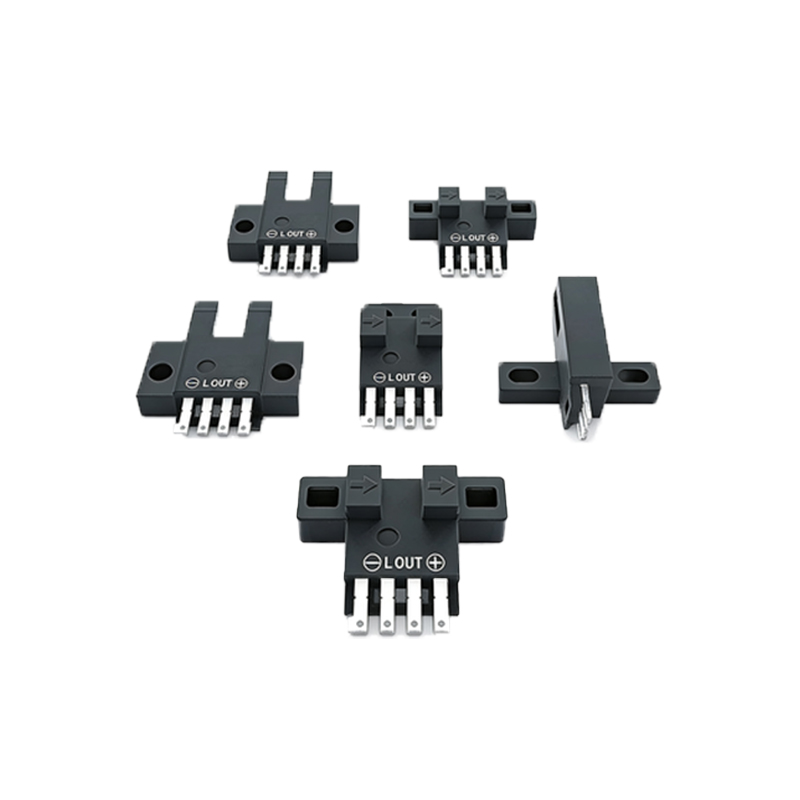
Through-Beam Sensor Models and Applications
Through-beam (or thru-beam) sensors consist of separate, opposed units for the transmitter and receiver. The transmitter projects a continuous beam to the receiver. An object is detected when it interrupts this beam. This configuration offers the longest sensing ranges and highest excess gain, making it highly reliable in dirty or dusty environments where signal attenuation is a concern. Common universal models in this category include the Banner EZ-BEAM® QS18, known for its rugged housing and ranges up to 15 meters, and the Omron E3Z-T series, celebrated for its compact size and high noise immunity. Typical part numbers like E3S-CL or VMT series from various manufacturers are designed for heavy-duty applications. They are ideal for detecting opaque objects of varying sizes, checking for broken wires, or as safety light curtains. When specifying a through-beam model, critical factors are the required sensing distance, the minimum object size to be detected, and the environmental conditions (IP rating).
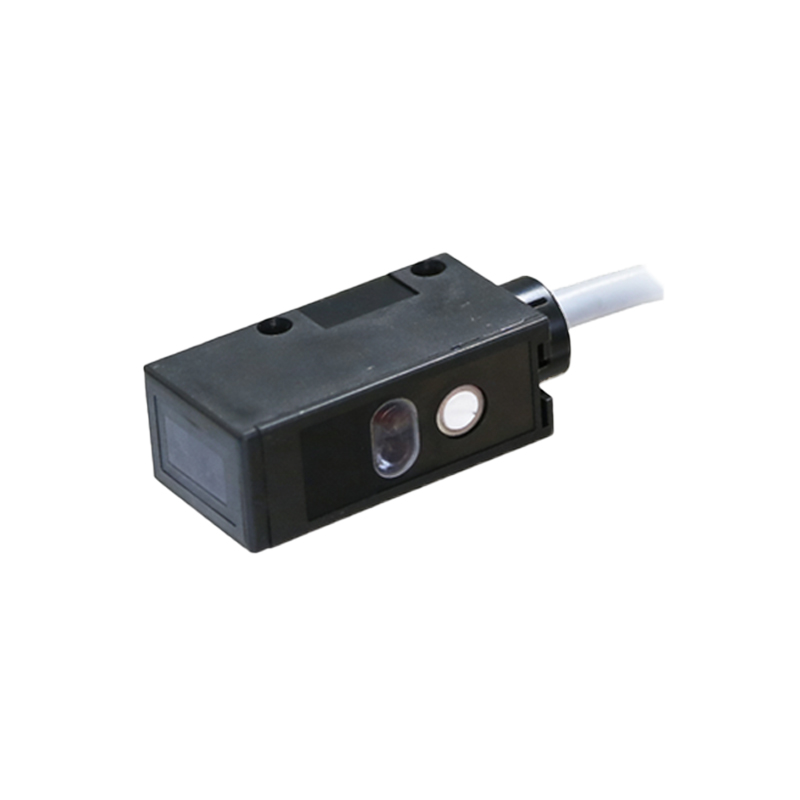
Retroreflective Sensor Models and Selection Criteria
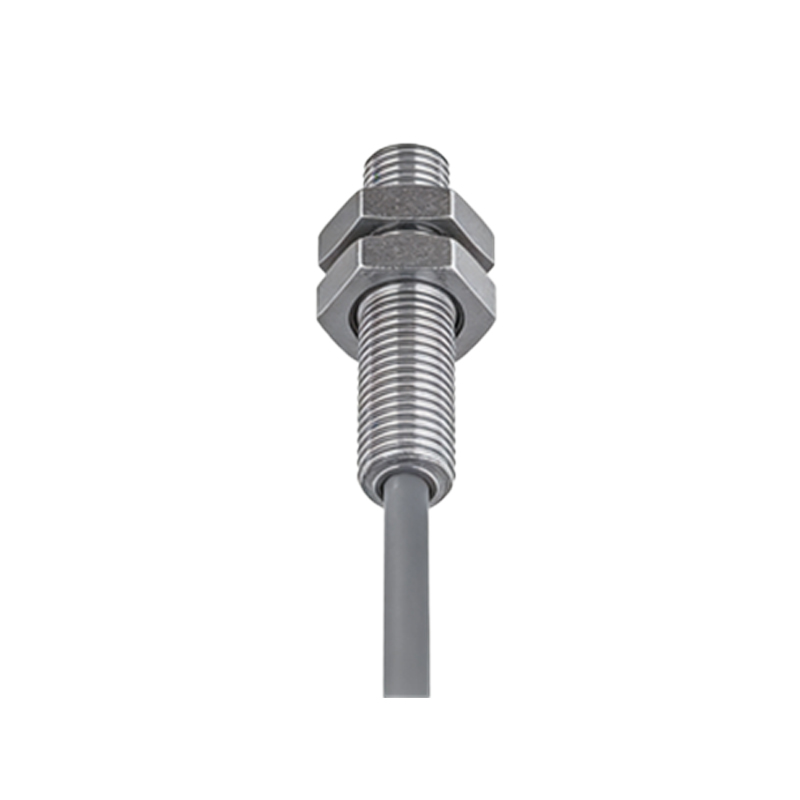
Retroreflective sensors house both the transmitter and receiver in a single housing. They emit light toward a specially designed reflector (corner-cube retroreflector), which bounces the beam directly back to the receiver. Detection occurs when an object blocks this reflected beam. This design simplifies installation compared to through-beam sensors, as only one device needs wiring and alignment, with the reflector placed opposite. Universal models like the Sick WTT12L or Keyence PZ2-V series offer excellent performance with sensing distances often up to 5-10 meters. A key consideration is the "polarizing filter" found in many models (e.g., Allen-Bradley 872C), which allows them to reliably detect shiny objects that might otherwise be mistaken for the reflector. Selection criteria focus on the target's surface characteristics (matte, glossy, transparent), the required range, and the potential for false triggers from background objects. They are widely used in packaging, material handling, and automated guided vehicle (AGV) systems for position verification.
Diffuse Reflective Sensor Models and Technological Features
Diffuse reflective (or proximity-mode) sensors are the most compact and easiest to install, as they require only a single unit and no separate reflector. The emitted light reflects off the target object itself back to the receiver. However, this mode has the shortest sensing range and is highly sensitive to the target's color, texture, and reflectivity. Advanced universal models incorporate background suppression or fixed-field teaching to overcome these limitations. For instance, the Pepperl+Fuchs ML100-8-H-250-RT/103/115 utilizes background suppression technology to detect an object only within a precise, defined distance, ignoring objects beyond it. Models with laser light sources, such as the Balluff BOD 26K, provide a precise, visible spot for detecting very small parts or precise edges. Common part numbers include E3Z-D from Omron or FX-300 from Panasonic. These sensors are perfect for detecting objects at close range, label detection on packages, or controlling loop heights in web processes.
Specialized Sensor Models: Fiber Optic and Color Mark
For extreme environments or minute detection tasks, specialized photoelectric models are employed. Fiber optic sensors separate the amplifier (containing the electronics) from the sensing head via a flexible fiber optic cable. This allows the tiny sensing head to be installed in extremely hot, cold, cramped, or hazardous locations. Universal amplifiers like the Banner DF-G3 or Sick KTS series can accept various fiber types (plastic or glass) and operate in multiple modes (through-beam or diffuse). Another critical specialized type is the color mark sensor. Models such as the Keyence LV-N series or Omron E3S-V use specialized optics and algorithms to detect specific colors or contrast marks with high precision, regardless of ambient light changes. They are essential in printing, labeling, and product sorting applications where registration marks or color-coded parts must be identified reliably.
Output Configurations and Electrical Considerations
The utility of a universal photoelectric sensor is also defined by its electrical interface. Outputs are primarily categorized as discrete (digital) or analog. Discrete outputs include PNP (sourcing) and NPN (sinking) transistor configurations, which are standard for PLC input modules. Many modern sensors, like the IFM O5D series, offer programmable or selectable PNP/NPN outputs for maximum compatibility. Analog outputs (4-20mA or 0-10V) are provided by sensors designed for measuring distance, transparency, or thickness continuously. Furthermore, IO-Link capability is becoming a standard feature in advanced universal models (e.g., Sick W12-2). IO-Link enables digital bidirectional communication for parameter setting, advanced diagnostics, and process data exchange, aligning with Industry 4.0 principles. Electrical specifications such as operating voltage (typically 10-30V DC), current consumption, and short-circuit protection are vital for system design.
Conclusion: Trends and Future Developments
The evolution of universal photoelectric sensors continues toward greater intelligence, connectivity, and robustness. Future models will increasingly integrate IO-Link as a standard feature, providing richer device data for predictive maintenance. Enhanced sensing technologies, such as Time-of-Flight (ToF) principles in diffuse sensors, will offer more stable detection regardless of color or surface. Miniaturization will persist, allowing sensors to fit into ever-smaller machinery. Furthermore, the development of sensors with integrated logic functions (like timers, counters, and logic gates) will enable simpler, decentralized control solutions. When selecting a sensor, engineers must balance the universal specifications—range, mode, output, and housing—with the specific demands of the application environment and the strategic need for data connectivity. A thorough understanding of the available models and their capabilities ensures optimal performance, reliability, and longevity in any automated system.