Introduction to Photoelectric Sensors
Photoelectric sensors are pivotal components in modern industrial automation, utilizing light beams to detect the presence, absence, or distance of objects. These devices operate by emitting a light source—typically infrared, visible red, or laser—toward a target. A receiver then captures the reflected or transmitted light, converting it into an electrical signal for processing. The fundamental principle relies on changes in light intensity, enabling precise detection across diverse environments. Industries such as manufacturing, packaging, and material handling extensively deploy photoelectric sensors due to their non-contact nature, which minimizes wear and tear and enhances operational longevity. Their ability to function in harsh conditions, including areas with dust, moisture, or extreme temperatures, makes them indispensable for robust automation systems. By offering high-speed response and accuracy, these sensors facilitate seamless process control, contributing to improved efficiency and safety in automated workflows.
Key Functional Modes
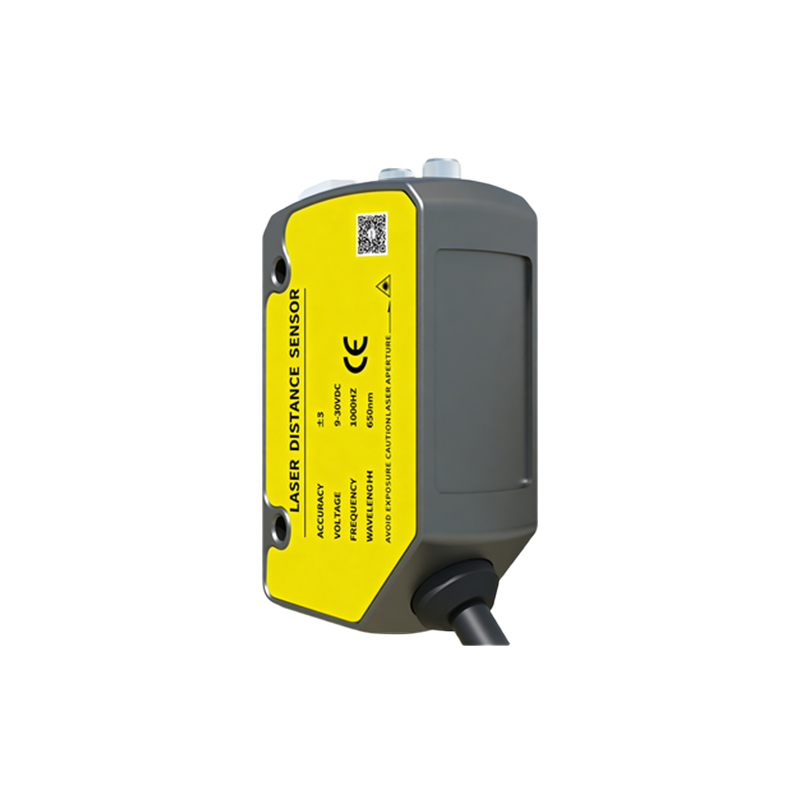
Photoelectric sensors operate in several distinct modes, each tailored to specific application needs. The through-beam mode involves separate emitter and receiver units positioned opposite each other; detection occurs when an object interrupts the light beam, providing long-range and reliable sensing ideal for conveyor systems. In retro-reflective mode, a single housing contains both emitter and receiver, using a reflector to bounce light back; objects are detected when they block the reflected beam, suitable for medium-range tasks like packaging line monitoring. Diffuse mode relies on the target itself to reflect light back to the receiver within the same unit, enabling proximity sensing for short distances, often used in object counting or positioning. Advanced variants include background suppression and foreground suppression modes, which adjust sensitivity to ignore distant or close backgrounds, respectively, enhancing precision in complex scenarios. Each mode balances range, accuracy, and environmental adaptability, allowing engineers to select optimal configurations for tasks ranging from simple presence detection to intricate measurement applications.
Technical Characteristics and Performance
The performance of photoelectric sensors is defined by key technical characteristics that influence their suitability for industrial use. Sensing range varies widely, from a few centimeters in diffuse models to over 100 meters in through-beam setups, with laser-based sensors offering extended precision for alignment or inspection. Response time is critical in high-speed automation, with many sensors achieving detection in milliseconds to maintain throughput in rapid production lines. Environmental durability is ensured through enclosures rated IP67 or higher, providing resistance to water, oil, and particulate ingress, while temperature tolerance typically spans -25°C to 70°C for reliable operation in extreme settings. Output options include digital signals (e.g., NPN/PNP transistors) or analog signals for distance measurement, with connectivity supporting PLC integration. Additionally, features like adjustable sensitivity, teach-in functions for easy calibration, and built-in diagnostics enhance usability. These characteristics collectively ensure that photoelectric sensors deliver consistent, repeatable performance, minimizing downtime and maintenance costs in demanding industrial environments.
Advantages Over Alternative Sensors
Compared to other sensing technologies like inductive or capacitive sensors, photoelectric sensors offer unique advantages that justify their widespread adoption. Their non-contact detection capability eliminates physical interaction with targets, reducing mechanical stress and allowing use with fragile or sensitive materials. Versatility in detecting various object types—regardless of material composition, color, or surface texture—sets them apart, as they can sense non-metallic items that inductive sensors might miss. Long sensing ranges enable applications in large-scale setups, such as warehouse automation or vehicle detection, where proximity sensors fall short. High-speed operation supports fast-paced industries like electronics assembly, where milliseconds impact efficiency. Moreover, photoelectric sensors provide excellent resolution for precise positioning, often surpassing ultrasonic sensors in accuracy for small object detection. While they may require careful alignment and can be affected by ambient light interference, modern designs incorporate filters and modulated light sources to mitigate these issues, making them a superior choice for many automation challenges.
Applications in Industrial Automation
In industrial settings, photoelectric sensors serve diverse roles that enhance automation and safety. On production lines, they detect product presence for quality control, trigger robotic actions for pick-and-place operations, or monitor fill levels in containers to prevent overflow. Packaging machinery relies on them for label verification, cap placement checks, and box sealing confirmation, ensuring consistency in high-volume outputs. In material handling, sensors guide AGVs (Automated Guided Vehicles) by detecting path markers or obstacles, while in logistics, they facilitate sorting systems by reading barcodes or identifying parcel dimensions. Safety applications include light curtains that protect workers by halting machinery when breaches are detected, preventing accidents. Additionally, they aid in energy conservation by controlling lighting or HVAC systems based on occupancy. By integrating with IoT platforms, these sensors enable predictive maintenance, alerting operators to potential failures before they disrupt operations. Their adaptability across sectors—from automotive to pharmaceuticals—underscores their role as enablers of smart, efficient industrial ecosystems.
Selection and Implementation Considerations
Choosing the right photoelectric sensor requires careful evaluation of application parameters to ensure optimal performance. Engineers must first assess the detection requirements, including object size, color, and surface reflectivity, as these factors influence the choice of light source and mode. Environmental conditions, such as exposure to dust, humidity, or vibration, dictate the need for robust housing and protective features. Sensing range and response time should align with process speeds to avoid bottlenecks, while output compatibility with existing control systems (e.g., PLCs or microcontrollers) is essential for seamless integration. Budget constraints may lead to a balance between cost and features, such as opting for standard infrared sensors over laser models for less critical tasks. During installation, proper alignment and mounting are crucial to prevent false triggers; using brackets or adjustable mounts can simplify this process. Regular maintenance, including lens cleaning and sensitivity checks, prolongs sensor life. By following manufacturer guidelines and leveraging technical support, industries can maximize the reliability and benefits of photoelectric sensors, driving automation success.