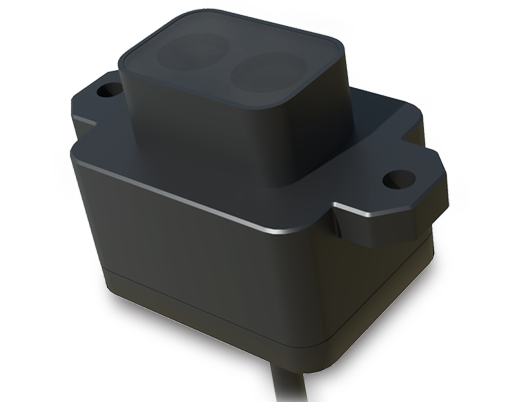
In the realm of precision measurement and industrial automation, laser displacement sensors have emerged as indispensable tools, offering unparalleled accuracy and reliability. These devices operate on the principle of triangulation or time-of-flight, projecting a laser beam onto a target surface and analyzing the reflected light to determine distance or displacement with exceptional precision. One of the most significant advantages of laser displacement sensors is their non-contact nature. Unlike traditional mechanical probes or tactile gauges, they do not physically touch the measured object, thereby eliminating the risk of surface damage, wear, or contamination. This characteristic is particularly crucial in industries such as semiconductor manufacturing, automotive assembly, and pharmaceuticals, where even minor contact can compromise product integrity.
Another key benefit lies in their high-speed measurement capabilities. Laser displacement sensors can perform thousands of measurements per second, enabling real-time monitoring and control in dynamic production environments. This rapid data acquisition is essential for applications like vibration analysis, thickness inspection of moving materials, or robotic guidance systems, where delays could lead to quality issues or operational inefficiencies. The accuracy and resolution of these sensors are also noteworthy. Modern laser displacement sensors can achieve sub-micron resolution, allowing for the detection of minute variations that would be imperceptible to other measurement methods. This level of detail supports stringent quality assurance protocols and facilitates advanced research in fields like materials science and nanotechnology.
Versatility is a further strength. Laser displacement sensors can measure a wide range of materials, including metals, plastics, glass, and even liquids, regardless of color or reflectivity, thanks to advanced algorithms and adjustable sensitivity settings. They are also adaptable to various environmental conditions, with models designed to withstand extreme temperatures, humidity, or vibrations commonly found in industrial settings. Additionally, their compact size and ease of integration into existing systems make them a cost-effective solution for automation upgrades. By reducing manual inspection needs and minimizing downtime through predictive maintenance, these sensors contribute significantly to operational efficiency and cost savings. In summary, laser displacement sensors combine non-contact operation, high speed, precision, and adaptability, making them a cornerstone of modern measurement technology across diverse sectors.