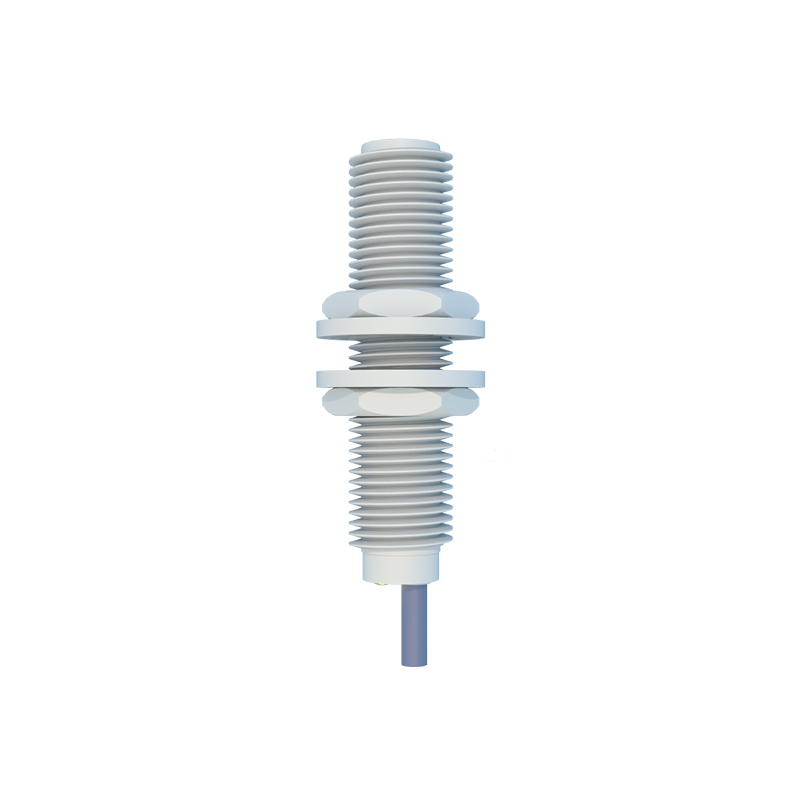
Proximity sensors are ubiquitous in modern automation, silently performing critical tasks in industries ranging from manufacturing and automotive to consumer electronics and security systems. Unlike traditional mechanical limit switches, these non-contact devices detect the presence or absence of an object within a specified range without any physical contact. Their operation hinges on the principle of disturbing or changing a field or beam. The core working principle involves the sensor generating an electromagnetic field, light beam, or ultrasonic sound wave. When a target object enters this generated field, it causes a detectable change in the field's state or the signal's return path. This change is then converted by the sensor's internal circuitry into an electrical output signal, typically a simple ON/OFF switch, which is sent to a controller like a PLC (Programmable Logic Controller).
The specific mechanism varies significantly depending on the underlying technology. The most common types are inductive, capacitive, photoelectric, and ultrasonic proximity sensors. An inductive proximity sensor is the workhorse for detecting metallic objects. It operates by generating a high-frequency oscillating electromagnetic field from its coil and oscillator circuit. When a ferrous or non-ferrous metal target enters this field, eddy currents are induced on the surface of the metal. These eddy currents draw energy from the oscillator, dampening its oscillation. The sensor's detection circuit monitors this amplitude reduction. Once the damping reaches a predetermined threshold, it triggers the output circuit to switch states, indicating the presence of the target. Key characteristics include a sensing range limited to metals, typically up to 60mm, and insensitivity to non-metallic materials like plastic or wood.
In contrast, a capacitive proximity sensor can detect both metallic and non-metallic materials, including liquids, powders, plastics, and glass. It functions similarly to an open capacitor. The sensor's active surface acts as one plate of a capacitor, with the target object acting as the other plate, and the air gap as the dielectric. The sensor generates an electrostatic field. As a target approaches, it alters the dielectric constant of the field, increasing the capacitance. The sensor's circuit measures this change in capacitance. When the capacitance exceeds a set level, the output switches. This makes capacitive sensors ideal for applications like liquid level detection, material handling of non-metals, and touch interfaces. They generally have shorter sensing ranges than inductive types.
Photoelectric proximity sensors, or photoeyes, use light to detect objects. They consist of a light emitter (usually an LED producing visible red, infrared, or laser light) and a receiver. There are three main operational modes. The through-beam type has separate emitter and receiver units; detection occurs when the target object interrupts the light beam. The retro-reflective type uses a single housing with both emitter and receiver, relying on a reflector to bounce the beam back; the object is detected when it blocks this reflected beam. The diffuse or reflective type also has a single unit, but it detects light reflected directly off the target object itself. The receiver converts the received light intensity into an electrical current. A change in this current (absence in through-beam, presence in diffuse) triggers the output. Photoelectric sensors offer the longest sensing ranges, sometimes exceeding meters, and can detect virtually any material.
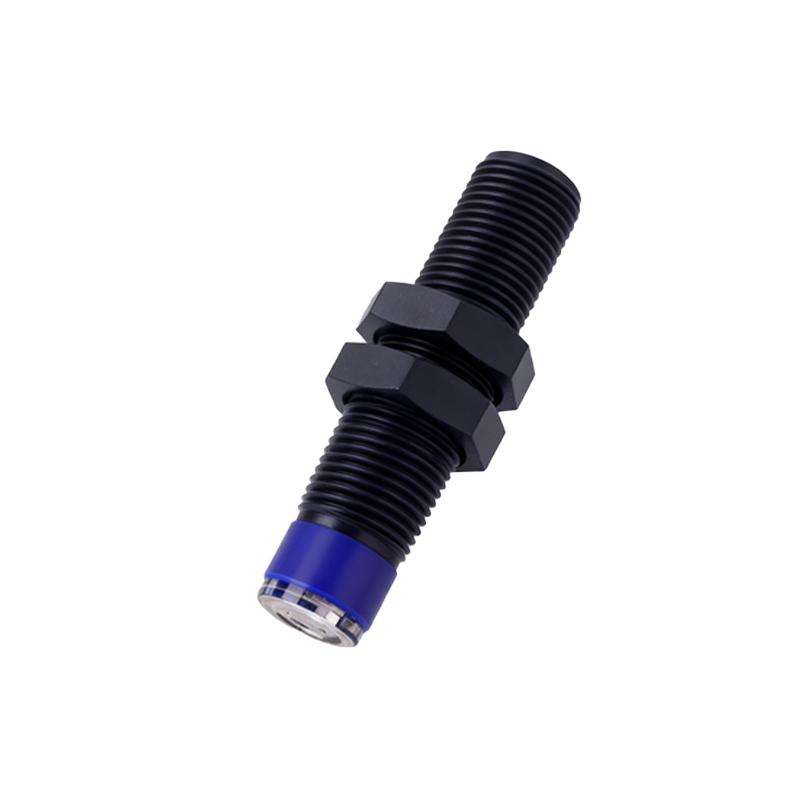
Ultrasonic proximity sensors employ sound waves beyond human hearing. They contain a transducer that emits high-frequency ultrasonic pulses (typically 40-200 kHz) and then listens for the echo. The sensor measures the time interval between emitting the pulse and receiving the reflected echo. This time-of-flight is directly proportional to the distance to the target object. When an object enters within a preset distance, the changed time triggers the output. Ultrasonic sensors are excellent for detecting objects regardless of color, transparency, or material, and are widely used for distance measurement, level sensing of bulk materials, and in challenging environments with dust or vapor.
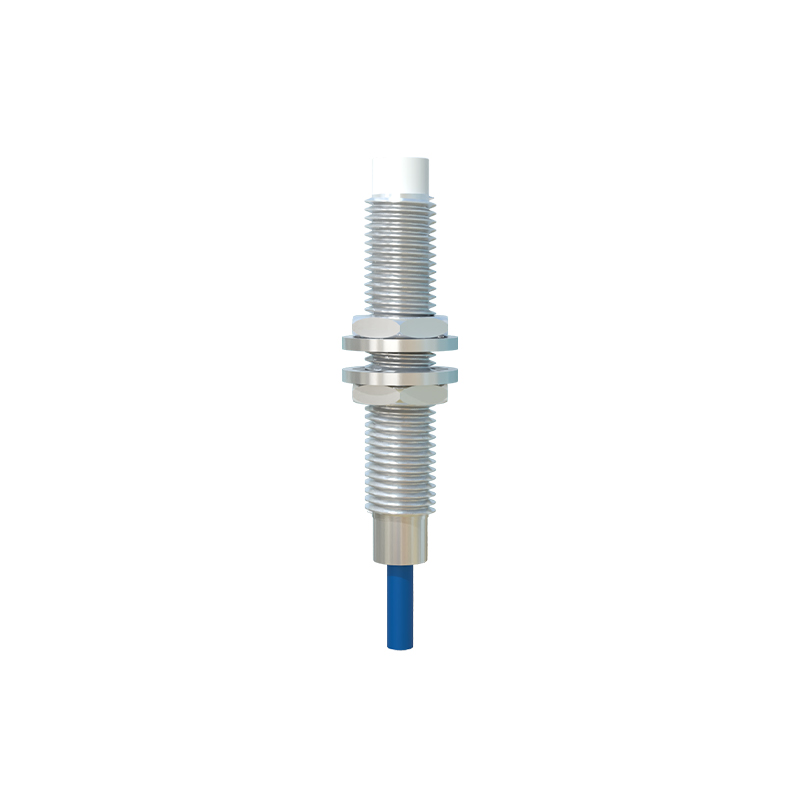
The output from all these sensor types is a clean, bounce-free signal vital for high-speed counting, positioning, and safety interlocking. Understanding the working principle—field disturbance leading to a processed electrical output—is key to selecting the right sensor. Factors like target material, required sensing distance, environmental conditions (dust, moisture, temperature), and response speed dictate whether an inductive, capacitive, photoelectric, or ultrasonic sensor is the optimal choice for a reliable and efficient automation solution.