Introduction to Two-Wire Proximity Switches
Two-wire proximity switches represent a fundamental and widely adopted sensor technology in industrial automation. Unlike their three-wire or four-wire counterparts, these devices simplify installation by combining the power supply and signal output into a single pair of wires. This intrinsic design eliminates the need for a separate control line, making them exceptionally cost-effective and straightforward to integrate into existing control systems, particularly those traditionally using mechanical limit switches. The core principle involves the sensor drawing a small leakage current when in the "off" state and a higher operating current when activated, with this current change being detected by the connected controller, such as a PLC input module. Their robustness, minimal wiring requirements, and compatibility with standard AC/DC circuits have cemented their role in countless applications, from conveyor control to machine guarding.
Operating Principle and Key Characteristics
The functionality of a two-wire proximity sensor hinges on its ability to modulate current flow based on target presence. In the absence of a target, the sensor maintains a low quiescent current (or leakage current). When a metallic or other detectable object enters its sensing range, the internal oscillator circuit is damped, triggering a switching element—typically a solid-state device—which allows a significantly higher current to flow through the loop. This current surge is interpreted by the receiving device as a "switch closed" signal. A critical characteristic is the voltage drop across the sensor, which must be accounted for in system design to ensure the PLC input receives a voltage level it recognizes as "ON." Furthermore, these sensors are distinguished by their lack of polarity sensitivity in AC versions and defined polarity for DC types, their limited output current capacity, and the presence of a residual current even in the off-state, which can affect highly sensitive control inputs.
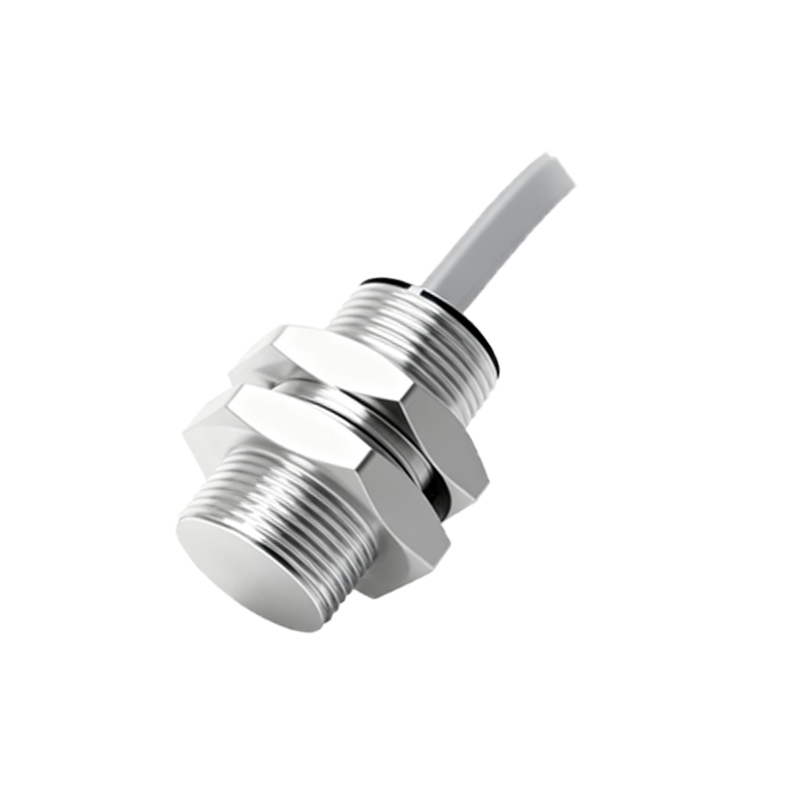
Advantages Over Multi-Wire Sensor Configurations
The primary advantage of the two-wire design lies in its simplicity and economic efficiency. Installation time and material costs are drastically reduced due to the minimal wiring; only two wires need to be connected in series with the load and power supply. This makes them ideal for retrofitting applications where space in control cabinets is limited or where wiring conduits are already congested. They offer enhanced reliability with fewer connection points that could potentially fail. Additionally, their similarity to conventional mechanical switches in wiring diagrams eases the transition to solid-state sensing for maintenance personnel. The inherent short-circuit and overload protection in many models further enhances system safety and durability, reducing downtime in harsh industrial environments like manufacturing plants and packaging lines.
Critical Considerations for Selection and Application
Selecting the appropriate two-wire proximity switch requires careful analysis of several parameters. First, the operating voltage range (e.g., 20-250V AC or 10-55V DC) must match the available supply. The load current rating of the sensor must not be exceeded by the current drawn by the PLC input or connected relay. Designers must meticulously calculate the voltage drop under operating conditions to ensure the signal at the controller is valid. Another vital factor is the sensor's switching frequency or response time, which must be fast enough for high-speed applications. Environmental conditions such as temperature extremes, presence of cutting fluids, or metallic dust also dictate the choice of housing material (e.g., stainless steel, PBT plastic) and protection rating (IP67, IP69K). Understanding the difference between normally open (NO) and normally closed (NC) output logic is also essential for correct circuit design and safety functionality.
Common Industrial Use Cases and Installation Best Practices
Two-wire proximity sensors find ubiquitous use across industries. Typical applications include position detection of machine parts, end-of-travel sensing on actuators, object counting on production lines, and level detection in bins or hoppers. For successful implementation, adherence to best practices is crucial. Installers should ensure a stable power supply with minimal fluctuations. The sensing face must be positioned with adequate clearance from surrounding metal to avoid false triggering—a parameter known as the flush-mounting or non-flush-mounting characteristic. Wiring should follow manufacturer guidelines, using shielded cables in electrically noisy environments to prevent electromagnetic interference (EMI). Regular maintenance, including cleaning the sensing face and checking for physical damage, ensures long-term operational integrity. It is also recommended to consult the sensor's datasheet for specific details on sensing distance derating for different target materials.
Troubleshooting and Maintenance Guidelines
Despite their reliability, two-wire proximity switches may encounter issues. Common problems include failure to detect targets, constant activation, or intermittent operation. Troubleshooting typically begins with verifying the power supply voltage at the sensor terminals under load. Measuring the current flow in