Introduction to Glucose Photoelectric Sensing
The accurate monitoring of blood glucose levels is a cornerstone of modern healthcare, particularly for managing diabetes. Among the various technologies developed, photoelectric sensors have emerged as a pivotal tool for non-invasive or minimally invasive glucose detection. Unlike traditional enzymatic methods that rely on chemical reactions, photoelectric sensing leverages the interaction between light and biological tissues to quantify glucose concentration. This approach primarily utilizes optical phenomena such as near-infrared (NIR) spectroscopy, Raman spectroscopy, and optical polarimetry. The fundamental principle rests on the fact that glucose molecules exhibit specific light absorption, scattering, and polarization rotation characteristics. When light of a particular wavelength is directed onto the skin or a sample, the glucose molecules modulate the light's properties. A photodetector then captures this altered light signal, and sophisticated algorithms correlate these optical changes to precise glucose concentrations. This method promises a future free from frequent finger-pricking, enhancing patient compliance and enabling continuous monitoring.
Core Working Principles and Technologies
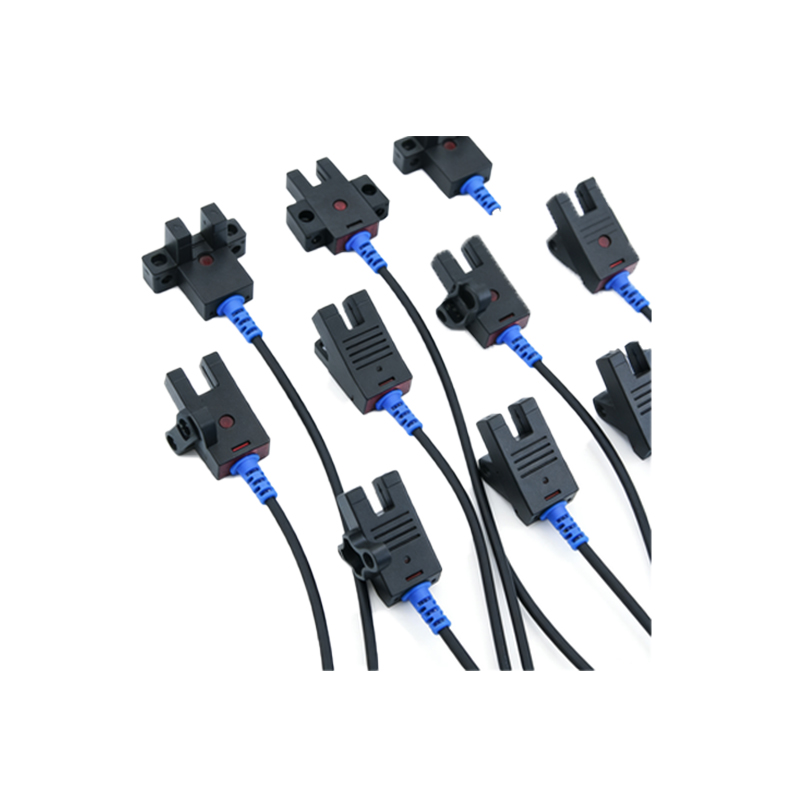
The operational framework of glucose photoelectric sensors is built on advanced optical techniques. Near-infrared spectroscopy is one of the most researched methods. It exploits the fact that glucose has unique absorption peaks in the NIR spectrum (typically between 900 nm and 2500 nm). A light source, often a laser or LED, emits NIR light into the tissue. The light penetrates the skin, interacts with interstitial fluid containing glucose, and is then reflected or transmitted to a photodiode or CCD sensor. The intensity of the received light at specific wavelengths is inversely related to the glucose concentration due to absorption. Another promising technology is Raman spectroscopy, which measures the inelastic scattering of light. When monochromatic light (usually from a laser) interacts with glucose molecules, the scattered light undergoes a frequency shift that provides a unique molecular "fingerprint." This method offers high specificity but requires sensitive equipment to detect the weak signal. Optical polarimetry, though less common for in-vivo use, measures the rotation of polarized light caused by the chiral properties of glucose molecules in aqueous humor or other transparent fluids.
Key Components and Sensor Architecture
A typical glucose photoelectric sensor system comprises several critical components engineered for precision and reliability. The light source is paramount; it must be stable, wavelength-specific, and safe for human tissue. Lasers and superluminescent LEDs (SLEDs) are commonly employed for their coherence and narrow spectral bandwidth. The optical delivery system, which may include fiber optics or waveguides, directs the light to the measurement site with minimal loss. The photodetector is the heart of the system, converting the modulated light signal into an electrical current. Avalanche photodiodes (APDs) or photomultiplier tubes (PMTs) are often used for their high sensitivity, especially crucial for detecting faint signals like those in Raman spectroscopy. An embedded microcontroller or digital signal processor (DSP) runs complex algorithms to filter noise, compensate for confounding factors (like skin temperature, hydration, or other blood constituents), and calculate the final glucose reading. The entire assembly is miniaturized into wearable formats, such as wristbands or skin patches, for continuous monitoring.
Current Applications and Clinical Implementation
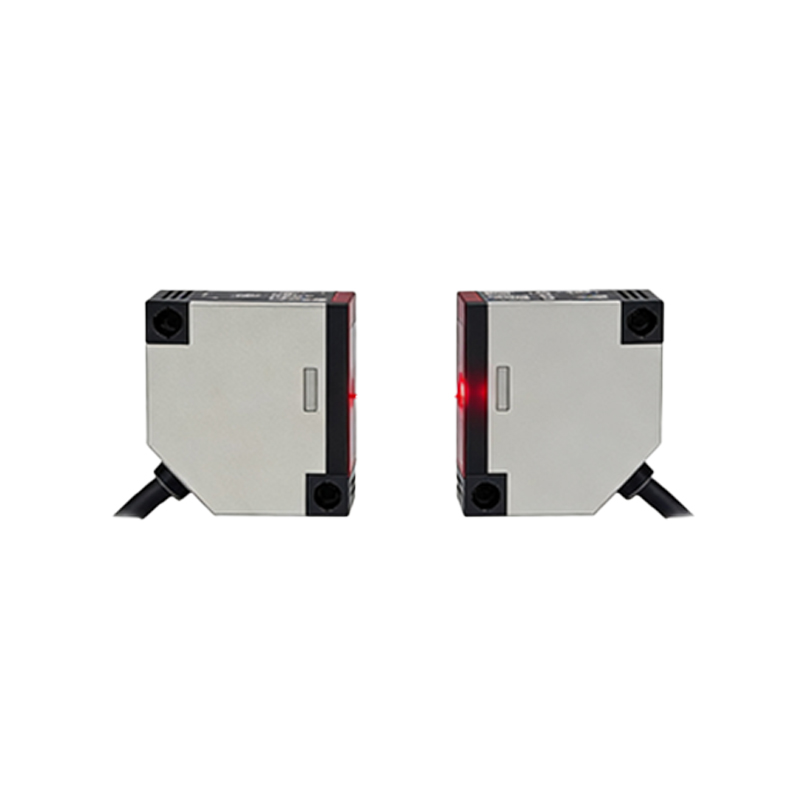
Glucose photoelectric sensors are transitioning from research laboratories to real-world clinical and personal use. The most direct application is in non-invasive continuous glucose monitoring (CGM) systems. Several commercial and prototype devices, worn on the wrist or earlobe, use NIR or similar optical methods to provide trend data and alerts for hypo- or hyperglycemia. While not yet as accurate as invasive CGM systems for critical therapeutic decisions, they offer unparalleled comfort for trend analysis and lifestyle management. In clinical settings, specialized tabletop analyzers utilizing photoelectric principles provide rapid, reagent-free glucose measurements from serum or plasma samples, streamlining laboratory workflows. Furthermore, this technology is being integrated into "smart" healthcare devices and the Internet of Medical Things (IoMT), allowing seamless data transmission to smartphones and cloud platforms for remote patient monitoring and telemedicine consultations, empowering both patients and healthcare providers.
Challenges and Technical Hurdles
Despite significant progress, the widespread adoption of photoelectric glucose sensors faces substantial technical challenges. A primary issue is signal specificity and interference. Human tissue is a complex matrix; components like water, hemoglobin, lipids, and proteins also absorb and scatter light, creating a strong background signal that can overshadow the glucose-specific signal. Advanced multivariate calibration and machine learning algorithms are required to isolate the glucose contribution. Signal-to-noise ratio (SNR) is another critical hurdle, particularly for methods like Raman spectroscopy. The weak Raman signal necessitates powerful, stable lasers and extremely sensitive detectors, which can impact device size, cost, and power consumption. Individual physiological variations—skin thickness, color, temperature, and blood flow—can affect optical paths and introduce measurement errors, requiring personalized calibration. Long-term stability and reproducibility of the optical components also remain areas of active research to ensure consistent performance over months or years of use.
Future Trends and Research Directions
The future of glucose photoelectric sensing is vibrant, driven by interdisciplinary innovation. Research is intensely focused on multi-modal sensing, combining two or more optical techniques (e.g., NIR with Raman or photoacoustics) to cross-validate readings and dramatically improve accuracy and reliability. The integration of nanotechnology is promising; the use of surface-enhanced Raman scattering (SERS) substrates with metallic nanoparticles can amplify the Raman signal by factors of millions, potentially enabling compact, low-power sensors. Another frontier is the development of fully implantable, long-term optical sensors that reside in the subcutaneous tissue, communicating wirelessly with an external reader. Advances in silicon photonics and integrated optoelectronics aim to shrink all optical components onto a single microchip, leading to ultra-low-cost, disposable sensor patches. Furthermore, the convergence with artificial intelligence will yield smarter, self-calibrating systems that adapt to each user's unique physiology, paving the way for truly personalized and predictive diabetes management, and potentially extending to other metabolic biomarkers.