Introduction to Photoelectric Distance Sensors
Photoelectric sensors for distance measurement represent a cornerstone technology in modern industrial automation and process control. These devices operate on the principle of emitting a light beam, typically from an LED or laser diode, towards a target object. The sensor then detects the reflected light and calculates the distance based on the properties of the returned signal. Unlike simple presence detection sensors, distance-measuring variants provide continuous, analog, or digital data representing the precise gap between the sensor head and the target. This capability is fundamental for applications requiring precision positioning, dimensional inspection, or level monitoring, where mere object detection is insufficient. The core advantage lies in their non-contact nature, allowing for wear-free operation and measurement of delicate, hot, or moving objects without physical interaction.
Core Operating Principles and Technologies
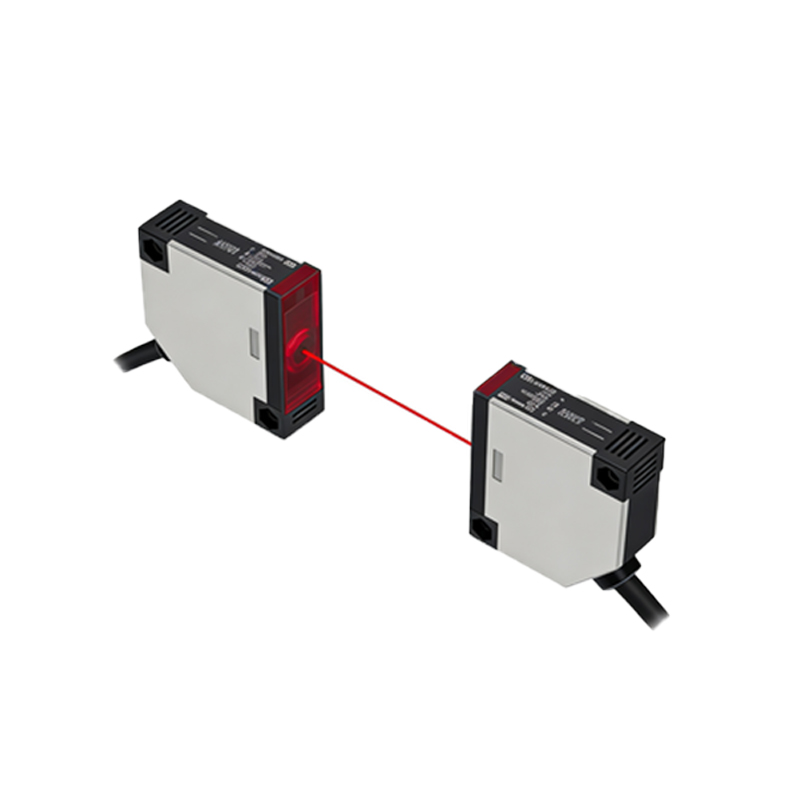
The performance and application suitability of a photoelectric distance sensor are dictated by its underlying measurement principle. The two predominant technologies are triangulation and time-of-flight (ToF). Triangulation-based sensors use a precise geometric arrangement. The emitted light beam strikes the target, and the reflected light is focused onto a position-sensitive detector (PSD) or a CMOS array at an angle. The position of the light spot on the detector shifts linearly with the target's distance, enabling high-resolution measurements, often in the sub-micron range, but typically over shorter ranges. Conversely, Time-of-Flight sensors measure the time delay between the emission of a light pulse and the reception of its reflection. This method, calculating distance as a function of the speed of light, is ideal for longer ranges, from several centimeters up to many meters, though with generally lower resolution than triangulation. A third variant, confocal chromatic measurement, uses white light and spectral analysis for exceptional precision on reflective or transparent surfaces.
Key Performance Specifications and Selection Criteria
Selecting the appropriate sensor requires a careful analysis of key parameters. Measurement range defines the minimum and maximum distances over which the sensor can operate accurately. Resolution specifies the smallest detectable change in distance, critical for high-precision tasks. Repeatability indicates the sensor's consistency in returning the same value for a static target under unchanged conditions. Linearity error describes the deviation of the sensor's output from a perfectly straight line across its measurement range. Environmental factors are paramount: sensing distance can be affected by the target's color, material, surface finish (glossy vs. matte), and ambient light conditions. Engineers must also consider the output signal type (analog 4-20mA/0-10V, digital IO-Link, serial interface), response time, housing material (often stainless steel or ruggedized plastic for IP67/IP69K ratings), and mounting constraints.
Industrial Applications and Use Cases
The versatility of distance-measuring photoelectric sensors fuels their adoption across diverse sectors. In automotive manufacturing, they ensure precise gap and flushness measurements between body panels. In packaging machinery, they monitor material roll diameter to prevent breakage or control filling levels in containers. Robotics heavily relies on these sensors for precise end-effector positioning and object handling. Semiconductor and electronics production lines use high-precision models for wafer handling and component placement. In logistics, they facilitate palletizing and dimensioning of packages. Level monitoring in silos or tanks for bulk solids or liquids is another classic application, replacing mechanical floats. Their role in quality control for dimensional verification of machined parts is indispensable, providing 100% inline inspection without slowing production.
Installation, Calibration, and Best Practices
Proper installation is critical for optimal sensor performance. Mounting must be rigid to prevent vibration-induced errors. The sensor should be aligned perpendicular to the target surface to ensure the strongest signal return; angled surfaces can cause signal loss or measurement inaccuracies. For diffuse reflection sensors, maintaining a clean optical window is essential, as dust or oil film can attenuate the light beam. Calibration procedures vary by model but often involve teaching the sensor the output values for known near and far points within the application's specific range. Utilizing background suppression models can help ignore irrelevant objects beyond the target. For challenging surfaces like glass or shiny metal, specialized sensors with polarized filters or coaxial optical designs (where emission and reception paths are aligned) may be necessary to overcome specular reflection issues.
Future Trends and Technological Advancements
The evolution of photoelectric distance sensors is driven by the demands of Industry 4.0 and smart factories. Integration of advanced digital communication protocols like IO-Link is becoming standard, enabling remote parameterization, detailed diagnostics, and condition monitoring. Sensor fusion, combining distance data with other sensor inputs (e.g., vision), is creating more intelligent perception systems. Miniaturization continues, allowing sensors to fit into increasingly compact machinery. There is also a push towards higher robustness against environmental interference, such as immunity to intense ambient light from welding arcs or sunlight. Furthermore, the development of multi-pixel ToF sensors and array-based triangulation sensors is enabling simple 3D profile measurement, blurring the lines between traditional sensors and more complex vision systems, thereby opening new frontiers for automated inspection and guidance.