Introduction to Photoelectric Sensor Coding Systems
In the industrial automation landscape, photoelectric sensors are ubiquitous components, critical for tasks ranging from object detection and counting to positioning and inspection. To manage the vast array of available models with differing specifications, manufacturers employ systematic product coding systems. These alphanumeric codes are not random strings but structured identifiers that convey essential technical and functional attributes. Understanding this coding is paramount for engineers, procurement specialists, and system integrators to ensure the correct sensor is selected for a specific application. A misinterpretation can lead to system downtime, compatibility issues, or suboptimal performance. This guide deciphers the common elements found in photoelectric sensor product codes, providing a framework for navigating catalogs and datasheets with confidence.
Decoding the Core Components of a Product Code
A typical photoelectric sensor product code is segmented into distinct blocks, each representing a key characteristic. While formats vary by manufacturer, a generalized structure often includes the following sequence: Series Code, Sensing Mode, Output Type, Connection Style, and Special Features. The Series Code, usually at the beginning, identifies the product family or housing design (e.g., cylindrical, rectangular, slot-type). This is followed by letters or numbers denoting the Sensing Mode: diffuse (proximity), retro-reflective, through-beam, or background suppression. The next segment specifies the Output Type, such as NPN or PNP transistor, relay, analog, or IO-Link digital communication. Connection Style indicates the electrical interface, like cable, quick-disconnect (M8, M12), or terminal block. Finally, suffixes may denote Special Features like adjustable sensing range, teach-in functionality, high-temperature resistance, or specific approvals (e.g., UL, CE).
Sensing Mode Designations in Product Codes
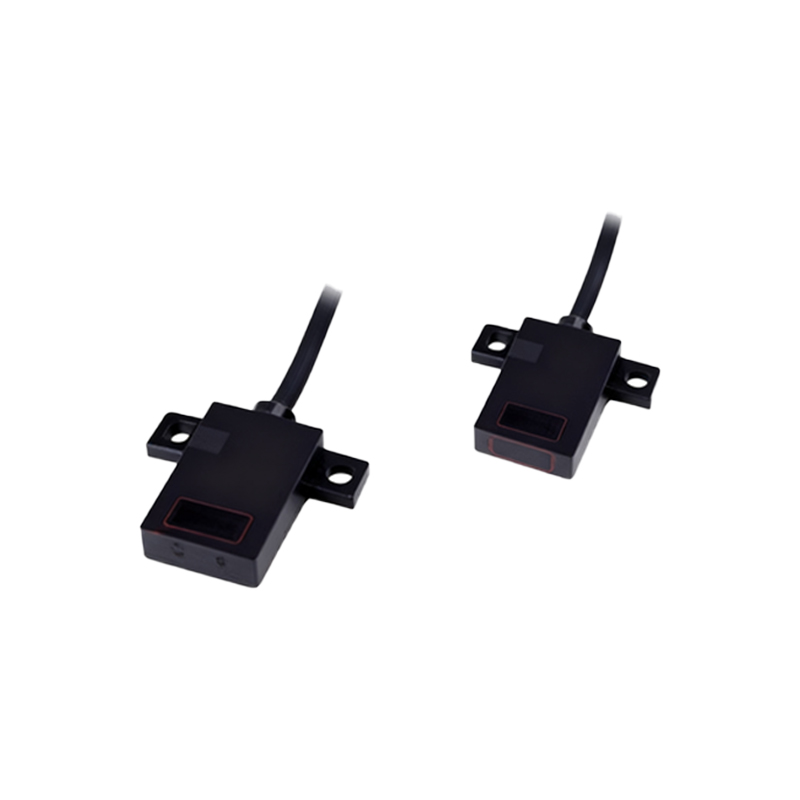
The sensing method is a primary differentiator and is prominently featured in the code. Common abbreviations include 'D' for diffuse reflective sensors, which detect objects without a separate reflector. 'R' often signifies retro-reflective models, requiring a reflector. 'T' is frequently used for through-beam types, comprising separate emitter and receiver units. Advanced modes like background suppression (BGS) or foreground suppression (FGS) might be indicated by codes like 'B' or 'FG'. Some manufacturers use more descriptive codes, such as 'POL' for polarized retro-reflective sensors that ignore shiny objects. Recognizing these designations allows an engineer to immediately narrow down the sensor type based on the required detection logic and installation constraints in the application.
Output Configuration and Electrical Interface Codes
The electrical output specification is crucial for integration with controllers like PLCs. Codes in this segment define the output's electrical characteristics. 'NPN' (sourcing) and 'PNP' (sinking) are standard, often abbreviated simply as 'N' or 'P'. The number of outputs is also indicated, e.g., '1' for normally open (NO) or normally closed (NC), or '2' for complementary outputs. For analog sensors, codes may include 'A' followed by a number for the output type (0-10V, 4-20mA). The rise of industrial IoT is reflected in codes for smart sensors with IO-Link communication, often marked as 'IOL' or 'IO'. The connection interface, such as 'M12' or 'CBL' (integrated cable), is another vital part of the code, ensuring mechanical and electrical compatibility with existing infrastructure.
Special Feature and Environmental Rating Suffixes
The tail end of a product code often contains suffixes specifying special capabilities or environmental robustness. These are critical for demanding applications. For instance, 'HT' or 'H' might indicate a high-temperature variant suitable for oven or welding environments. 'IP67' or 'IP69K' ratings for ingress protection are commonly integrated into the code. Laser-based sensors may include 'LSR'. Features like adjustable sensing distance could be marked as 'ADJ', and teach-in functionality as 'TE'. Safety-rated sensors for use in guarded machinery will have specific codes aligning with standards like ISO 13849. Understanding these suffixes ensures the selected sensor not only functions but also survives and maintains reliability in its intended operating environment.
Practical Application: Interpreting a Sample Code
Consider a hypothetical product code: PSD-30N-M12P-IO. Breaking it down: 'PSD' likely identifies the product series (perhaps a compact rectangular housing). '30' could indicate a 30mm sensing range or housing size. 'N' specifies an NPN output transistor. 'M12P' defines the connection as a 4-pin M12 quick-disconnect plug with PNP wiring? (Note: Careful! 'N' for output and 'P' in M12 might seem contradictory; this highlights the necessity of consulting the specific manufacturer's guide, as 'P' here could mean 'plug' style). Finally, '-IO' strongly suggests integrated IO-Link digital communication. This step-by-step analysis, cross-referenced with the official datasheet, prevents costly errors in ordering and installation.
The Importance of Manufacturer Documentation
While common patterns exist, there is no universal standard for photoelectric sensor coding. Each manufacturer has its own proprietary system. Therefore, the definitive resource is always the manufacturer's product catalog, selection guide, or datasheet. These documents provide a comprehensive code breakdown, often with selection trees or configurator tools. Relying solely on assumed patterns from one brand to interpret another's codes is a common pitfall. Best practice involves obtaining the specific decoding key from the supplier's website or technical support. This diligence is a small investment that pays significant dividends in project accuracy and efficiency.
Conclusion and Best Practices for Selection
Mastering photoelectric sensor product coding is a fundamental skill for efficient system design and maintenance. By systematically analyzing each segment of the code—series, sensing mode, output, connection, and features—professionals can make informed selections. The key takeaways are to recognize the standard abbreviations for common functions, always verify interpretations against the manufacturer's documentation, and use online configurators where available. As sensor technology evolves with more smart features, these coding systems will incorporate new elements, but the structured approach to decoding them remains constant. This knowledge streamlines procurement, reduces compatibility risks, and ensures optimal sensor performance in complex automation systems.