Introduction to NBB5 Proximity Sensor Switches
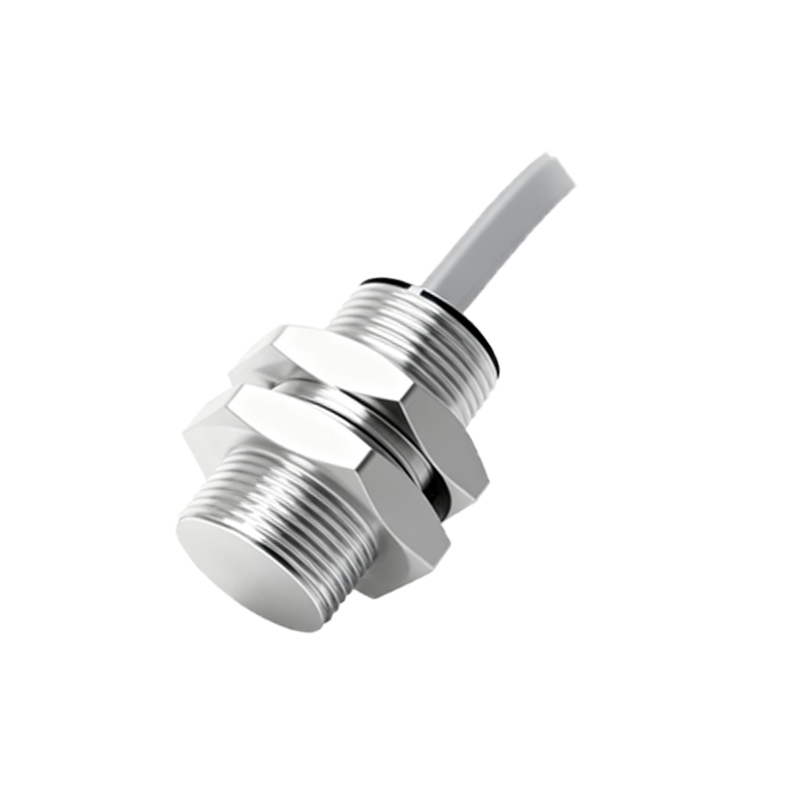
The NBB5 series represents a cornerstone in the realm of inductive proximity sensors, engineered for reliability in demanding industrial environments. These non-contact switches are designed to detect the presence of metallic objects without physical contact, utilizing an electromagnetic field. The hallmark of the NBB5 is its robust cylindrical M18 housing, typically constructed from nickel-plated brass or stainless steel, offering exceptional resistance to mechanical stress, oils, and coolants. This design ensures longevity and stable performance in applications ranging from machine tools and automated assembly lines to material handling systems. The series is renowned for its consistent switching points and high switching frequency, making it a preferred choice for precision positioning and object counting tasks.
Core Operating Principle and Technology
At the heart of every NBB5 sensor lies an oscillator circuit that generates a high-frequency electromagnetic field at its active face. When a ferrous or non-ferrous metal target enters this detection field, eddy currents are induced within the target. This process dampens the oscillations within the sensor's coil. An integrated evaluation circuit meticulously monitors the amplitude of these oscillations. Upon reaching a predefined threshold—indicating the target is within the specified sensing range—the circuit triggers a state change in the sensor's solid-state output. This switching signal is then used to control machinery, provide feedback to a PLC, or activate indicators. The technology ensures wear-free operation, a critical advantage over mechanical limit switches.
Key Technical Specifications and Variants
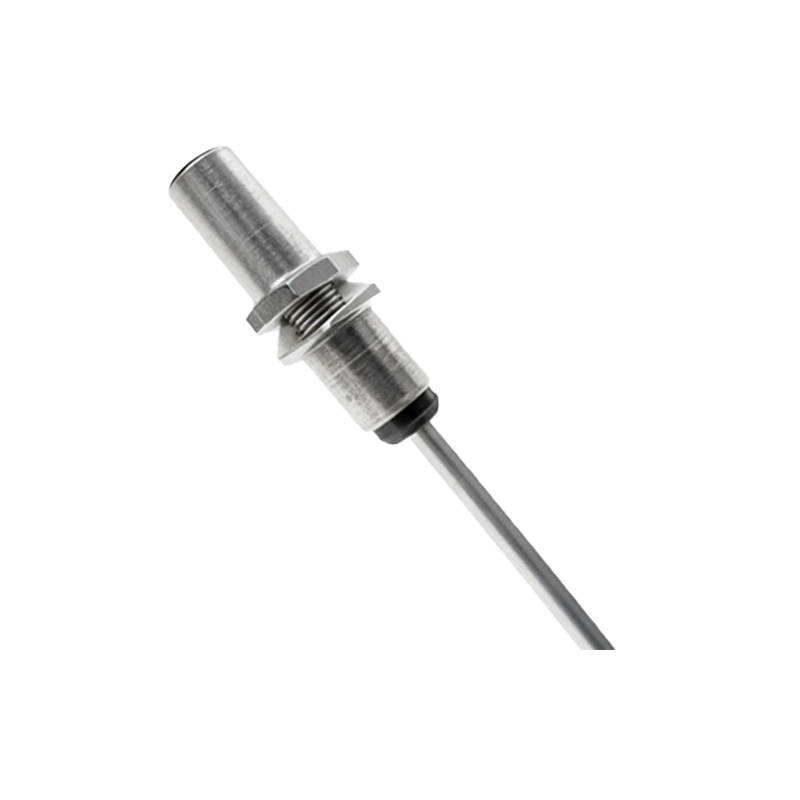
The NBB5 series is characterized by several critical specifications. The standard sensing distance for an M18 sensor is typically 5mm or 8mm, with a guaranteed operational limit of 0-81% of the nominal distance to account for manufacturing tolerances and temperature fluctuations. These sensors commonly operate on a wide range of DC voltages (10-30V DC) or AC voltages (20-250V AC), with versions featuring 3-wire, 4-wire, or 2-wire configurations. Output types include Normally Open (NO), Normally Closed (NC), or complementary outputs. Key performance metrics include a high switching frequency, often up to 2 kHz, enabling detection of rapidly moving parts, and a robust IP67 or IP68 ingress protection rating, allowing use in wash-down and dusty environments. Variants may include weld-field immune models and those with extended temperature ranges.
Installation and Wiring Considerations
Proper installation is paramount for optimal performance. The NBB5 must be mounted with adequate clearance from surrounding metal structures to prevent false triggering; this typically requires a non-metallic zone around the sensor barrel. For flush-mountable versions, this requirement is reduced. Wiring must adhere strictly to the datasheet, ensuring correct connection of the brown (L+), blue (L-), and black (output) wires in a 3-wire DC model. For AC versions, attention to load current and leakage current is crucial. It is recommended to use shielded cables in electrically noisy environments and to install suppression modules for inductive loads like relays or solenoids to protect the sensor's output transistor from voltage spikes.
Typical Industrial Application Scenarios
The versatility of the NBB5 sensor makes it ubiquitous across factory floors. A primary application is end-position detection on pneumatic cylinders, where it reliably confirms whether a piston is fully extended or retracted. In conveyor systems, arrays of NBB5 sensors are used for precise part counting, jam detection, and sorting based on metal presence. They serve as vital components in rotary indexing tables for verifying part presence before a machining operation. Within CNC machining centers, these sensors monitor tool changer positions and pallet lock status. Their robustness also makes them suitable for harsh environments like die-casting machines or welding cells, where they must withstand spatter, vibration, and high ambient temperatures.
Troubleshooting Common Operational Issues
Even robust components like the NBB5 can encounter issues. Common problems include failure to detect a target, which may stem from using a non-metallic target, the target being outside the sensing range, or a misaligned sensor. Constant activation can be caused by metal chips adhering to the sensing face or insufficient clearance from the mounting bracket. Intermittent operation often points to loose wiring connections, electrical interference, or a fluctuating power supply. A systematic approach involves verifying the target material and distance, checking the power supply voltage with a multimeter, inspecting the physical installation, and ensuring the load connected to the output is within specifications. LED indicators on most NBB5 sensors provide immediate visual status feedback for power and switching state.
Advantages Over Alternative Sensing Solutions
Compared to other sensing technologies, the NBB5 inductive proximity switch