Introduction to Hugong Photoelectric Sensors
In the competitive landscape of industrial automation, selecting reliable and high-performance components is paramount. Hugong, as a prominent manufacturer in the sensor market, has established a reputation for producing a wide range of photoelectric sensors. These devices are fundamental for tasks like object detection, counting, positioning, and quality control across various production lines. This review delves into the performance, features, and typical applications of Hugong photoelectric sensors to assess their suitability for demanding industrial environments.
Core Technology and Operating Principles
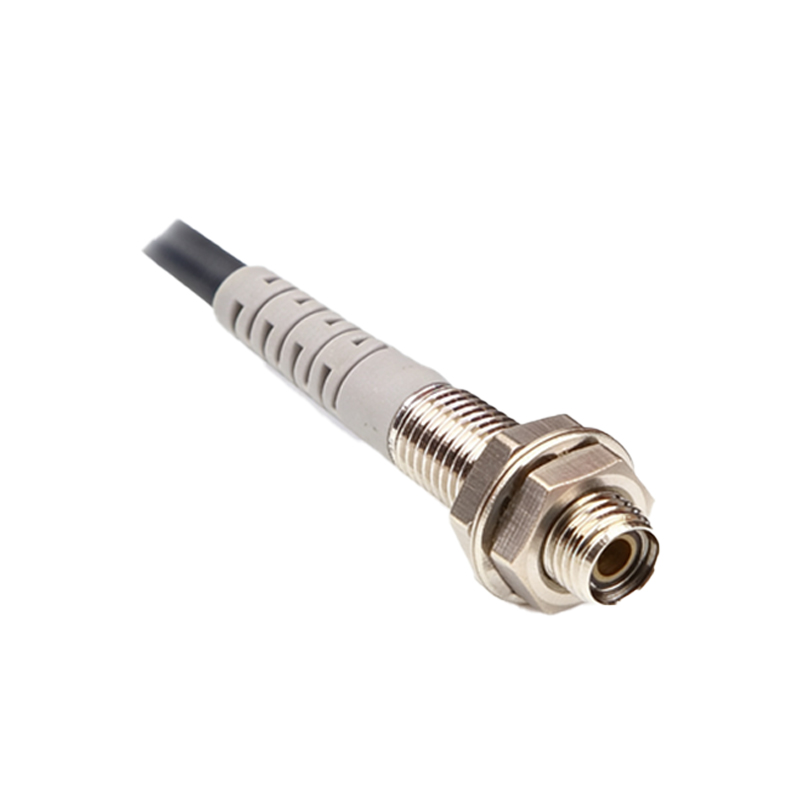
Hugong photoelectric sensors operate on the same fundamental principles as other industry-standard models. They utilize a light emitter, typically an LED, and a receiver. The sensor detects changes in the received light beam caused by the presence or absence of a target object. Hugong offers all major types: through-beam (or opposed), retro-reflective, and diffuse reflective sensors. Through-beam models provide the longest sensing ranges and highest reliability, as the emitter and receiver are separate units. Retro-reflective types use a reflector, making installation easier for longer ranges than diffuse types. Diffuse sensors detect objects directly without a separate reflector or receiver, ideal for close-range applications where space is limited.
Key Performance Characteristics and Build Quality
The performance of Hugong sensors is generally commendable for their price segment. They offer competitive sensing ranges across their product families. Their housings are typically constructed from robust materials like nickel-plated brass or industrial-grade plastics (PBT), ensuring good resistance to common industrial hazards such as minor impacts, oil mist, and coolant splashes. Many models feature IP67 or higher ingress protection ratings, making them suitable for washdown environments in food processing or packaging. The electronic components are designed for stable operation, with minimal drift over time and good immunity to ambient light interference, a critical factor for consistent operation under factory lighting.
Notable Product Features and Versatility
A significant strength of the Hugong portfolio is its versatility. They provide sensors with both analog and discrete (PNP/NPN) outputs, catering to different PLC and control system requirements. Many models incorporate advanced features like background suppression technology in diffuse sensors, which allows for precise detection regardless of the object's color or reflectivity. They also offer fiber optic versions for extreme environments (high temperature, tight spaces) and specialized models for color mark detection or precise contrast recognition. The availability of both standard and miniature housings allows engineers to select the perfect form factor for their application.
Ease of Installation and Configuration
Engineers and technicians appreciate the user-friendly design of most Hugong sensors. Many units come with clear visual indicators—usually a stable LED for power and a blinking or color-changing LED for output status. This simplifies alignment, troubleshooting, and verification. The mounting options are standardized, with adjustable brackets or threaded barrels (e.g., M8, M12, M18, M30) that are industry-common, ensuring easy integration into existing machine designs. Wiring is straightforward, with clear terminal designations or pre-wired connectors using the ubiquitous M8 or M12 industrial connectors.
Application Suitability and Industry Use Cases
Hugong photoelectric sensors find successful application in numerous sectors. In material handling and packaging, they are used for detecting boxes on conveyors, monitoring fill levels, and ensuring proper case sealing. In automotive assembly, they verify the presence of components, count parts, and control robotic cell operations. Their robust construction makes them suitable for primary metal industries for detecting metal sheets or coils. In the electronics industry, their precision is leveraged for PCB positioning and component verification. They are a common sight in warehouse automation for pallet detection and guiding AGVs (Automated Guided Vehicles).
Comparison with Other Major Brands
When compared to top-tier European or Japanese brands known for ultra-high precision and specialized materials, Hugong sensors position themselves as highly reliable and cost-effective workhorses. They may not always offer the extreme sensing distances or the fastest response times of premium brands, but for the vast majority of standard industrial applications, their performance is more than adequate. The value proposition is strong, offering a balance of reliability, features, and price that is attractive for OEMs (Original Equipment Manufacturers) and end-users looking to control project costs without sacrificing operational integrity.
Considerations for Potential Buyers
Before specifying Hugong sensors, engineers should carefully review the datasheets for the specific model. Key parameters to verify include the required sensing distance, response time, light source type (red, infrared, laser), output type, and environmental specifications (temperature range, IP rating). Ensuring compatibility with the existing control system voltage (10-30V DC typically) is crucial. For highly critical safety applications, it is essential to note that standard photoelectric sensors are not safety-rated devices; dedicated safety light curtains or laser scanners would be required for personnel protection.
Conclusion and Final Assessment
In summary, Hugong photoelectric sensors represent a solid choice for a wide spectrum of industrial automation tasks. They deliver reliable performance, robust construction, and a useful set of features that meet the needs of most standard applications. Their competitive pricing and good availability make them a practical option for system integrators and plant maintenance teams. While they may not be the first choice for applications demanding the absolute highest precision or for extreme environmental conditions beyond their specified ratings, for general-purpose object detection and process control, Hugong sensors prove to be dependable components that contribute effectively to operational efficiency and automation goals.