Introduction to Photoelectric Sensor Knobs
Photoelectric sensor knobs are integral adjustment components found on the housings of many industrial photoelectric sensors. These manual controls allow operators and technicians to fine-tune the sensor's operational parameters directly on the device, without the need for external programming tools or software interfaces. The presence of a knob typically indicates a sensor designed for flexibility and ease of setup in dynamic or varied application environments. By rotating the knob, users can adjust critical thresholds such as sensitivity, response time, or the set point for the light intensity received. This physical interface provides an immediate, tactile method for calibration, making it a preferred feature in settings where rapid adjustments are necessary or where access to complex programming suites is limited. The design and functionality of these knobs vary, ranging from simple potentiometers for analog adjustment to multi-functional digital encoders with push-button capabilities.
Primary Function: Sensitivity Adjustment
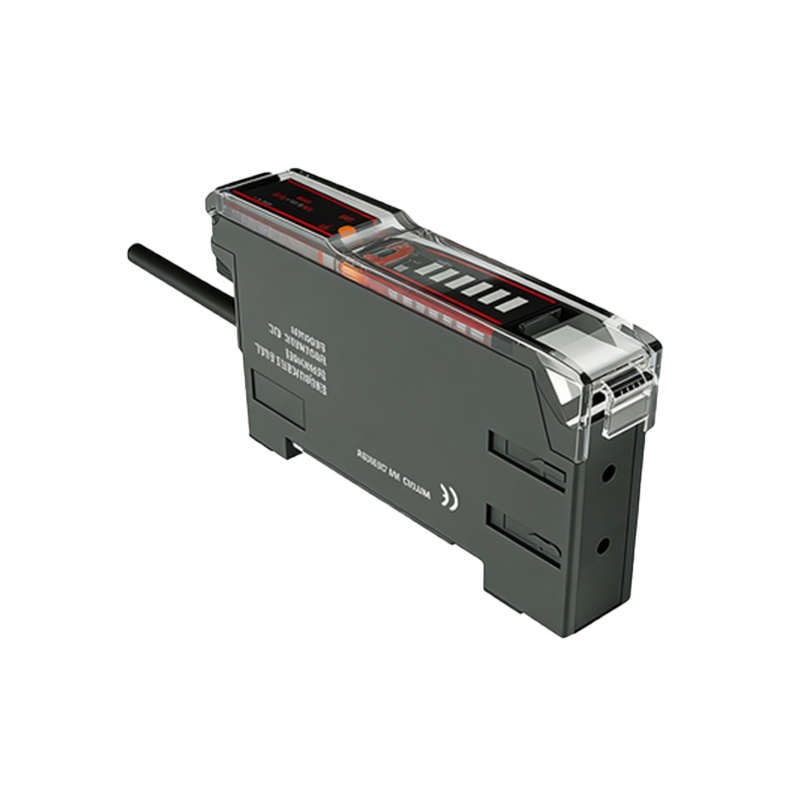
The most common and critical function of a photoelectric sensor knob is sensitivity adjustment. The sensitivity setting determines the minimum amount of reflected or received light the sensor needs to detect to trigger its output signal. In practical terms, adjusting the sensitivity allows the sensor to reliably detect targets of varying colors, surface finishes, sizes, or distances, while ignoring background interference or environmental noise like ambient light. Turning the knob clockwise often increases sensitivity, enabling the detection of faint light signals from low-reflectivity objects or over longer ranges. Conversely, turning it counterclockwise decreases sensitivity, which is useful for ignoring small, close objects or highly reflective backgrounds. Proper sensitivity calibration via the knob is essential for preventing false triggers and ensuring consistent, reliable operation in applications from packaging lines to material handling.
Function: Setting the Response Time or Delay
Many advanced photoelectric sensors feature knobs that control the device's response time or on/off delay functions. The response time adjustment dictates how quickly the sensor reacts to a change in the detected light condition. A faster response is crucial for high-speed counting or sorting applications. Alternatively, introducing a delay can be beneficial for debouncing signals or ensuring a target is stably present before triggering an action. Some knobs allow setting a specific ON-delay (the output activates a set time after detection) or OFF-delay (the output remains active for a set time after the target is gone). This functionality, managed through a simple turn of a knob, adds a layer of logic and timing control directly at the sensor level, simplifying system design and reducing the load on the central programmable logic controller (PLC).
Function: Switching Between Operating Modes
On multi-mode or programmable photoelectric sensors, a knob often serves as a selector switch between different operating modes. Common modes include Light-ON/Dark-ON operation, which defines whether the output activates when light is received or when it is blocked. Other selectable modes might include background suppression, retro-reflective, through-beam, or convergent beam operation for diffuse sensors. Using the knob to cycle through these pre-configured modes allows a single sensor model to be adapted for a wide variety of physical sensing configurations. This versatility reduces inventory complexity, as technicians can reconfigure a standard sensor on the fly to suit a new task, simply by referencing the manual and turning a knob to the appropriate position marked on the housing.
Application Benefits in Industrial Settings
The practical benefits of photoelectric sensor knobs in industrial automation are significant. They enable rapid commissioning and setup, drastically reducing machine downtime during installation or product changeovers. The tactile feedback and immediate effect of a knob adjustment allow for real-time tuning while observing the process, which is more intuitive for many technicians compared to navigating digital menus. This simplicity also reduces training requirements. Furthermore, in harsh industrial environments where display screens might be hard to read or touchscreens may not respond well to gloved hands, a robust, mechanical knob provides a reliable and durable interface. The ability to make local adjustments without a laptop or network connection enhances operational resilience and independence on the factory floor.
Considerations for Selection and Use
When selecting a photoelectric sensor with adjustment knobs, engineers must consider several factors. The environmental rating is paramount; knobs should be sealed appropriately (e.g., IP67 rating) to prevent ingress of dust, oils, and coolants that could impair their function. The resolution and range of adjustment are also critical—some knobs offer coarse adjustment for major changes, while others provide fine, incremental control for precise calibration. It is vital to protect these knobs from unauthorized or accidental adjustment in a running production line, which can be achieved through models featuring lockable knobs, recessed designs, or software lockouts once the optimal setting is found. Proper documentation of the final knob positions for different processes is a recommended best practice for maintaining consistency.
Conclusion: The Value of Manual Control
In an era increasingly dominated by digital communication and software-based configuration, the humble photoelectric sensor knob remains a testament to the enduring value of direct, manual control. It embodies a principle of simplicity and accessibility in industrial design. By providing an immediate physical interface for critical parameters, these knobs empower technicians, enhance flexibility, and contribute to system robustness. Whether used for fine-tuning a sensitive detection task, setting a timing sequence, or switching an operating mode, the functionality embedded in these rotary controls is a key factor in the widespread adoption and utility of photoelectric sensors across countless automation applications. Their continued evolution, including integration with digital displays or hybrid interfaces, ensures they will remain a relevant and user-friendly feature for the foreseeable future.