Understanding Proximity Sensor Fundamentals
Proximity sensors are indispensable components in modern industrial automation, designed to detect the presence or absence of an object without physical contact. Their operation hinges on various physical principles, primarily electromagnetic fields, light, or sound. The core advantage lies in their non-contact nature, which eliminates mechanical wear and tear, ensures high reliability, and enables fast response times. These sensors are critical for applications ranging from object detection and positioning on conveyor belts to safety interlocks and counting tasks. Before delving into selection methods, it is essential to grasp that the choice fundamentally depends on the target object's material, size, required sensing distance, environmental conditions, and the desired electrical output. A misaligned selection can lead to system failures, false triggers, and increased downtime.
Identifying the Target Object Material
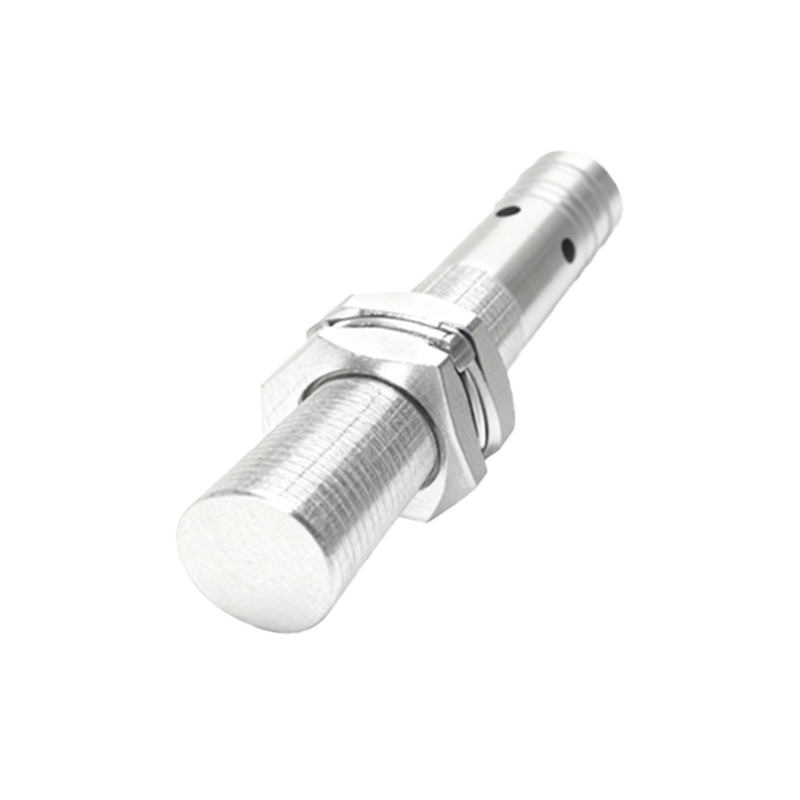
The material composition of the target is the foremost deciding factor. For metallic objects, especially ferrous metals like steel and iron, inductive proximity sensors are the default and most robust choice. They generate an electromagnetic field and detect eddy current losses caused by a metal target. For non-metallic materials—such as plastic, wood, glass, or liquids—capacitive proximity sensors are required. These sensors can detect virtually any material by measuring changes in capacitance. For precise detection of small objects or for applications requiring color differentiation or transparency detection, photoelectric sensors (a type of proximity sensor using light) are ideal. Ultrasonic sensors, using sound waves, are versatile and can detect objects of almost any material, including granular substances, but may be affected by environmental factors like temperature and air turbulence.
Determining the Required Sensing Range
The nominal sensing distance, or switching distance, is a key specification. It is defined as the distance from the sensor's face to the standard target where the output switches. Engineers must consider both the nominal distance and a reliable operating distance, typically 70-80% of the nominal value to account for supply voltage tolerances, temperature variations, and part-to-part inconsistencies. Inductive sensors typically offer ranges from a few millimeters up to about 60 mm for standard models. Capacitive sensors have similar ranges but can be adjusted for sensitivity. Photoelectric sensors, depending on the type (diffuse, retro-reflective, or through-beam), can sense from centimeters to several meters. Ultrasonic sensors offer the longest ranges, often up to several meters. Always select a sensor with a rated sensing distance greater than your application's maximum required gap to ensure a safety margin.
Evaluating the Operating Environment
Industrial environments can be harsh. The sensor must withstand ambient conditions without degradation in performance. Key environmental factors include temperature extremes, presence of dust, oil, coolants, or chemical splashes, and potential for physical impact or vibration. For wet or washdown environments (e.g., food and beverage), sensors with high IP (Ingress Protection) ratings like IP67 or IP69K are mandatory. In areas with heavy metal chips or dust, a sensor with a flush or shielded design (for inductive types) is necessary to prevent side-effects from surrounding metal. For high-temperature applications near ovens or furnaces, specialized high-temperature models are available. Electromagnetic interference (EMI) from motors or welders can also affect sensor performance, so choosing models with robust EMI immunity is crucial for stable operation.
Selecting the Appropriate Output and Electrical Connection
The electrical interface must be compatible with the control system, typically a PLC (Programmable Logic Controller). The primary output types are NPN (sinking) and PNP (sourcing) for DC sensors, and AC/DC or relay outputs for other models. The choice between NPN and PNP depends on the PLC input module's configuration. The output configuration—normally open (NO) or normally closed (NC)—defines the logic state when no target is present. Wiring style is another practical consideration: pre-wired cables offer quick installation, while quick-disconnect (QD) versions allow for easy sensor replacement without rewiring. Additionally, consider if the application requires analog outputs (for distance proportional signals) or specialized IO-Link digital communication for advanced diagnostics and parameter setting.
Considering Physical Size and Mounting Constraints
The available space for sensor installation often dictates the form factor. Proximity sensors come in cylindrical barrels (e.g., M8, M12, M18, M30 threads), rectangular blocks, and slot styles. Miniature sensors (like M5 or M8) are essential for tight spaces or small-part detection. The mounting method—flush (non-flush) or non-flush (shielded or unshielded) for inductive sensors—significantly affects the sensing distance and immunity to adjacent metal