Introduction to Inductive Proximity Sensing
Inductive proximity sensors are fundamental components in industrial automation, renowned for their non-contact detection of metallic objects. Operating on the principle of electromagnetic induction, these sensors generate an oscillating electromagnetic field from a coil within their sensing face. When a conductive metal target enters this field, eddy currents are induced on the target's surface. This causes a change in the oscillation amplitude within the sensor's coil, which is detected by the internal circuitry, triggering a switching action. This robust, wear-free technology is ideal for harsh environments where mechanical limit switches would fail, offering high reliability and long operational life in applications ranging from machine tools to material handling systems.
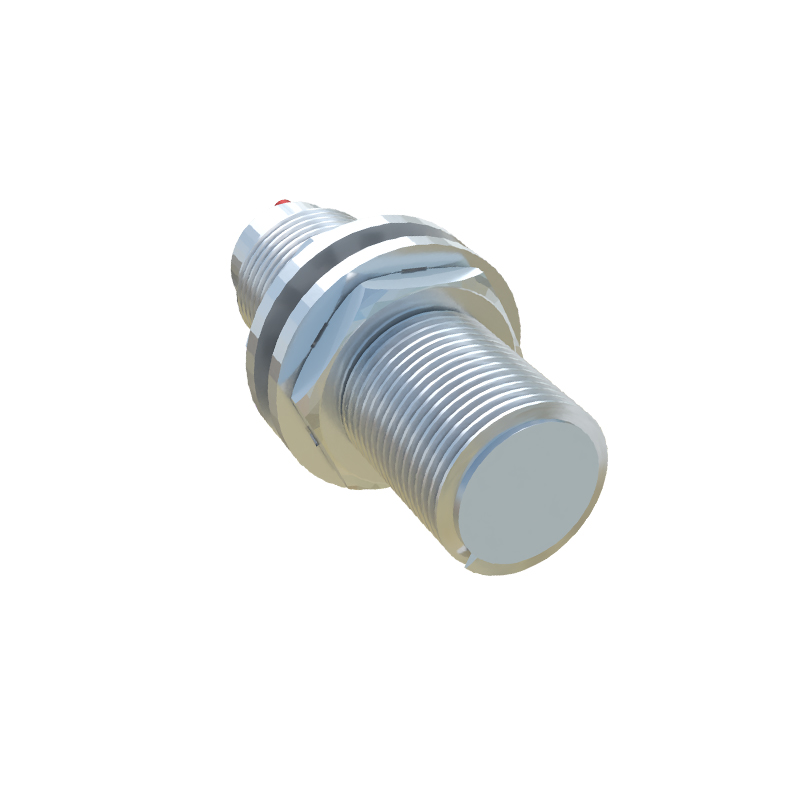
The NPN Output Configuration Explained
The designation "NPN" refers to the type of transistor used in the sensor's output switching circuit. In an NPN inductive proximity sensor, the output acts as a sinking switch. This means the switched output terminal is connected to the negative voltage rail (0V or common). When an active metal target is detected, the NPN transistor inside the sensor turns on, effectively connecting the output signal wire to the common (negative) line. To complete the circuit, the load (such as a PLC input, relay coil, or indicator lamp) must be connected between the positive voltage supply and the sensor's output wire. Consequently, the load receives power and activates when the sensor switches the output to common. This configuration is sometimes called "sinking" or "negative switching."
Key Operational Characteristics and Specifications
Several critical parameters define the performance of an NPN inductive proximity sensor. The sensing range, typically specified in millimeters, indicates the maximum distance at which a standard target can be reliably detected. This range is influenced by the target's material, size, and shape; ferrous metals like steel are detected at the nominal range, while non-ferrous metals like aluminum or copper have a reduced effective range. Other vital specifications include the operating voltage (commonly 10-30V DC), current consumption, switching frequency (how many on/off cycles per second it can handle), and the housing material (often nickel-plated brass or stainless steel for durability). Engineers must also consider the sensor's protection rating (IP67 or IP69K for dust and water resistance) and temperature range to ensure suitability for the application environment.
Wiring and Installation Best Practices
Correct wiring is paramount for reliable operation. A standard three-wire DC NPN sensor has brown (positive supply), blue (common/negative), and black (output signal) wires. The brown wire connects to the positive DC supply, the blue wire to the negative or 0V, and the black wire to the load. The other side of the load then connects back to the positive supply. It is crucial to ensure the power supply voltage matches the sensor's rating and that the load current does not exceed the sensor's maximum switching capacity. During installation, maintain the specified lateral and axial clearance from metal mounting surfaces to prevent false triggering. Proper shielding of cables in electrically noisy environments and the use of surge protection devices are also recommended to enhance system longevity.
Advantages Over PNP and Other Sensor Types
The choice between NPN and PNP (sourcing) outputs is often dictated by the control system's input module design. NPN sensors are traditionally prevalent in control systems where PLC digital inputs are configured to accept a sinking signal. Key advantages of NPN inductive sensors include compatibility with a wide range of legacy PLCs and controllers, and in some regions, they are the standard convention. Compared to capacitive or photoelectric sensors, inductive sensors offer unparalleled consistency and immunity for detecting metals only. They are unaffected by dust, oil, dirt, or ambient light, making them exceptionally reliable in dirty industrial settings like machining, stamping, or welding applications.
Common Industrial Applications
NPN inductive proximity sensors serve countless functions across manufacturing and process industries. A primary application is position sensing, such as detecting the presence or absence of a metal part on a conveyor, verifying the end-of-travel of a cylinder, or confirming the closed position of a metal door or guard. They are extensively used for counting metal objects passing a point, monitoring rotational speed by detecting gear teeth or bolts on a rotating shaft, and in automated assembly for part verification before a process step. Their robustness also makes them ideal for use in CNC machine tools for tool positioning and in automotive assembly lines for robotic guidance and part presence detection.
Troubleshooting and Maintenance Tips
While known for durability, these sensors can encounter issues. Common problems include failure to detect a target, which may be caused by the target being outside the sensing range, incorrect alignment,