What is a Miniature Inductive Proximity Sensor?
A miniature inductive proximity sensor is a non-contact electronic device designed to detect the presence or absence of metallic objects within a very short range, typically from a few millimeters up to about 15 millimeters. Its compact size, often with housing diameters as small as M5, M8, or M12, allows for installation in space-constrained applications where traditional sensors cannot fit. The core principle of operation is based on electromagnetic induction. The sensor generates a high-frequency oscillating electromagnetic field from its active face. When a metallic target enters this field, eddy currents are induced on the surface of the target. This causes a change in the oscillation amplitude within the sensor's coil, which is detected by the internal circuitry. The sensor then triggers a solid-state output signal, switching its state to indicate object detection.
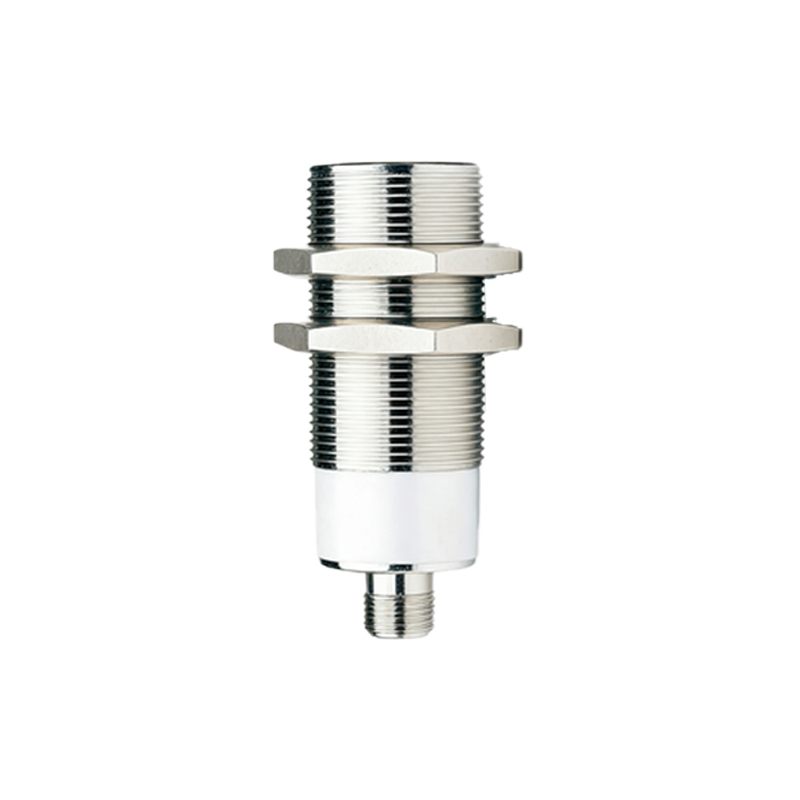
Core Components and Operating Principle
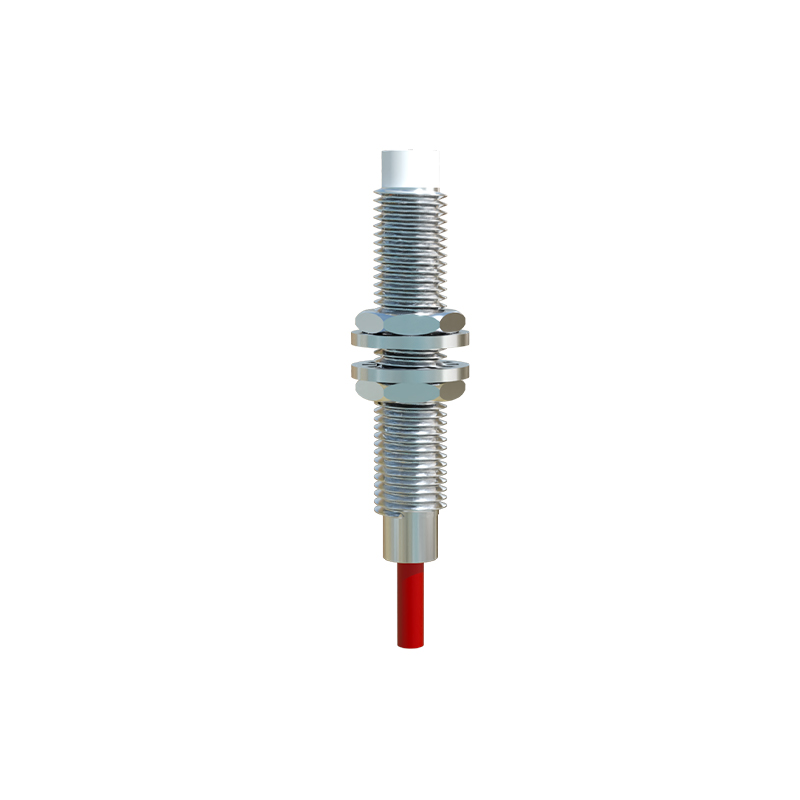
The fundamental components include an oscillator coil, a ferrite core, a detection circuit, and an output amplifier, all housed in a robust, often stainless steel or nickel-plated brass, casing. The oscillator generates the high-frequency field. The detection circuit continuously monitors the amplitude of these oscillations. The presence of a ferrous or non-ferrous metal (like aluminum, brass, or copper) dampens the oscillations. For ferrous metals, the effect is stronger due to their magnetic permeability, which also distorts the field, often allowing for a slightly longer sensing range. The circuit is precisely tuned to recognize this specific damping effect, ignoring other environmental interferences. The output stage then provides a clean, bounce-free signal, either PNP (sourcing) or NPN (sinking), compatible with programmable logic controllers (PLCs) and other industrial control systems.
Key Characteristics and Performance Metrics
Several critical parameters define a sensor's suitability for an application. The sensing distance, or nominal range (Sn), is specified for a standard target, usually a square of mild steel. It is crucial to note that the effective sensing distance can vary with different metals; a reduction factor is applied for non-ferrous metals. Repeatability, the consistency of the switching point, is exceptionally high, often within microns. Switching frequency indicates how many on/off cycles per second the sensor can handle, which is vital for high-speed counting or positioning tasks. Another vital feature is the built-in hysteresis, which prevents output chattering when a target is at the exact switching point. These sensors are also celebrated for their high resistance to environmental factors like dust, oil, coolant, and non-metallic debris, as only conductive materials can trigger them.
Common Output Configurations and Wiring
Miniature inductive sensors are predominantly available in 3-wire DC configurations. The two primary types are PNP (also known as "sourcing") and NPN ("sinking"). In a PNP sensor, the output wire switches the positive voltage to the load when activated. In an NPN sensor, the output wire switches the negative or ground connection. The choice depends on the input configuration of the controller. A 4-wire version, offering both a Normally Open (NO) and a Normally Closed (NC) output in one housing, is also common for flexible logic design. Wiring is straightforward: brown wire to DC positive (+V), blue wire to DC common (0V), and the black (or white) wire is the switched output signal. Proper shielding and grounding are recommended in electrically noisy industrial environments.
Advantages Over Other Sensor Types
Compared to mechanical limit switches, miniature inductive sensors offer superior longevity with no moving parts to wear out, enabling hundreds of millions of operations. They provide faster response times, often in microseconds, and are completely immune to physical contact, eliminating target wear. When compared to capacitive sensors, they are unaffected by non-conductive materials like plastics, liquids, or wood, making them selectively precise for metals. Versus photoelectric sensors, they are highly reliable in dirty, dusty, or foggy conditions where light beams could be obscured, and they are not affected by the color or reflectivity of the target. Their rugged, sealed construction (typically IP67 or higher) makes them ideal for harsh washdown or outdoor environments.
Typical Industrial Applications
The application spectrum is vast due to their reliability and size. In automated machinery, they are used for precise end-position detection of cylinders, part presence verification on conveyors, and high-speed counting of metal parts. In robotics, they serve as collision detection sensors on grippers or as feedback for arm positioning. The packaging industry uses them to detect metal seals or caps on production lines. Within CNC machining centers, they provide tool breakage detection or pallet positioning. Their miniature form factor is