Introduction to Photoelectric Sensors
Photoelectric sensors are versatile devices widely used in industrial automation for detecting the presence, absence, or distance of objects without physical contact. They operate by emitting a light beam, typically from an LED or laser diode, and then analyzing the light that is either reflected back or interrupted by a target object. The core principle involves converting changes in light intensity into electrical signals. These sensors are prized for their high speed, long sensing ranges, and ability to detect a vast array of materials, including transparent and opaque substances. Their non-contact nature minimizes wear and tear, making them ideal for harsh environments and applications requiring high reliability. From packaging lines to automotive assembly, photoelectric sensors form a critical component of modern control systems, enabling precise and efficient automation.
Through-Beam Sensors
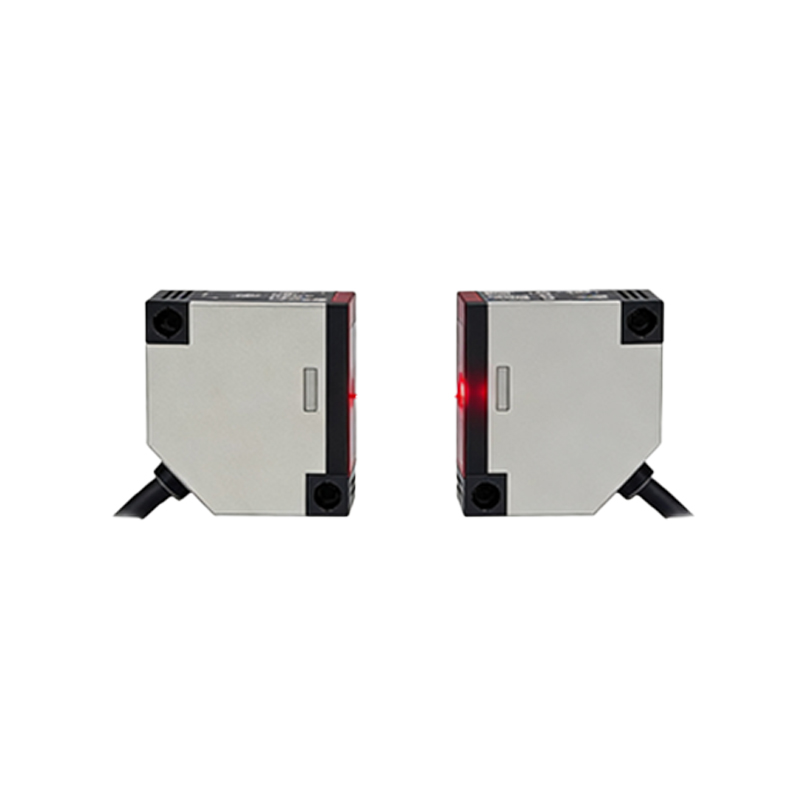
Through-beam sensors, also known as opposed-mode sensors, consist of two separate units: a transmitter and a receiver. The transmitter projects a continuous beam of light directly to the receiver. Detection occurs when an object physically interrupts this light beam, causing the receiver's signal to drop. This configuration offers the longest possible sensing range and highest reliability among photoelectric types, as it is largely immune to environmental factors like target color, reflectivity, or surface finish. It is exceptionally effective in dirty environments or for detecting small, fast-moving objects. Common applications include part counting on high-speed conveyors, break detection in material webs, and safety curtains on machinery. The primary trade-off is the need for precise alignment of two separate components and increased installation complexity.
Retro-Reflective Sensors
Retro-reflective sensors house both the light emitter and receiver in a single housing. They function by directing light toward a specialized reflector, often a corner-cube prism or tape, which reflects the beam directly back to the receiver. An object is detected when it blocks this return path. This design simplifies installation compared to through-beam sensors, as only one device and a reflector need to be mounted and aligned. Sensing ranges are shorter than through-beam but longer than diffuse sensors. A key feature is the use of polarizing filters to prevent false triggers from shiny objects that might otherwise reflect light directly back like the reflector. These sensors are well-suited for applications like pallet detection, door open/close monitoring, and detecting objects on conveyors where mounting space on one side is limited.
Diffuse Reflective Sensors
Diffuse reflective sensors, or proximity-mode sensors, integrate the emitter and receiver into one unit. They detect objects by relying on the diffuse reflection of light from the target's surface itself. The emitted light strikes the object and scatters in many directions; a portion of this scattered light returns to the receiver to trigger detection. This makes them the simplest to install, as no separate reflector or receiver is needed. However, performance is highly dependent on the target's color, size, texture, and reflectivity. Light-colored, matte objects are detected at longer ranges than dark, shiny, or absorbent ones. Sensing distances are the shortest of the three main types. They are commonly used for detecting objects at close range, such as in bottle filling stations, wafer positioning in electronics, or detecting the presence of a product in a chute.
Background Suppression Sensors
Background Suppression (BGS) sensors are a specialized type of diffuse sensor designed to ignore objects beyond a specific set distance. They use triangulation or optical focusing techniques to ensure only light reflected from objects within a defined "window" is focused onto the receiver. Objects outside this window, including the background, are ignored. This allows for precise detection regardless of the target's color or reflectivity and is invaluable when the object must be distinguished from a similarly colored or patterned background. For example, a BGS sensor can reliably detect a black object on a black conveyor belt. Applications include precise edge guiding, detecting transparent films or glass, and assembly verification where parts must be at an exact position.
Fiber Optic Photoelectric Sensors
Fiber optic photoelectric sensors separate the sensing head (the fiber optic cable) from the amplifier unit. The light is transmitted and received through flexible or rigid fiber optic strands. This allows the tiny sensing tip to be installed in extremely confined, hot, or hazardous locations where a standard sensor would not fit or survive, while the electronics remain safely housed elsewhere. They are immune to electrical noise and can be used in explosive atmospheres. The sensing mode (through-beam, retro-reflective, or diffuse) is determined by the configuration of the fiber optic tips. Common uses include detecting minute electronic components on circuit boards, monitoring inside small machinery, and sensing in high-temperature processes like semiconductor manufacturing.
Color Mark and Luminescence Sensors
These are advanced functional variants. Color mark sensors detect specific color contrasts or marks on packaging, labels, or products. They use a focused light source and a receiver tuned to specific wavelengths to distinguish between colors with high precision, crucial for registration control in printing or labeling. Luminescence sensors detect materials that fluoresce under ultraviolet (UV) light. They emit UV light and sense the visible light emitted by the target, allowing them to detect invisible marks, verify the presence of adhesives or security features, or sort materials that are otherwise indistinguishable. Both types address niche but critical quality control and process verification tasks in sophisticated manufacturing lines.
Conclusion and Selection Criteria
Selecting the correct photoelectric sensor function depends on a detailed analysis of the application requirements. Key factors include required sensing distance, target characteristics (size, material, color, transparency), environmental conditions (dust, moisture, ambient light), required response speed, and installation constraints. Through-beam sensors offer maximum range and reliability for clear beam interruption. Retro-reflective provides a good balance for medium-range applications with single-sided mounting. Diffuse sensors offer simplicity for close-range proximity sensing. Specialized types like BGS, fiber optic, and color sensors solve specific challenges. Understanding these functional classifications empowers engineers to design robust, efficient, and cost-effective automation solutions.