Introduction to AB Transparent Object Detection Technology
In the realm of industrial automation, the reliable detection of transparent objects—such as glass bottles, plastic films, and vials—presents a persistent challenge. Standard photoelectric sensors often fail with these materials due to their high light transmittance. AB's specialized transparent object detection photoelectric sensors are engineered to overcome this hurdle. These sensors utilize advanced optical principles and signal processing to consistently identify materials that are otherwise invisible to conventional sensors. Their development marks a significant leap forward for packaging, bottling, pharmaceutical, and electronics industries, where process integrity depends on the accurate tracking of every item, regardless of its optical properties.

Core Operating Principles and Optical Innovation
The efficacy of AB's sensors lies in their sophisticated use of light. Unlike standard diffuse sensors that rely on the reflection of light from the target object, models designed for transparent detection often employ a convergent beam or a background suppression methodology. A key technology is the use of a highly focused, convergent light beam. When a transparent object passes through this beam, it causes minute refraction and reflection of the light, altering the beam's path just enough for the sensor's sensitive receiver to detect a change. Other models use polarized light or specific wavelength emissions (often in the blue or green spectrum) that interact more predictably with common transparent polymers and glass, enhancing the signal-to-noise ratio and ensuring reliable detection.
Key Features and Technical Specifications
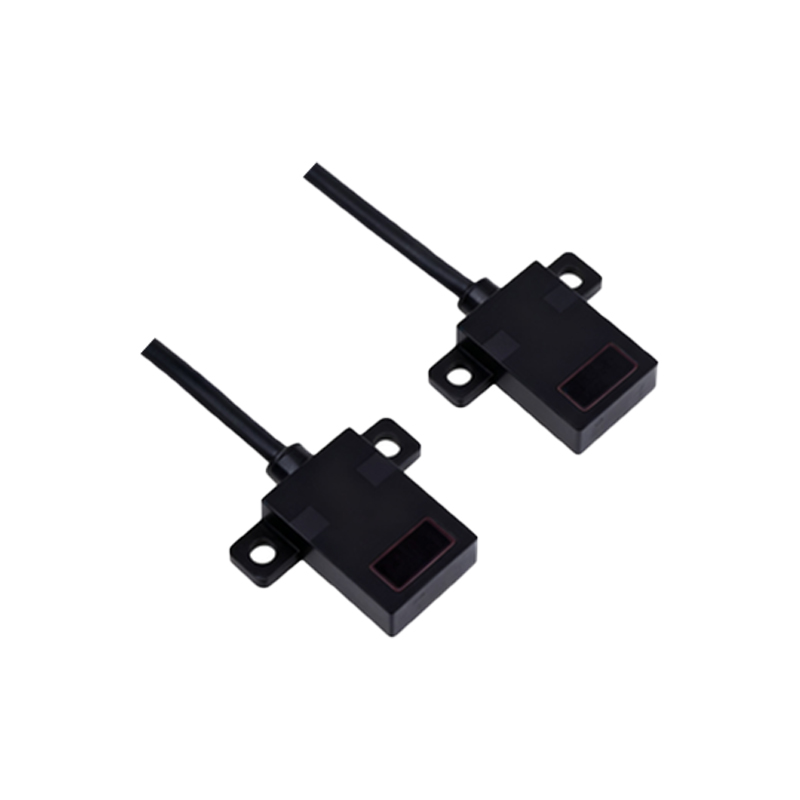
AB transparent object detection sensors boast a suite of features tailored for demanding environments. They typically offer high-intensity, modulated LED light sources to combat ambient light interference. Many models incorporate automatic sensitivity adjustment or teach-in functions, allowing for quick setup by simply presenting the sensor to the object and the background during calibration. Key specifications include a precise sensing distance, often adjustable, a fast response time measured in microseconds to keep pace with high-speed production lines, and robust housing ratings (e.g., IP67, IP69K) for resistance to water, dust, and chemical washdowns. The output options are versatile, including NPN/PNP transistors, analog outputs, or IO-Link for smart sensor integration and data exchange.
Application Scenarios in Modern Industry
The applications for these specialized sensors are vast and critical. In beverage bottling plants, they verify the presence of empty glass or PET bottles on filling lines, preventing spills and machine jams. In pharmaceutical packaging, they ensure blister packs have tablets in every pocket and that clear vials are correctly positioned for capping and labeling. The electronics industry uses them to detect the presence of transparent protective films on components before assembly. Furthermore, in printing and converting, they are indispensable for detecting the leading edge of clear films and ensuring proper registration, thereby minimizing material waste and production downtime.
Advantages Over Traditional Detection Methods
Choosing AB's transparent object detection sensors over traditional mechanical or standard photoelectric methods offers substantial benefits. Firstly, they provide non-contact detection, eliminating mark wear and product damage. Their precision drastically reduces false negatives (missing a transparent object) and false positives (triggering on a bubble or droplet), which enhances overall equipment effectiveness (OEE). The reliability translates into less product waste, lower maintenance costs, and uninterrupted production flow. Their flexibility and ease of integration into existing PLC-controlled systems make them a cost-effective upgrade that delivers immediate improvements in automation line reliability and quality control.
Installation, Calibration, and Best Practices
Proper installation is paramount for optimal performance. Sensors should be mounted securely to minimize vibration, and the sensing path must be kept free of obstructions like dust, mist, or stray reflective surfaces. Calibration, often a simple push-button "teach" process, should be performed with the actual transparent object and the specific background (e.g., conveyor belt) under normal operating conditions. It is a best practice to periodically check and clean the lens to maintain optical clarity. When troubleshooting intermittent detection, factors to review include changes in the object's material composition, ambient temperature fluctuations affecting optics, and voltage stability to the sensor.
The Future of Sensing: Integration with Industry 4.0
AB's transparent object detection sensors are evolving into intelligent components of the Industrial Internet of Things (IIoT). The integration of IO-Link communication protocol is a game-changer, allowing for remote monitoring of sensor health, predictive maintenance alerts, and dynamic parameter adjustments from a central control system. This digital transformation enables the collection of valuable process data, facilitating analytics for further optimization of production efficiency and traceability. As smart factories advance, these sensors will play an increasingly vital role in creating adaptable, transparent, and highly efficient automated systems.