Introduction to Through-Beam Photoelectric Sensors
Through-beam photoelectric sensors, also known as opposed-mode sensors, are fundamental components in industrial automation and control systems. They consist of two separate units: a transmitter and a receiver. The transmitter emits a continuous or modulated beam of light, typically infrared, visible red, or laser light, which is directed towards the receiver unit positioned directly opposite. The receiver's sole function is to detect this specific light beam. The core operating principle is straightforward: an object is detected when it physically interrupts the light path between the two units. This configuration makes through-beam sensors renowned for offering the longest sensing ranges and highest levels of reliability among photoelectric sensor types, as they are largely immune to the object's color, reflectivity, or surface finish.
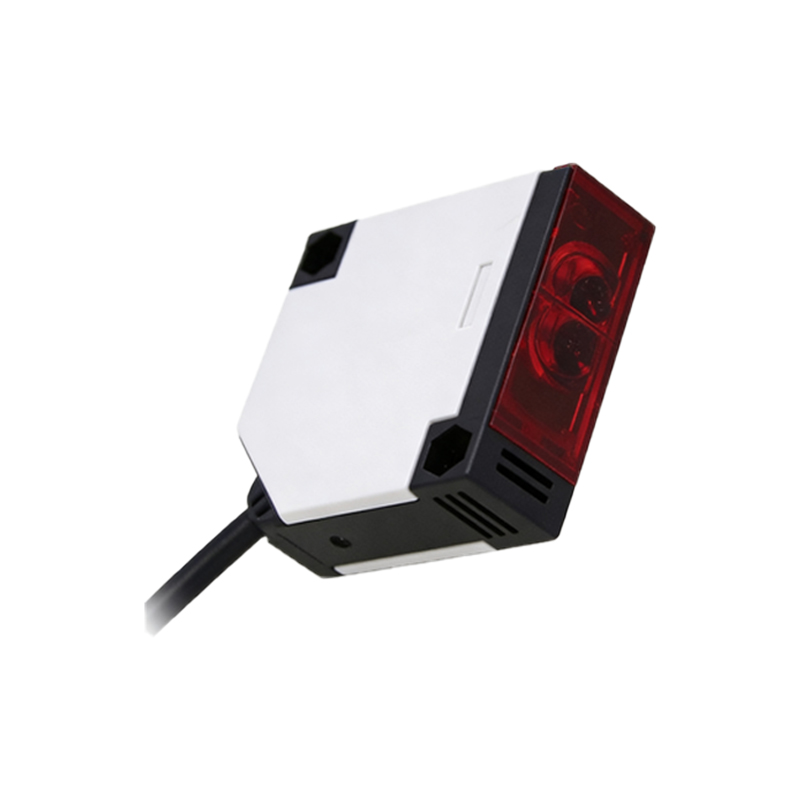
The Normal Operating State: Beam Received
In the absence of any obstruction in the light path, the sensor system is in its normal, or "beam received," state. The transmitter's light beam strikes the receiver's photodetector (usually a phototransistor or photodiode) continuously. The receiver's internal circuitry processes this signal, typically resulting in a specific output state. For a sensor configured with a "light-on" or "dark-on" operation mode, this unbroken beam condition determines the logical output. In the common "dark-on" mode, the output transistor is OFF when the beam is received. This state indicates that the monitored process area is clear, a conveyor line is ready for the next item, or a safety guarding zone is secure. The stability of this state is critical, and high-quality sensors incorporate modulation techniques to ensure the receiver only responds to the specific frequency of its paired transmitter, effectively ignoring ambient light interference.
The Detection State: Beam Broken
The primary detection event occurs when an object passes between the transmitter and receiver, breaking the light beam. The receiver no longer detects the transmitted light signal. This transition triggers a change in the sensor's output circuit. Following the "dark-on" example, the output transistor would switch ON when the beam is broken. This active detection state is used to count objects on a production line, detect the presence of a part for machine actuation, signal the end of a roll of material, or trigger a safety stop. The response time of this transition is extremely fast, often in microseconds, allowing for the detection of very small or rapidly moving objects. The reliability of this state change is paramount, and it is this high contrast between the "beam received" and "beam broken" states that grants through-beam sensors their superior performance in demanding environments.
Alignment and Signal Strength Considerations
A critical, often overlooked, "working state" is proper alignment. Even when no object is present, the sensor may not be in a true "beam received" state if the units are misaligned. Precise mechanical alignment is essential for optimal performance. Many modern through-beam sensors feature built-in alignment aids, such as visible red beams or LED indicators on the receiver that show signal strength. A solid green LED typically indicates strong beam reception, while a dim or flickering light suggests marginal alignment or potential issues like lens contamination. Monitoring this "alignment state" during installation and maintenance is crucial to prevent false triggers or missed detections, ensuring the system operates within its designed sensing margin.
Fault and Diagnostic States
Beyond normal operation, sensors must communicate fault conditions. Advanced through-beam sensors provide diagnostic states through indicator LEDs or via IO-Link communication. A common fault state is a persistent "beam broken" signal despite no physical obstruction, which could indicate a failure of the transmitter (no light output), severe misalignment, heavy contamination on the lenses, or a damaged receiver. Conversely, a permanent "beam received" state when an object is present might point to a receiver failure. Some sensors feature a "signal strength monitoring" function that can preemptively warn of degrading conditions, such as gradual lens fogging in washdown environments, before a complete failure occurs. Understanding these diagnostic states is key for predictive maintenance and minimizing downtime.
Environmental Influences on Sensor State
The operational states of a through-beam sensor can be affected by environmental factors. While inherently resistant to many interferences, extreme conditions can create anomalous states. For instance, dense fog, steam, or heavy dust can scatter or attenuate the light beam, potentially causing the receiver to intermittently lose the signal, mimicking a "beam broken" state. Conversely, intense ambient light, such as direct sunlight or strobe lights, could theoretically saturate the receiver, though modulation techniques largely mitigate this. Selecting sensors with appropriate ingress protection (IP) ratings, correct light source wavelengths (e.g., laser for precision, infrared for stability), and sufficient power reserves for the application ensures stable state transitions despite environmental challenges.
Application-Specific State Logic
The interpretation of the sensor's basic states—beam present or beam broken—is defined by the control logic within the connected system, such as a PLC (Programmable Logic Controller). The sensor's physical output (PNP/NPN, NO/NC) is wired to correspond with the desired machine action. For example, in a packaging machine, a broken beam might signal "carton present," initiating a sealing cycle. In a safety light curtain application, a broken beam state commands an immediate machine halt. Furthermore, timing functions can be applied to these states to create derived conditions, like a "jammed" state if the beam remains broken for an abnormally long period, indicating a production line stoppage.
Conclusion and Best Practices
Mastering the working states of through-beam photoelectric sensors—from the clear "beam received" to the active "beam broken," and including alignment and diagnostic conditions—is essential for designing robust and reliable automation systems. Key practices include ensuring precise alignment during installation, regularly cleaning lenses to maintain signal integrity, understanding the configured output logic (dark-on vs. light-on), and utilizing built-in diagnostic indicators for proactive maintenance. By thoroughly comprehending these operational and diagnostic states, engineers can leverage the full potential of through-beam sensors for accurate object detection, enhanced safety, and optimized process control across countless industrial applications.