Introduction to Proximity Sensing Technology
Proximity sensors are foundational components in modern industrial automation, enabling non-contact detection of objects within a defined sensing range. Unlike mechanical limit switches, these electronic devices operate without physical contact, offering superior reliability, longevity, and speed. The core principle involves generating an electromagnetic field or beam and detecting changes caused by the presence of a target object. This technology is critical for applications ranging from simple object counting on conveyor belts to complex position verification in robotic assembly cells. The evolution from basic inductive sensors to sophisticated multi-technology devices has been driven by the demand for higher precision, miniaturization, and integration with Industrial Internet of Things (IIoT) platforms.
Core Operating Principles: Inductive and Capacitive Sensors
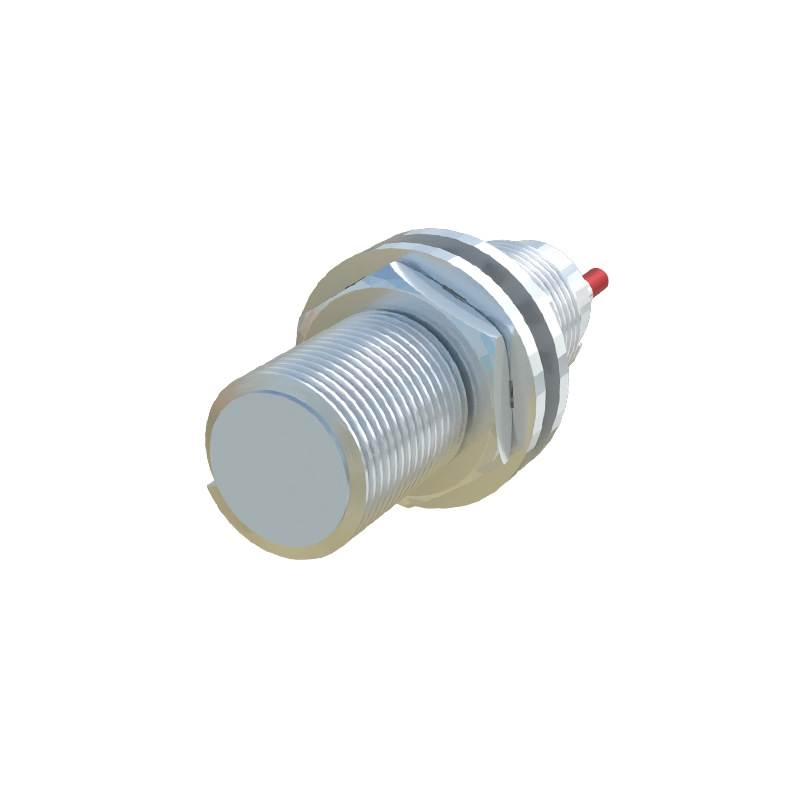
Inductive proximity sensors are the workhorses for detecting metallic objects. They consist of an oscillator coil that generates a high-frequency electromagnetic field. When a conductive metal target enters this field, eddy currents are induced on the target's surface. These currents draw energy from the oscillator, causing its amplitude to decrease. An evaluation circuit monitors this amplitude change and triggers a solid-state output switch. The sensing distance depends on the actuator material, with ferrous metals like steel offering the longest range. Capacitive sensors, in contrast, can detect both metallic and non-metallic materials (plastics, wood, liquids). They function by generating an electrostatic field between two electrodes. The presence of any material with a dielectric constant different from air alters the capacitance of the system. This change is measured, and when it exceeds a threshold, the sensor switches its output. This makes them ideal for level detection in tanks or detecting filled packages.
The Role of Photoelectric and Ultrasonic Sensors
Photoelectric sensors utilize light beams for detection, offering some of the longest ranges among proximity technologies. An emitter projects a light beam (often infrared, visible red, or laser) towards a receiver. In the through-beam mode, the receiver detects the beam's interruption. In the retro-reflective mode, the sensor and reflector work in tandem. The diffuse or proximity mode is most common for general object detection, where the sensor detects light reflected directly from the target. Advanced models use background suppression or fixed-field technology to ignore objects beyond a precise set distance. Ultrasonic sensors operate on a sonar principle, emitting high-frequency sound pulses and measuring the time for the echo to return. They excel in harsh environments where dust, smoke, or target color would compromise photoelectric sensors, making them perfect for distance measurement, transparent object detection, and liquid level control.
Key Performance Characteristics and Selection Criteria
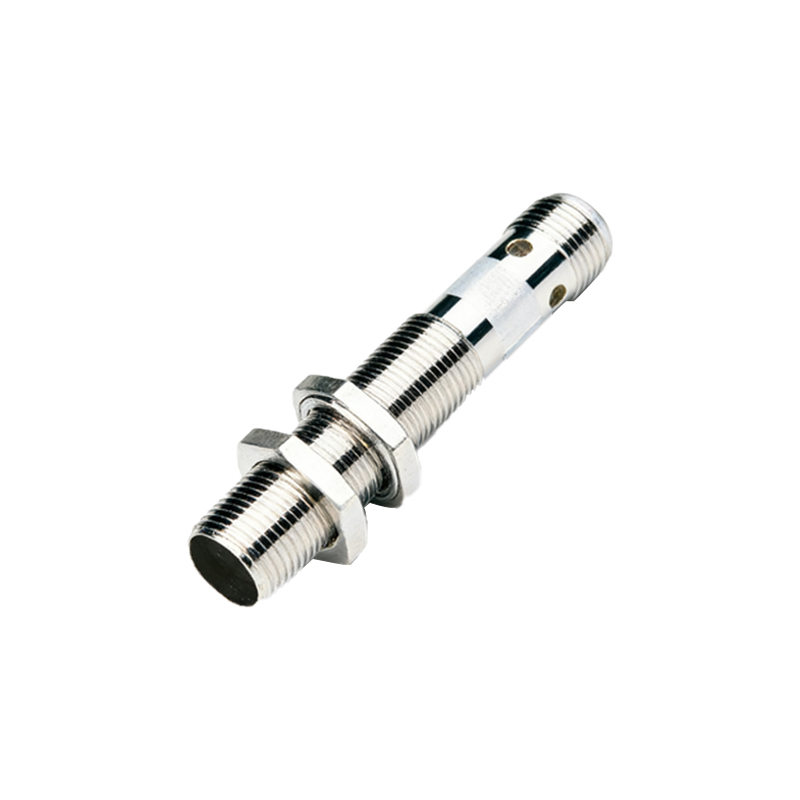
Selecting the correct sensor requires analyzing several key parameters. The nominal sensing distance (Sn) is the theoretical range under standardized conditions. The effective operating distance, considering temperature and voltage tolerances, is typically 70-80% of Sn. Hysteresis is a crucial feature that prevents output chatter when a target is at the sensing edge; it creates a differential between the switch-on and switch-off points. Response frequency indicates how many detection cycles per second the sensor can handle, vital for high-speed counting. Environmental factors like temperature rating, ingress protection (IP code), and resistance to chemicals or welding spatter are critical for durability. Furthermore, output types (PNP/NPN, analog, IO-Link) and housing design (barrel, rectangular, ring-shaped) must match the control system and mechanical constraints.
Integration with Smart Manufacturing and Industry 4.0
The modern proximity sensor is no longer just a simple switch. Intelligent sensors with IO-Link communication capability are becoming standard. IO-Link transforms a binary sensor into a smart device that can transmit detailed diagnostic data—such as operating temperature, signal strength, and remaining lifespan—to the controller. This enables predictive maintenance, reducing unplanned downtime. Sensors can also have their parameters (like sensing distance or output delay) configured remotely, simplifying changeovers in flexible production lines. Integration into Ethernet-based networks (EtherNet/IP, PROFINET) allows sensor data to be directly accessible for higher-level Manufacturing Execution Systems (MES), contributing to data-driven optimization and the realization of the digital factory.
Application Examples Across Various Industries
In automotive manufacturing, inductive sensors precisely detect piston position in cylinders or verify the presence of engine blocks. Capacitive sensors monitor adhesive bead application on windshields. In packaging, photoelectric sensors count bottles, check fill levels, and inspect labels. Ultrasonic sensors manage large roll diameters in paper and textile mills. In material handling, a network of sensors coordinates pallet positioning on automated guided vehicles (AGVs) and ensures safe operation of automated storage and retrieval systems (AS/RS). The food and beverage industry relies heavily on stainless-steel, washdown