Introduction to Photoelectric Sensor Switches
Photoelectric sensor switches, such as the QNQ series, are fundamental components in modern industrial automation. These devices operate by emitting a beam of light, typically infrared, visible red, or laser, to detect the presence, absence, or distance of an object. The core principle involves a transmitter (light source) and a receiver. When the light beam is interrupted or reflected by a target object, the receiver detects this change and triggers an electrical switch output. This non-contact detection method offers significant advantages over mechanical limit switches, including higher speed, longer sensing ranges, minimal wear and tear, and the ability to detect a wide variety of materials, including glass, plastic, and metal. The reliability and versatility of photoelectric sensors make them indispensable in applications ranging from packaging and material handling to assembly line monitoring and safety systems.
Key Features of the QNQ Series
The QNQ series of photoelectric sensors is engineered for robust performance in demanding industrial environments. A standout feature is its diverse sensing modes. The through-beam (or opposed) mode, where the transmitter and receiver are separate units, offers the longest detection range and highest reliability, ideal for precise object counting. The retro-reflective mode uses a single housing with both emitter and receiver, along with a reflector, providing a good balance of range and ease of installation for detecting large objects. Finally, the diffuse (or proximity) mode, with a single unit, detects objects by the reflection of light directly from the target's surface, perfect for close-range applications or detecting varied surface colors. QNQ sensors often incorporate advanced functions like background suppression, which allows them to ignore objects beyond a set distance, and teach-in capabilities for easy configuration of sensitivity and switching points directly on the device.

Technical Specifications and Selection Criteria
Selecting the correct QNQ sensor requires careful consideration of several technical parameters. The sensing range is paramount; through-beam models can detect objects several meters away, while diffuse types are suited for distances from a few centimeters to a meter. The light source type is another critical factor: infrared LEDs are common for general purposes, red visible LEDs aid in alignment, and laser diodes enable high-precision detection of small objects. Output configuration is equally important, with options including NPN (sinking) or PNP (sourcing) transistor outputs, relay contacts, or analog outputs for distance measurement. Environmental ratings, denoted by IP (Ingress Protection) codes like IP67, indicate resistance to dust and water, ensuring reliable operation in washdown areas or outdoor settings. Engineers must also evaluate the response time, which can be in the microsecond range, to ensure compatibility with high-speed production lines.
Typical Applications in Automation Systems
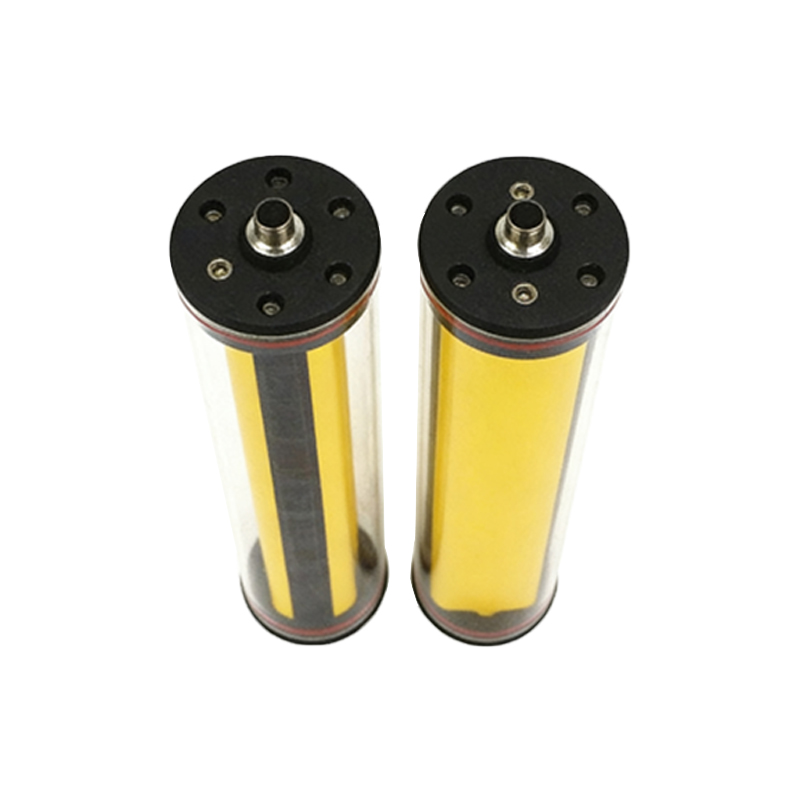
QNQ photoelectric switches find extensive use across numerous industrial sectors. In conveyor systems, they are deployed for precise object detection, jam prevention, and accurate counting of products or packages. Within automated assembly and robotics, these sensors provide critical feedback on part presence, orientation, and positioning, enabling precise pick-and-place operations. In packaging machinery, they control the filling level of containers, verify label placement, and detect film breaks. Safety is another crucial domain, where safety-rated light curtains or area scanners, built on photoelectric principles, create invisible barriers to protect personnel from hazardous machinery. Furthermore, in the food and beverage industry, sensors with stainless-steel housings and high IP ratings monitor bottle fill levels, cap placement, and packaging integrity under strict hygienic conditions.
Installation, Alignment, and Troubleshooting
Proper installation is key to optimal sensor performance. For through-beam sensors, precise alignment of the transmitter and receiver is essential; many models feature alignment indicators or audible signals to assist. Retro-reflective sensors must be correctly angled towards their reflector, avoiding shiny surfaces that could cause false reflections. Diffuse sensors should be mounted at the recommended distance and angle relative to the target. Common issues include false triggering due to ambient light interference, which can be mitigated by using modulated light sources, selecting sensors with sunlight immunity, or installing physical shields. Accumulation of dust, dirt, or condensation on the lens is another frequent cause of failure, emphasizing the need for regular maintenance and choosing models with appropriate environmental seals. Diagnosing problems often involves checking the power supply, verifying the output signal with a multimeter, and ensuring the target object's reflectivity and size are within the sensor's specified limits.
Advantages Over Other Sensor Technologies
Compared to other non-contact sensing technologies like inductive or capacitive proximity sensors, QNQ photoelectric switches offer distinct benefits. While inductive sensors only detect metals and capacitive sensors detect materials with a dielectric constant, photoelectric sensors can detect virtually any solid object regardless of material composition. They provide much longer sensing distances than their counterparts. Compared to ultrasonic sensors, photoelectrics generally have faster response times and are less affected by temperature variations or air turbulence, though they can be challenged by transparent objects or highly absorbent surfaces. The combination of long range, fast response, material versatility, and non-contact operation solidifies the position of photoelectric sensors as a preferred choice for a vast array of detection tasks in complex automation environments.
Future Trends and Integration
The evolution of photoelectric sensor technology, including the QNQ series, is moving towards greater intelligence and connectivity. Modern iterations are increasingly incorporating IO-Link communication, a point-to-point serial protocol that allows for bidirectional data exchange. This enables remote configuration, real-time diagnostics (monitoring parameters like lens contamination or LED intensity), and the transmission of process values beyond simple on/off signals. Integration with Industrial Internet of Things (IIoT) platforms is becoming more common, allowing sensor data to contribute to predictive maintenance schedules and overall equipment effectiveness (OEE) calculations. Furthermore, advancements in laser technology and background suppression algorithms continue to enhance precision, enabling detection of extremely small objects or reliable operation in environments with complex backgrounds, pushing the boundaries of automation capabilities.