Introduction to TCRT Sensors
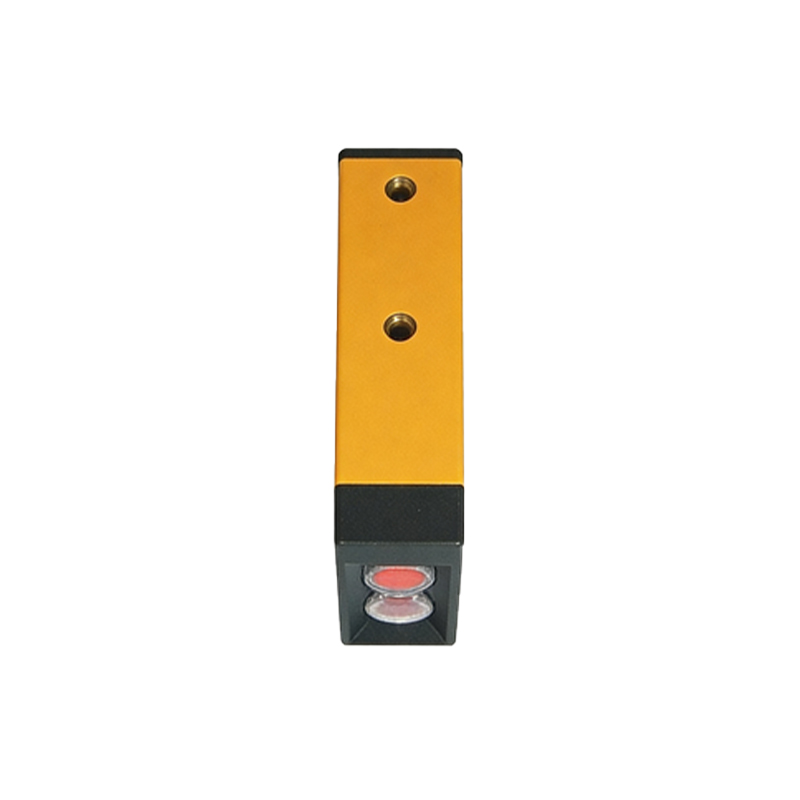
A TCRT (Transmissive Optical Sensor with Phototransistor) is a compact, integrated infrared photoelectric sensor. It combines an infrared emitting diode (IRED) and a phototransistor in a single, opposing-axis package. The core principle involves the IRED emitting a beam of infrared light. When an object passes between the emitter and the detector, it interrupts this beam. The phototransistor detects this interruption or reduction in light intensity, producing a corresponding change in its output current. This simple yet effective mechanism makes TCRT sensors highly reliable for non-contact detection and counting applications. Their self-contained design simplifies assembly and alignment compared to separate emitter-detector pairs, offering significant advantages in manufacturing and maintenance.
Key Operating Characteristics
The performance of a TCRT sensor is defined by several critical parameters. The sensing distance, typically ranging from a few millimeters to about 10-15 mm, depends on the intensity of the IRED and the sensitivity of the phototransistor. The response time is exceptionally fast, often in the microsecond range, enabling detection of high-speed events. Output characteristics can be analog, providing a variable signal proportional to the received light, or digital, offering a simple on/off signal via an internal or external comparator circuit. Environmental factors such as ambient light, dust, and temperature can influence performance. Modern TCRT sensors often incorporate modulation techniques, where the IRED is pulsed at a specific frequency, and the detector is tuned to that same frequency. This greatly enhances immunity to ambient light interference, ensuring stable operation in diverse industrial settings.
Common Industrial Applications
TCRT sensors are ubiquitous in automation and electronics due to their versatility and low cost. A primary application is object detection and counting on conveyor belts in packaging, bottling, and material handling lines. They are integral to paper detection in printers and copiers, ensuring paper is present before printing begins. In consumer electronics, they are used in slot detectors for appliances like printers and disk drives. Furthermore, they serve as vital components in rotary encoders for speed and position sensing, where a slotted wheel interrupts the beam. Their ability to detect transparent objects, like glass or plastic films—which often challenge other sensor types—makes them invaluable in specialized packaging and quality control processes.
Advantages Over Alternative Sensors
When compared to other proximity sensing technologies, TCRT sensors offer distinct benefits. Unlike diffuse reflective sensors, which rely on light reflecting off the target, TCRT sensors use a direct beam. This makes their operation largely independent of the target's color, reflectivity, or surface texture, leading to more consistent and reliable detection. Compared to mechanical limit switches, they provide non-contact sensing, eliminating wear and tear and enabling much higher operational speeds. While ultrasonic or capacitive sensors might be better for longer ranges or non-metallic targets, TCRTs excel in short-range, precise through-beam applications with fast response times. Their simplicity translates to high durability, long lifespan, and exceptional cost-effectiveness for high-volume applications.
Critical Selection Criteria
Selecting the right TCRT sensor requires careful consideration of the application's needs. First, determine the required sensing gap or slot width where the object will pass. Next, consider the object's size, material, and required detection speed to specify the necessary response time. The output type must match the control system's input; a digital NPN or PNP output is common for PLCs, while an analog output might be needed for precision measurement. Environmental conditions are paramount: sensors with modulated infrared light are essential for areas with strong ambient light. Finally, mechanical factors like housing material (often plastic or metal for robustness), mounting style, and ingress protection (IP) rating for dust and moisture resistance must align with the installation environment to ensure long-term reliability.
Installation and Calibration Tips
Proper installation is crucial for optimal TCRT sensor performance. Ensure the emitter and detector are precisely aligned on opposite sides of the sensing path; even minor misalignment can drastically reduce effective sensing distance. The sensor should be mounted securely to prevent vibration from causing misalignment. For detecting small objects, the object size should be sufficient to fully interrupt the infrared beam. Calibration often involves adjusting a potentiometer (if available) to set the sensitivity threshold, especially when detecting translucent materials. It is also good practice to provide a stable, clean power supply and to shield the sensor cable from electrical noise in high-interference environments. Regular maintenance should include cleaning the lens surfaces of both the emitter and detector to prevent dust or grime from attenuating the light signal.
Future Trends and Developments
The evolution of TCRT sensor technology continues to focus on enhancing performance and integration. Trends include miniaturization for use in increasingly compact electronic devices and wearables. There is a push towards higher precision and stability over wider temperature ranges for automotive and aerospace applications. Integration with smart features, such as built-in diagnostics (e.g., LED status indicators for alignment or lens contamination) and digital communication interfaces (like IO-Link), is becoming more common. This allows for predictive maintenance and easier integration into Industry 4.0 and Industrial Internet of Things (IIoT) systems. Furthermore, advancements in IRED and phototransistor materials aim to improve energy efficiency and extend sensing ranges while maintaining the fundamental cost and reliability advantages that have made TCRT sensors an industry staple.