Introduction to Ultra-Compact Sensing
The evolution of industrial automation demands components that are not only highly reliable but also exceptionally space-efficient. Enter the ultra-compact proximity sensor platform, a technological marvel engineered to deliver precise non-contact detection in the most constrained environments. These platforms integrate advanced sensing elements, signal processing, and robust housing into a footprint previously thought impossible. Their development marks a significant leap from traditional, bulky sensors, enabling new design possibilities in robotics, compact machinery, and intricate assembly lines. By minimizing physical size without compromising performance, they address the core challenge of modern manufacturing: achieving more functionality within shrinking spatial envelopes.
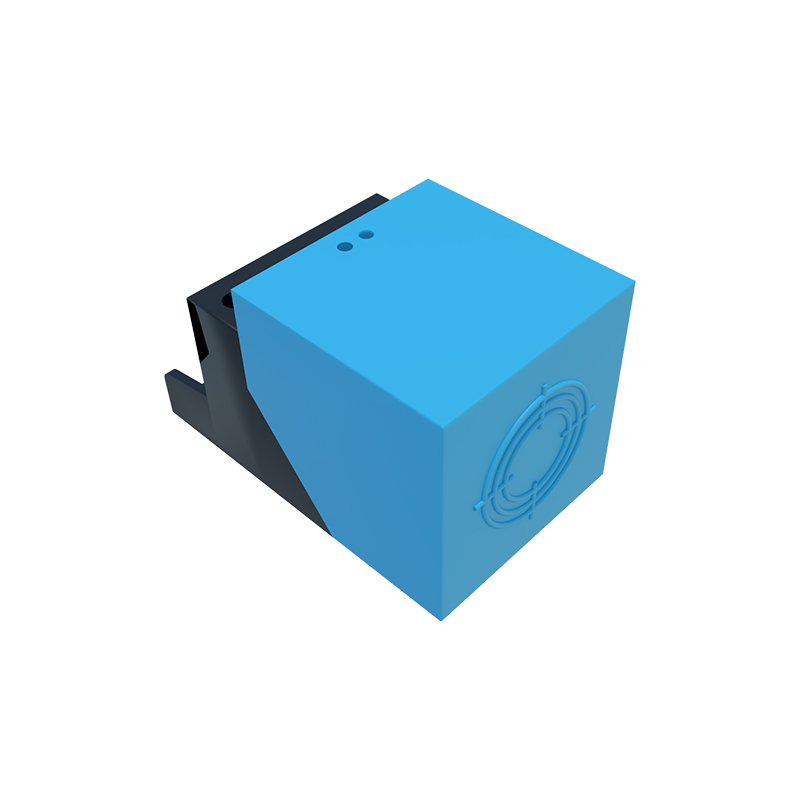
Core Technologies and Operating Principles
At the heart of an ultra-compact proximity sensor lies sophisticated sensing technology, primarily based on inductive, capacitive, or magnetic principles. Inductive sensors, for instance, generate an electromagnetic field to detect metallic objects, while capacitive variants sense changes in capacitance caused by both metallic and non-metallic materials. The miniaturization breakthrough is achieved through high-density ASIC (Application-Specific Integrated Circuit) design, which consolidates oscillator, amplifier, and signal conditioner onto a single microchip. Advanced surface-mount technology (SMT) allows for the placement of these micro-components onto a minimal PCB area. Furthermore, innovations in coil winding and ferrite core design for inductive types have drastically reduced the sensor head size while maintaining a strong and stable detection field.
Key Design Advantages and Performance Metrics

The primary advantage of these platforms is their unparalleled space-saving design, often with housing dimensions as small as M3 or M4. This allows for installation in locations where standard sensors simply cannot fit. Despite their size, they offer impressive sensing ranges, sometimes achieving up to 2mm for a 3mm diameter inductive sensor. Key performance metrics include high switching frequency, enabling fast response times for high-speed applications, and exceptional repeat accuracy. Many models feature embedded protection against short-circuit, reverse polarity, and electromagnetic interference (EMI), ensuring reliability in harsh industrial settings. The use of high-grade materials like PBT or stainless steel guarantees resistance to chemicals, oils, and mechanical stress.
Application Spectrum in Modern Industry
The application range for ultra-compact proximity sensors is vast and growing. In the semiconductor and electronics industry, they are indispensable for wafer handling, PCB positioning, and micro-component assembly where precision and cleanliness are paramount. Collaborative robots (cobots) utilize these sensors for safe, close-quarter object detection and gripper positioning. They are also critical in miniaturized medical devices, automated packaging machinery for detecting tiny items, and in automotive manufacturing for monitoring valve positions and gear teeth in transmissions. Their low power consumption makes them ideal for battery-operated portable equipment and IoT-enabled devices in smart factories.
Integration and Installation Considerations
Successful integration of these sensors requires careful planning. Engineers must account for the reduced mounting space and ensure proper mechanical fixation, often using specialized miniature brackets. The sensing face requires precise alignment with the target object due to the small active area. Wiring, though typically using micro-connectors or direct cable outlets, must be managed to avoid strain on the compact housing. It is crucial to consider the surrounding metallic environment (for inductive sensors) to prevent shielding effects or false triggering. Many platforms now offer IO-Link digital communication capability, facilitating not only state detection but also parameter configuration and advanced diagnostics, simplifying integration into Industry 4.0 networks.
Future Trends and Market Direction
The future of ultra-compact proximity sensor platforms is geared towards even greater intelligence and integration. The convergence of sensing and wireless communication, such as with Bluetooth Low Energy (BLE), will enable truly cable-free sensor nodes for modular systems. Enhanced diagnostic features, like predictive maintenance data on wear and tear, will become standard. Material science will yield housings with higher temperature and chemical resistance. Furthermore, the development of multi-functional sensors that combine proximity, temperature, and vibration sensing in one ultra-compact package is on the horizon. As industries push for further miniaturization and data-driven operations, these sensor platforms will continue to be pivotal enablers of innovation, solidifying their role as critical components in the next generation of smart, agile manufacturing.