Understanding Photoelectric Sensor Outputs
Photoelectric sensors are fundamental components in industrial automation, widely used for object detection, counting, and positioning. Their operation is based on the emission of a light beam, typically infrared, visible red, or laser, and the reception of its reflection or interruption. The core question often arises: do these sensors output a digital signal? The answer is not absolute, as it depends heavily on the sensor's internal design and configuration. Most modern photoelectric sensors are equipped with built-in circuitry that processes the received light intensity. This processing stage is crucial—it converts the analog variations in light into a usable output signal. While many sensors are designed to provide a clean, on/off digital signal for direct compatibility with programmable logic controllers (PLCs) and other industrial control systems, the inherent working principle involves analog light measurement. Therefore, the output type is a deliberate design choice made to suit specific application requirements.
Analog vs. Digital Output Fundamentals
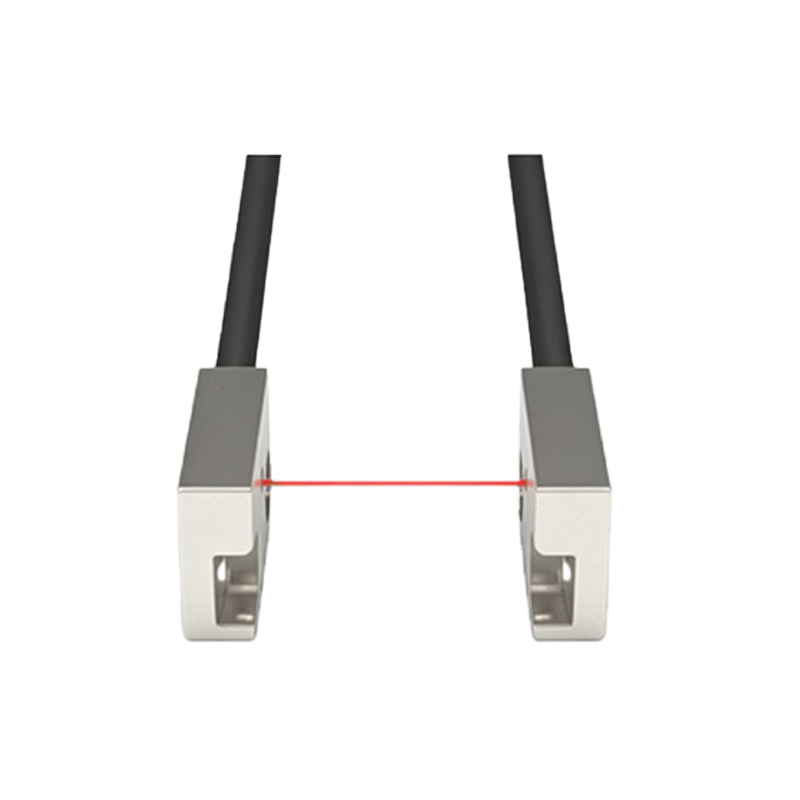
To clarify, an analog signal is a continuous voltage or current that varies proportionally with the measured phenomenon—in this case, the intensity of received light. A digital signal, in contrast, represents information as discrete binary states, typically a high voltage (e.g., 24V DC) for "ON" or "detected" and a low or zero voltage for "OFF" or "not detected." Many basic photoelectric sensors, especially diffuse, retro-reflective, and through-beam types, incorporate a comparator circuit. This circuit compares the processed signal from the receiver to a predefined threshold. When the signal strength exceeds this threshold (indicating sufficient reflected light or the interruption of a beam), the sensor's output transistor switches, generating a clean digital pulse. This is the most common output for standard presence/absence detection tasks.
Sensor Types and Their Typical Outputs
The output format is often linked to the sensor's functionality. Standard switching sensors (e.g., for detecting a bottle on a conveyor) predominantly feature digital outputs—either PNP (sourcing) or NPN (sinking) transistor configurations. These provide a simple, robust interface for machine control. However, specialized photoelectric sensors exist with explicit analog outputs. For example, analog output sensors provide a voltage (0-10V) or current (4-20mA) signal that is proportional to the distance to the target or the intensity of the reflected light. These are used in applications like measuring transparency, monitoring fill levels, or detecting subtle color differences. Furthermore, some advanced sensors offer both digital and analog outputs simultaneously or feature IO-Link communication, which can transmit digitized process data (like light intensity values) over a digital connection while retaining a standard switching signal.
The Role of Configuration and Threshold
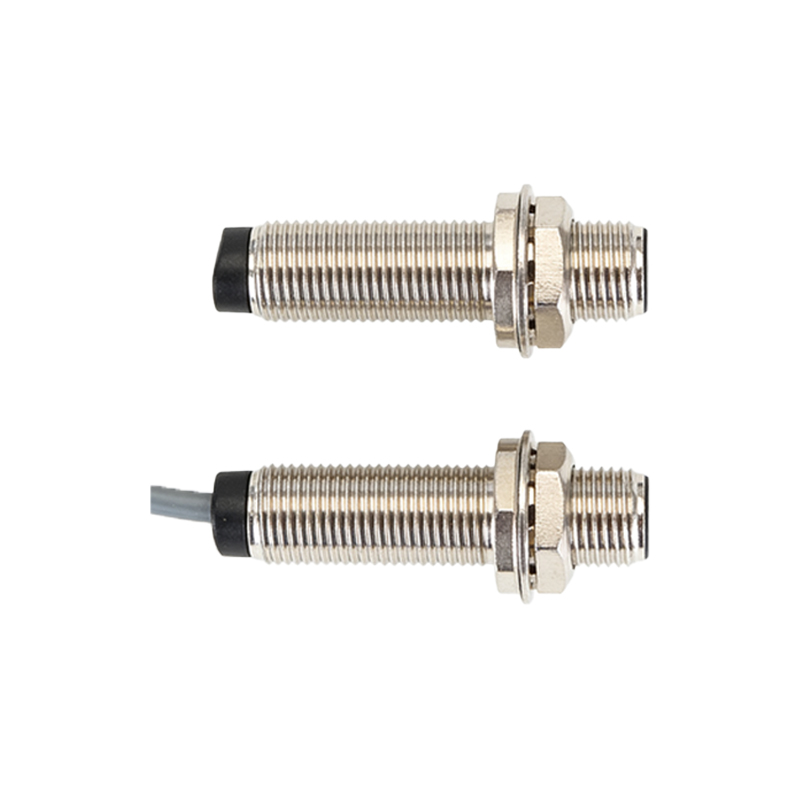
Even for sensors with a digital output, the line between analog and digital is blurred at the configuration stage. Most sensors have potentiometers or teach-in buttons to set the sensitivity threshold. This threshold setting effectively defines the point at which the continuous analog light measurement is converted into a discrete digital command. Setting a high threshold might ignore faint reflections, while a low threshold increases sensitivity. Some sensors with background suppression or precise background evaluation function by intelligently analyzing the analog signal to provide a stable digital switch point even on challenging surfaces. Thus, the digital output is the final result of an internal analog-to-digital conversion process tailored by user settings.
Communication Protocols and Smart Sensors
The evolution towards Industry 4.0 has introduced photoelectric sensors with serial or bus-based digital communication outputs. Sensors with IO-Link, PROFINET, or EtherNet/IP interfaces transmit data digitally. In these cases, the sensor's microcontroller digitizes the analog photoelectric signal at high resolution. It can then send not just a simple ON/OFF status but also detailed parameter data, such as exact light intensity, operating hours, or diagnostic information, as a stream of digital data packets. While the primary detection signal for control logic remains binary in many setups, the data exchange layer is fully digital, offering far more information than a simple voltage switch.
Conclusion: A Context-Dependent Answer
In summary, asking if a photoelectric sensor output is digital requires a nuanced response. For the vast majority of standard industrial applications involving object detection, the practical and functional output is indeed a clean, discrete digital signal designed to interface seamlessly with PLCs and relays. This digital output is the product of internal analog signal processing and threshold comparison. However, the photoelectric sensing principle itself is analog. Specific models are available with dedicated analog voltage/current outputs for measuring tasks, and modern smart sensors utilize digital communication protocols for comprehensive data exchange. Therefore, while the final output signal is very often digital, understanding the underlying analog process and the availability of alternative output types is essential for proper sensor selection and application.