Introduction to Micro Proximity Sensors
Micro proximity sensors are compact, non-contact detection devices that have become indispensable in modern automation and electronics. These sensors utilize various technologies, including inductive, capacitive, and photoelectric principles, to detect the presence or absence of an object within a small sensing range. Their miniature size allows for integration into tight spaces where traditional sensors cannot fit, enabling precise control and monitoring in applications from consumer electronics to sophisticated robotic assembly lines. The evolution of micro-machining and semiconductor technology has driven their miniaturization while enhancing reliability and performance, making them a cornerstone of Industry 4.0 and IoT solutions.
Inductive Micro Proximity Sensor Gallery
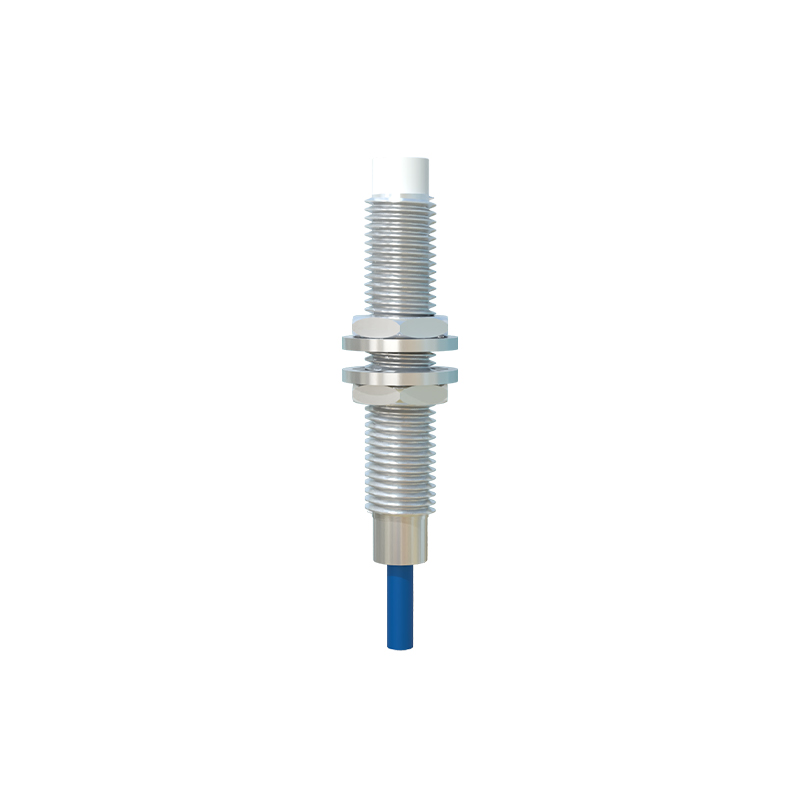
Inductive micro sensors are designed to detect metallic objects. A typical image showcases a cylindrical or rectangular housing, often made of nickel-plated brass or stainless steel, with a sensing face only a few millimeters in diameter. Internal diagrams reveal a coil, oscillator, and signal evaluation circuit. Photographs frequently highlight their installation in robotic grippers, where they verify the presence of a metal component, or embedded within machinery housings for position feedback. Close-up shots detail the robust construction, with IP67 or higher ratings, suitable for harsh industrial environments with coolant, oil, or metal shavings.
Capacitive Micro Proximity Sensor Visual Guide
Capacitive micro sensors can detect both metallic and non-metallic materials, such as plastics, liquids, or glass. Images often depict sensors with a flat or tubular design and a polymer sensing face. Visual comparisons show their application in level detection for small liquid containers or in packaging lines to sense the presence of cardboard or plastic films. Technical imagery may include cross-sectional views illustrating the electrode configuration that creates an electrostatic field. These sensors are commonly seen in clean environments, and pictures emphasize their use in semiconductor manufacturing or pharmaceutical packaging, where contamination-free operation is critical.
Photoelectric Micro Sensor Image Compilation
The photoelectric micro sensor category includes through-beam, retro-reflective, and diffuse reflective types. High-resolution images display incredibly small sensors, sometimes as tiny as an SMD component, with integrated LEDs and phototransistors. Through-beam sensor pictures show a separate emitter and receiver, often in opposing mounts for precise detection of minute objects. Diffuse sensor images illustrate a single unit detecting an object by reflecting its own light beam. Applications captured in photos include detecting micro-parts on vibrating feeders, verifying labels on high-speed bottling lines, and ensuring paper presence in compact printers.
Application-Specific Sensor Imagery
This section features images of micro proximity sensors in real-world scenarios. One series of photos might show a sensor array on a PCB for touchless button interfaces in automotive dashboards. Another set could illustrate sensors embedded in medical devices, such as infusion pumps, to detect cassette placement. High-magnification images reveal sensors used in miniature actuators for camera autofocus mechanisms or in drones for obstacle avoidance. Industrial close-ups demonstrate their role in electronic component placement machines, where they detect the lead frames of microchips with micron-level precision.
Technical Diagrams and Output Schematics
Beyond physical photos, technical drawings are crucial for understanding. These images include dimensional drawings with precise tolerances, critical for mechanical integration. Wiring diagrams visually explain the difference between NPN and PNP output configurations, often using color-coded wires (brown for V+, blue for V-, black for output). Timing charts are presented as graphical images, showing the sensor's response time and output signal behavior in relation to a target's movement. These diagrams are essential for engineers designing control systems and selecting the correct sensor for high-speed applications.
Mounting and Integration Examples
Visual guides on mounting are highly valuable. Images depict various bracket styles, from simple threaded collars to complex adjustable aluminum mounts, allowing for precise alignment. Photos show sensors being installed on 3D-printed fixtures for prototyping or on hardened steel tooling for permanent industrial use. Other images highlight the use of protective accessories, such as rubber boots or metallic shrouds, to shield the sensor from physical impact or electromagnetic interference in complex machinery.
Future Trends and Miniaturization Showcase
The latest image collections feature cutting-edge developments. This includes micro sensors with integrated IO-Link communication, shown with detailed shots of the connector and status LEDs. Microscopic images reveal MEMS-based proximity sensors used in wearable technology. Conceptual renderings and prototype photos illustrate sensors with embedded intelligence for predictive maintenance, capable of reporting their own health data. These visuals point towards a future of even smaller, smarter, and wirelessly connected sensing nodes, driving innovation in compact automation and smart devices.