Introduction to the GP1A53HRJ00F Photoelectric Sensor
The GP1A53HRJ00F is a compact, transmissive photoelectric sensor module designed for precise object detection and position sensing. This module integrates an infrared LED and a phototransistor within a single, robust housing, creating a through-beam sensor configuration. It is engineered to detect the presence or absence of an object by sensing the interruption of the infrared light beam between the emitter and receiver. The device is characterized by its high sensitivity, fast response time, and reliable performance in various industrial environments. Its compact form factor and built-in slit make it particularly suitable for applications requiring precise edge detection, such as in printers, copiers, and automated assembly lines. The module's design ensures stable operation against ambient light interference, providing consistent and accurate detection signals.
Key Electrical and Optical Specifications
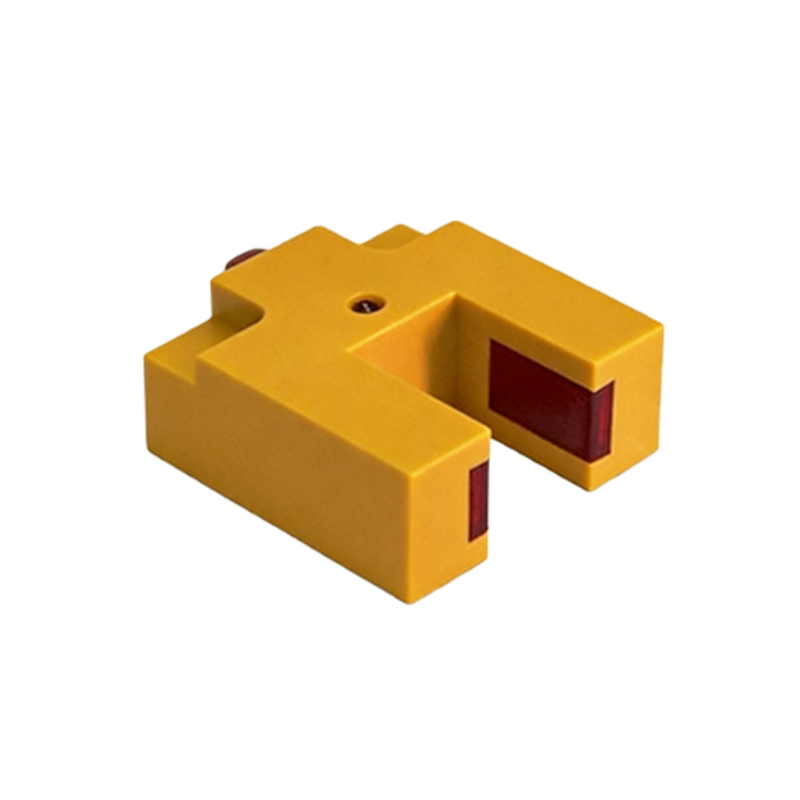
The operational parameters of the GP1A53HRJ00F are critical for system integration. The infrared LED emitter typically operates at a forward current of 20mA, with a peak wavelength of approximately 940nm, which is ideal for minimizing visible light interference. The phototransistor receiver features a collector-emitter voltage rating sufficient for standard logic interfaces. The sensor's output is an open-collector type, allowing for easy interfacing with microcontrollers, PLCs, or other digital circuits. Key specifications include a response time in the microsecond range, enabling detection of high-speed events. The gap distance between the emitter and receiver is precisely defined, and the sensor's sensitivity is tuned to detect objects as thin as paper or film passing through its slit. Designers must adhere to the absolute maximum ratings for current and voltage to ensure long-term reliability and prevent damage to the internal components.
Mechanical Design and Mounting Considerations
The mechanical construction of the GP1A53HRJ00F is tailored for easy installation and alignment. The housing features mounting holes or tabs that facilitate secure attachment to chassis or PCBs. The integrated slit aperture precisely defines the sensing area, which is crucial for applications like paper-end detection or rotary encoder disk sensing. Proper mechanical alignment between the sensor module and the target path is paramount for optimal performance. Misalignment can lead to reduced signal strength or false triggering. Engineers should utilize the recommended mounting fixtures and follow the specified gap tolerances provided in the datasheet. The module is designed to withstand typical levels of vibration and shock encountered in office automation and light industrial equipment, but care should be taken to avoid mechanical stress on the leads or housing.
Interface Circuit Design and Output Signal Conditioning
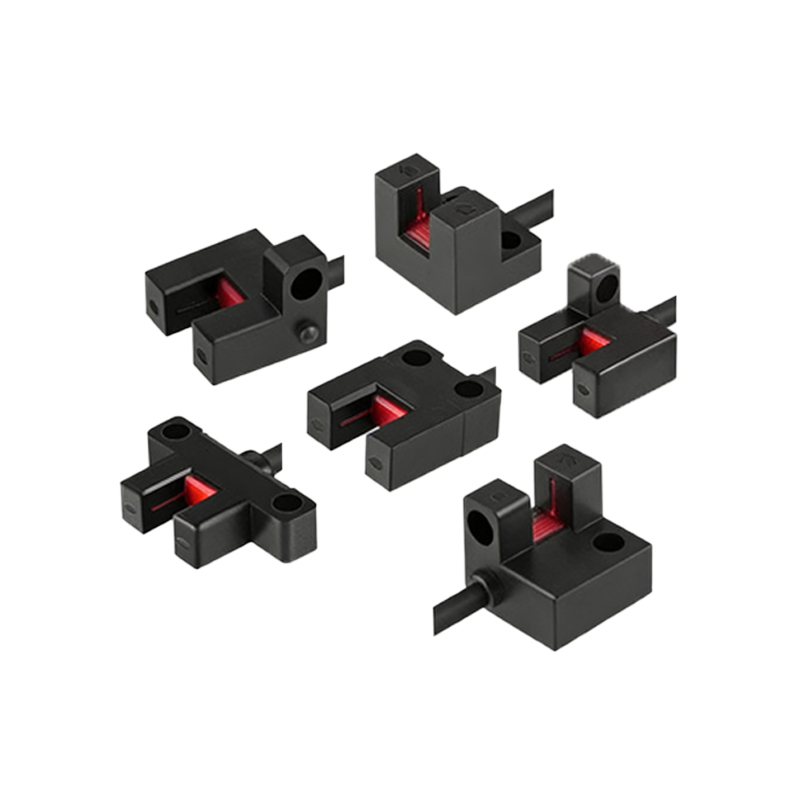
Interfacing the GP1A53HRJ00F with control electronics requires a simple external circuit. A current-limiting resistor is necessary in series with the infrared LED to set the proper forward current. For the phototransistor output, a pull-up resistor to the supply voltage (e.g., 5V or 3.3V) is required to generate a logic-level signal. When the light beam is uninterrupted, the phototransistor is saturated, pulling the output voltage low. When an object blocks the beam, the phototransistor turns off, and the pull-up resistor causes the output voltage to go high. This digital output can be directly connected to a GPIO pin of a microcontroller. For noisy environments, additional filtering, such as a small capacitor across the pull-up resistor or software debouncing, may be implemented to enhance signal integrity and prevent false readings from electrical noise.
Typical Applications in Industrial and Office Automation
The GP1A53HRJ00F finds extensive use in a variety of detection and control systems. In office equipment, it is commonly employed for paper jam detection, paper-out sensing in printers and fax machines, and toner-level monitoring. In industrial automation, it serves as a key component in rotary encoders, conveyor belt object counting, and machinery safety interlocks. Its ability to detect translucent materials also makes it suitable for film processing equipment and packaging machinery. The sensor's reliability and precision support critical functions that ensure equipment operates smoothly, prevents damage from malfunctions, and maintains high productivity. System designers value this module for its proven performance, ease of use, and cost-effectiveness in high-volume applications.
Design Guidelines for Reliability and Longevity
To maximize the operational life and reliability of the GP1A53HRJ00F in an application, several design practices should be followed. First, operate the LED within its specified current range to prevent premature aging due to overstress. Second, ensure that the operating ambient temperature remains within the rated limits to avoid thermal degradation of optical components. Third, keep the lens surfaces of the emitter and receiver clean and free from dust, oil, or other contaminants that could attenuate the light signal. Periodic maintenance checks are recommended for systems in dusty environments. Fourth, provide stable, clean power supplies to minimize electrical noise that could affect the sensor's output. Finally, when designing the PCB layout, keep signal traces short and away from high-current or switching lines to reduce inductive coupling and electromagnetic interference.