In modern automated welding, precision is non-negotiable. The consistent quality of a weld seam directly impacts the structural integrity, safety, and longevity of the final product. Achieving this level of consistency, especially in high-volume or complex welding applications, requires more than just a skilled robotic arm and a welding torch. It demands a sophisticated guidance system, and at the heart of this system lies a critical, yet often under-discussed component: the laser weld seam tracking sensor mount.
A laser seam tracking system operates by projecting a laser line or pattern onto the workpiece ahead of the welding torch. A camera or optical sensor then captures the reflected light, and sophisticated software algorithms analyze the image to determine the seam's exact location, geometry, and any deviations in real-time. This data is fed back to the robot controller, which dynamically adjusts the torch path to follow the seam perfectly. However, the accuracy of this entire feedback loop is fundamentally dependent on the stability and precision of the sensor's position relative to the welding torch. This is where the mount becomes indispensable.
The primary function of a laser weld seam tracking sensor mount is to provide a rigid, stable, and precisely adjustable platform. It must securely hold the sensor assembly—typically containing the laser projector and the camera—in a fixed spatial relationship to the welding torch. Any vibration, flex, or unintended movement of the mount translates directly into measurement error, which the robot will interpret as a seam deviation, leading to incorrect torch positioning and potential weld defects. High-quality mounts are engineered from robust materials like anodized aluminum or stainless steel to resist the harsh welding environment, which includes intense heat, spatter, electromagnetic interference, and mechanical shocks.

Design considerations for these mounts are extensive. Adjustability is a key feature. Technicians need fine control over the sensor's position in multiple axes: stand-off distance from the workpiece, lateral offset from the torch, and angular orientation. This allows for optimal calibration to suit different joint types—be it a butt joint, lap joint, or fillet weld—and varying material thicknesses. Furthermore, the mount must facilitate proper cable management for power and data lines, protecting them from heat and physical damage. Many advanced mounts also incorporate active or passive cooling systems, such as water-cooling jackets or heat sinks, to protect the sensitive optical components of the sensor from radiant welding heat.
Integration is another critical aspect. A well-designed mount is not an afterthought but an integral part of the welding tool center point (TCP) setup. It must be compatible with standard robot tool flange interfaces, allowing for quick installation and removal. The mount's design should minimize its footprint to avoid collisions in tight workspaces while maintaining the necessary rigidity. In multi-torch setups or applications with complex access requirements, custom-engineered mounts are often developed to meet specific geometric and functional needs.
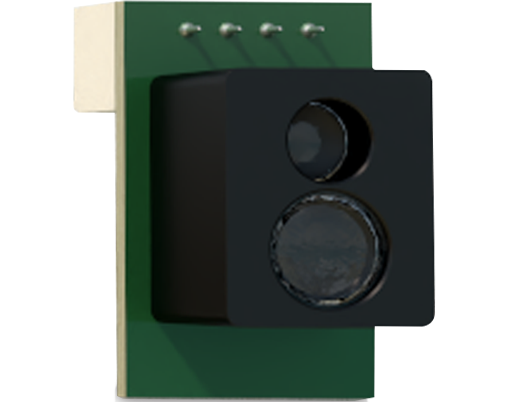
The benefits of investing in a high-performance sensor mount are substantial. First and foremost, it maximizes the return on investment of the seam tracking system itself by ensuring it operates at its designed accuracy. This leads to a dramatic reduction in rework and scrap caused by weld defects like lack of fusion, undercut, or misalignment. It increases overall equipment effectiveness (OEE) by allowing for higher welding speeds without sacrificing quality, as the robot can confidently maintain its path. It also reduces dependency on perfect part fixturing, accommodating natural variations in part fit-up and providing greater process flexibility.
In conclusion, while the laser sensor and the software algorithms capture the spotlight for their technological sophistication, the humble mount is the unsung hero that grounds the entire system in physical reality. It is the critical link that transforms digital tracking data into precise physical torch movement. For any manufacturer serious about automating welding processes to achieve superior, consistent quality, specifying and implementing the right laser weld seam tracking sensor mount is not a detail—it is a foundational decision for process reliability and excellence.
