Understanding Capacitive Proximity Sensing Technology
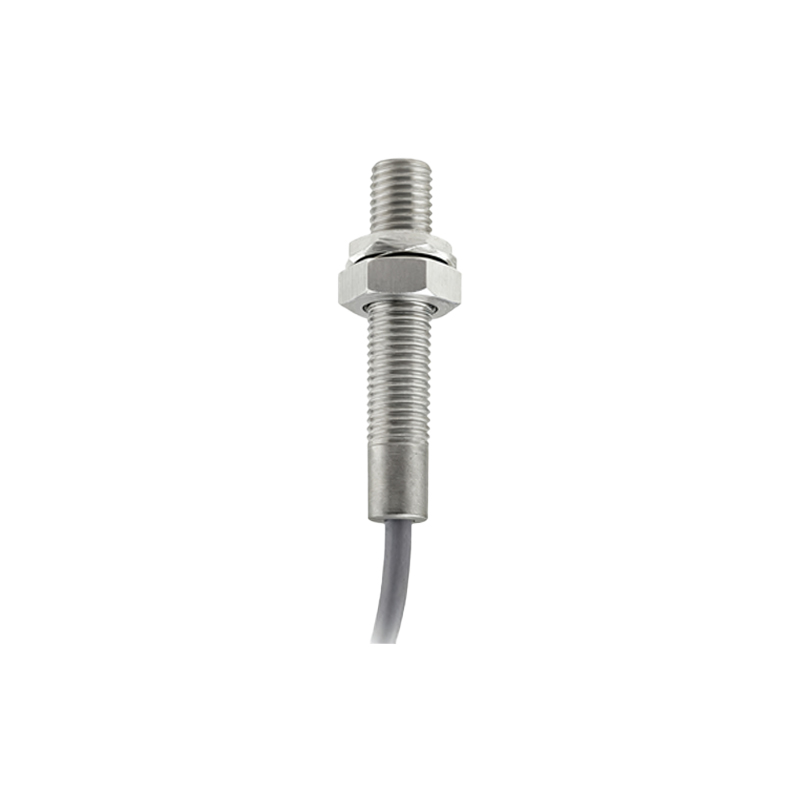
Capacitive proximity sensors operate on a fundamental principle: they generate an electrostatic field and detect changes in capacitance caused by the presence of an object. Unlike their inductive counterparts, which only detect metals, capacitive sensors can detect a vast array of materials, including liquids, powders, granules, plastics, wood, and glass. The sensor's active face, along with a connected ground electrode, forms a capacitor. When a target object enters the sensing field, it alters the dielectric constant of the space, changing the capacitance. The sensor's internal oscillator circuit detects this change, triggering a solid-state output switch. This versatile detection capability makes them indispensable in complex industrial environments where material variety is the norm. Their ability to sense through non-metallic barriers, like a container wall, further expands their application potential.
Primary Applications in Liquid Level Detection
One of the most critical and widespread uses of capacitive proximity sensors is in liquid level monitoring and control. Their non-contact nature and ability to sense through tank walls make them ideal for this purpose. They are extensively deployed to detect the presence or absence of liquids, slurries, and viscous fluids in tanks, silos, and pipes. For instance, a sensor mounted externally on a plastic or glass tank can reliably detect when the liquid level reaches a specific point without any direct contact, preventing contamination and corrosion. They are perfect for high and low-level alarms in water treatment plants, chemical processing, food and beverage production, and pharmaceutical manufacturing. Their robustness allows them to handle aggressive media safely from the outside of the container, ensuring system integrity and operator safety.
Material Handling and Packaging Industry Uses
In the fast-paced world of material handling and packaging, capacitive sensors provide reliable detection solutions. They are used to monitor the presence of products on conveyor belts, regardless of whether the items are cardboard boxes, plastic bottles, or bags of chips. They can detect the fill level of hoppers containing powders, grains, or pellets, ensuring continuous material flow and preventing blockages or run-outs. In packaging machinery, they verify the presence of labels, foil seals, or plastic lids on containers. Their sensitivity can be finely adjusted to ignore the conveyor belt itself and only react to the product, ensuring accurate counting and process control. This versatility streamlines automation, reduces waste, and maintains high production line efficiency.
Specialized Roles in Woodworking and Plastics
The woodworking and plastics industries heavily rely on capacitive sensors for process control and quality assurance. In woodworking, they are used to detect the presence of wood panels, boards, or logs on saws, planers, and routers. They can sense through layers of varnish or paint. In plastics manufacturing, they monitor the flow of plastic granules in feed systems, detect molded parts as they eject from presses, and verify the placement of plastic components in assembly jigs. Their immunity to dust and chips—common in these environments—when properly selected and installed, makes them more reliable than optical sensors in such dirty conditions. Their durability ensures consistent performance despite the challenging operating environments.
Advanced Applications and Niche Deployments
Beyond common industrial settings, capacitive sensors find use in sophisticated and niche applications. They are employed in the semiconductor industry to detect wafer presence. In automotive assembly, they can verify the presence of non-metallic components like glass windshields, rubber seals, or composite body panels. A growing application is in human-machine interface (HMI) technology, where their touch-sensitive capability is used for touchscreens and touch-sensitive control panels. Furthermore, they are used in security for proximity detection and in agriculture for monitoring grain levels in silos. Their adjustable sensing range and sensitivity allow engineers to tailor them for precise tasks, from detecting a thin sheet of paper to a full pallet of goods, demonstrating their remarkable adaptability across technological fields.