Introduction to Diffuse Reflective Photoelectric Sensors
Diffuse reflective photoelectric sensors, often simply called diffuse sensors, are a fundamental and widely used type of proximity sensor in industrial automation. Unlike through-beam or retro-reflective sensors that require separate components, a diffuse sensor houses both the light emitter (typically an LED) and the receiver in a single unit. The principle of operation is elegantly simple: the sensor emits a beam of light, usually infrared, visible red, or laser, towards a target. When this light strikes the target object, it scatters or "diffuses" in all directions. A portion of this scattered light reflects back to the sensor's receiver. The sensor's internal circuitry detects this returning light and triggers an output signal, indicating the presence of the object. This self-contained design makes them exceptionally easy to install and align, contributing to their immense popularity across countless applications.
Key Operating Principles and Components
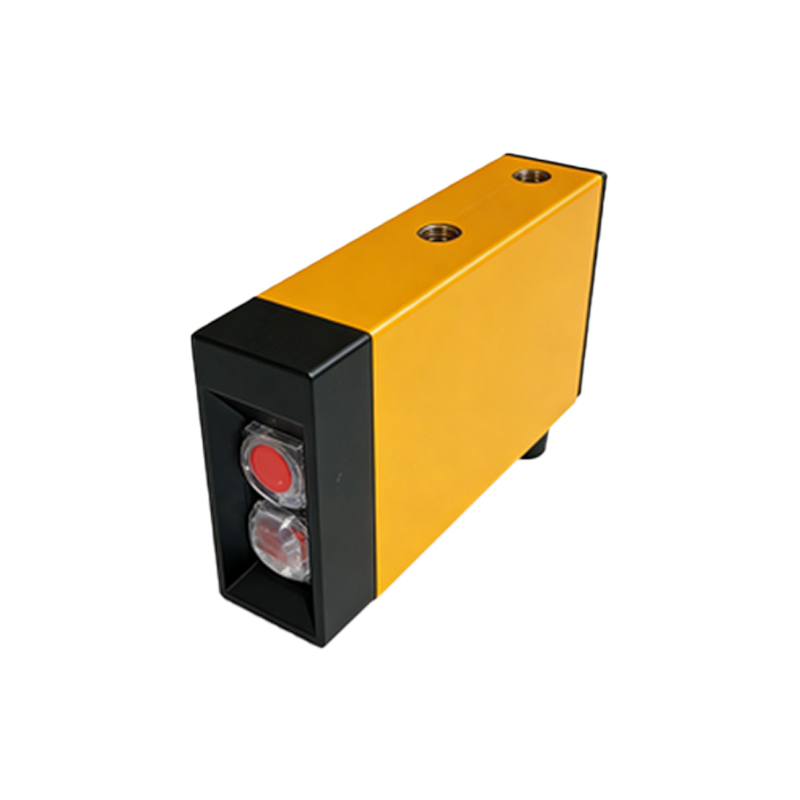
The core functionality hinges on the photoelectric effect and the properties of light reflection. The emitter is commonly a modulated LED, meaning the light is pulsed at a specific high frequency. This modulation allows the receiver to distinguish the sensor's own light from ambient background light, significantly enhancing reliability and noise immunity. The receiver is a phototransistor or photodiode tuned to the emitter's wavelength. A critical concept is the "background suppression" or "background evaluation" feature found in many advanced diffuse sensors. These models use triangulation principles; the receiver is positioned at an angle. Only light reflected from objects within a precise, defined distance range reaches the receiver at the correct angle. This allows the sensor to ignore more distant objects or the background, a crucial capability for detecting objects on conveyor belts or against complex backdrops.
Advantages and Limitations in Industrial Settings
The primary advantage of diffuse sensors is their straightforward, single-unit installation, eliminating the need for precise alignment of separate emitter and receiver components. This reduces setup time and cost. They are versatile for detecting a wide range of materials, including non-metallic objects that may be transparent to other sensor types. However, their performance is inherently tied to the target's properties. The sensing range is highly dependent on the object's size, color, and surface texture. A large, matte white object will reflect much more light and can be detected at a greater distance than a small, shiny black object. This variation necessitates careful selection and testing. Furthermore, they are generally not suitable for long-range detection compared to through-beam sensors, and highly reflective or transparent materials can pose challenges.
Common Types and Specialized Variants
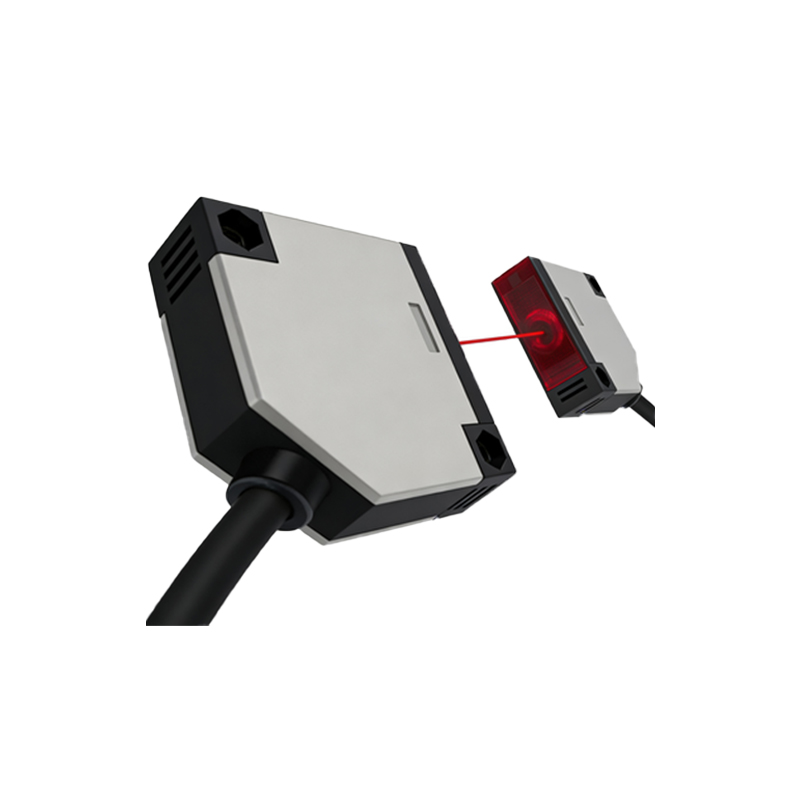
Beyond standard diffuse sensors, several specialized types address specific challenges. *Background Suppression (BGS)* sensors, as mentioned, use triangulation to define a precise sensing window, ignoring objects beyond a set distance. *Diffuse Sensors with Fiber Optics* employ flexible light guides, allowing the sensing head to be placed in tight, hot, or hazardous locations while the electronics remain safely housed elsewhere. *Color Mark Sensors* are a sophisticated subtype designed to detect contrasts in color or grayscale, often used in packaging and printing for registration mark detection. They emit white light and analyze the intensity of the reflected light to distinguish between different colors or materials. *Laser Diffuse Sensors* utilize a focused laser spot, enabling the detection of very small objects or precise edges at longer ranges with a high degree of accuracy.
Critical Selection Criteria for Engineers
Selecting the correct diffuse sensor requires a systematic evaluation of the application parameters. First, determine the required *sensing range*, but always refer to the sensor's datasheet for the precise detection distance for your specific target material (often defined using a standard white test card). The *target properties*—size, color, material, and surface finish—are paramount. Consider the *output type* needed: NPN/PNP transistor, analog, or IO-Link for smart sensor capabilities. The *housing material* (metal or plastic) and *protection rating* (IP67, IP69K) must suit the environmental conditions, including exposure to dust, moisture, washdowns, or chemicals. *Response time* is critical for high-speed applications, and *connection method* (pre-wired cable or connector) impacts installation logistics.
Typical Applications Across Industries
Diffuse photoelectric sensors are ubiquitous. In *packaging and material handling*, they detect the presence of boxes, bottles, or bags on conveyors, control filling levels, and count products. Within *automotive manufacturing*, they verify part presence in assembly jigs, detect robot end-of-arm tooling positions, and monitor component feeds. In the *food and beverage industry*, stainless steel, washdown-rated sensors detect containers, check for labels, and control liquid levels. *Electronics assembly* lines use miniature or laser diffuse sensors to verify tiny component placement on PCBs. They are also essential for *object detection in automated storage and retrieval systems (AS/RS)* and *position verification in machinery*.
Installation, Alignment, and Troubleshooting Tips
Proper installation is key to reliable operation. Mount the sensor securely to minimize vibration. During alignment, use the sensor's built-in indicator (often an LED) to confirm the detection state. For challenging surfaces, employ a teaching function if available, which allows the sensor to "learn" the actual reflection from the target. Common issues include false triggering due to reflective backgrounds, which can be solved by using a background suppression model or adjusting the angle. Failure to detect may result from insufficient light return; consider a sensor with a longer range, a different light type (e.g., laser for dark objects), or adjusting the sensor's sensitivity potentiometer. Always ensure the lens is clean and free from obstructions or buildup.
The Future and Integration with Industry 4.0
The evolution of diffuse sensors is tightly linked to the rise of Industry 4.0 and smart manufacturing. Modern sensors increasingly feature *IO-Link* communication, a point-to-point serial protocol that transforms them into intelligent devices. IO-Link enables remote parameter setting, real-time diagnostics (like lens contamination warnings), and the transmission of process data (e.g., received light intensity) to higher-level control systems. This facilitates predictive maintenance, faster changeovers, and deeper process insights. Furthermore, advancements in LED technology and signal processing continue to improve range, stability, and the ability to handle difficult-to-sense materials, ensuring diffuse reflective sensors remain a cornerstone of industrial sensing for the foreseeable future.