Fundamental Operating Principles
Capacitive and inductive proximity sensors are both non-contact devices used extensively in industrial automation for object detection, but they operate on fundamentally different physical principles. Inductive proximity sensors generate an electromagnetic field using a coiled oscillator circuit. When a metallic object enters this field, it induces eddy currents on the object's surface. These currents absorb energy from the oscillator, causing its amplitude to decrease. This change is detected by a threshold circuit, which triggers the sensor's output switch. The key characteristic is that inductive sensors are primarily designed to detect ferrous and non-ferrous metals. In contrast, capacitive proximity sensors function by generating an electrostatic field. The sensor's active face and the surrounding ground form a capacitor. When any material with a dielectric constant different from air enters this field, it alters the capacitance of the system. An internal oscillator is tuned to respond only when this capacitance reaches a specific threshold, triggering the output. This allows capacitive sensors to detect a vast range of materials, including liquids, plastics, wood, glass, and powders, in addition to metals.
Material Detection Capabilities and Limitations
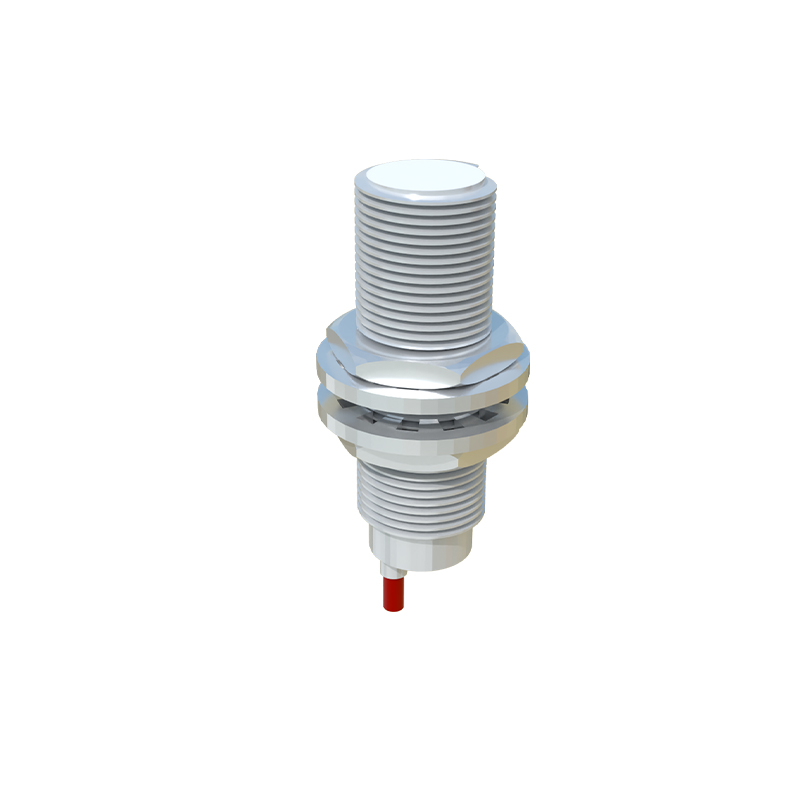
The core distinction in application lies in their material sensitivity. Inductive sensors are the specialists for metal detection. Their sensing range is highly consistent for different metals, though it is typically shorter for non-ferrous metals like aluminum or copper compared to steel. They are completely insensitive to non-metallic substances, making them ideal for environments with dust, chips, or water splashes where only metal presence needs to be confirmed. Capacitive sensors are the generalists. They can detect nearly any solid or liquid material. However, this versatility comes with a challenge: susceptibility to environmental interference. Factors like humidity, temperature fluctuations, dust accumulation on the sensor face, or even the container holding a liquid can affect the dielectric constant and thus the sensing distance. To combat this, most capacitive sensors feature a sensitivity adjustment potentiometer, allowing technicians to tune the sensor to ignore the container and detect only the target material inside.
Typical Sensing Distances and Form Factors
Sensing range is another critical differentiator. For a standard 18mm diameter barrel sensor, a typical inductive unit might offer a nominal sensing distance (Sn) of 5mm or 8mm. Capacitive sensors of the same size often have a slightly shorter nominal range, such as 5mm, but this can vary significantly based on the target material's dielectric constant. For instance, water (with a high dielectric constant) can be detected from a greater distance than a plastic granule. Both sensor types are available in similar industrial housings: cylindrical threaded barrels (M8, M12, M18, M30), rectangular block styles, and ring-shaped models for level detection or part counting. High-temperature variants and those with specialized housing materials (e.g., PTFE for chemical resistance) exist for both technologies to suit harsh environments.
Application Scenarios in Automation
In a typical factory, these sensors are deployed based on their strengths. Inductive sensors are ubiquitous for tasks like detecting the presence of a metal part on a conveyor, confirming the closed position of a metal valve, counting metallic products, or as end-position feedback on pneumatic cylinders (often with an integrated magnet). Capacitive sensors excel in applications where material composition is non-metallic. Common uses include liquid level detection in plastic or glass tanks (for water, oil, or chemicals), monitoring the fill level of plastic granules in hoppers, detecting the presence of glass bottles on a line, or verifying that a cardboard box flap is closed. They are also used for touch interfaces, acting as non-mechanical buttons.
Electrical Characteristics and Outputs
Electrically, both sensor types are quite similar in modern implementations, which simplifies integration. They are predominantly available in DC versions (10-30V DC) with 3-wire configurations: brown (V+), blue (V- or ground), and black (output). The output is typically a solid-state NPN (sinking) or PNP (sourcing) transistor. Analog output versions (4-20mA or 0-10V) are also available for both, providing a signal proportional to the distance to the target for precise positioning or monitoring. AC versions and 2-wire AC/DC models exist but are less common. Key performance specifications like switching frequency (how fast they can detect objects), repeat accuracy, and protection ratings (IP67, IP69K) are comparable and high for both, designed to meet rigorous industrial standards.
Selection Guidelines and Best Practices
Choosing between capacitive and inductive boils down to a simple question: What is the target material? If the answer is strictly metal, an inductive sensor